The Vivara Content Team
Snorkeling Cano Island: A Complete 2026 Travel Guide
Snorkeling Cano Island: A Complete 2026 Travel Guide

You’re probably looking at photos of luminous blue water, sea turtles, and those clean coral shelves Caño Island is known for, while asking a more grounded question: is snorkeling Caño Island worth the effort of a full day on the water?
That’s the right question.
A lot of Costa Rica excursions look magical in a brochure and feel rushed in practice. Boats leave early, the ocean has its own opinion, and what should feel restorative can turn into a checkbox tour if the day isn’t designed well. Caño Island is different, but only when you approach it with realistic expectations and good logistics.
The best trips aren’t built around squeezing in one more activity. They’re built around pace, comfort, and choosing conditions that match the kind of day you want. Some travelers want peak visibility and clean, easy snorkeling. Others care more about seeing a wider range of marine life, even if the water isn’t at its clearest. Those trade-offs matter.
This guide is for travelers who want an authentic version. Not just what Caño Island is, but how to plan a day that feels smooth from start to finish.
The Dream of a Perfect Snorkeling Day
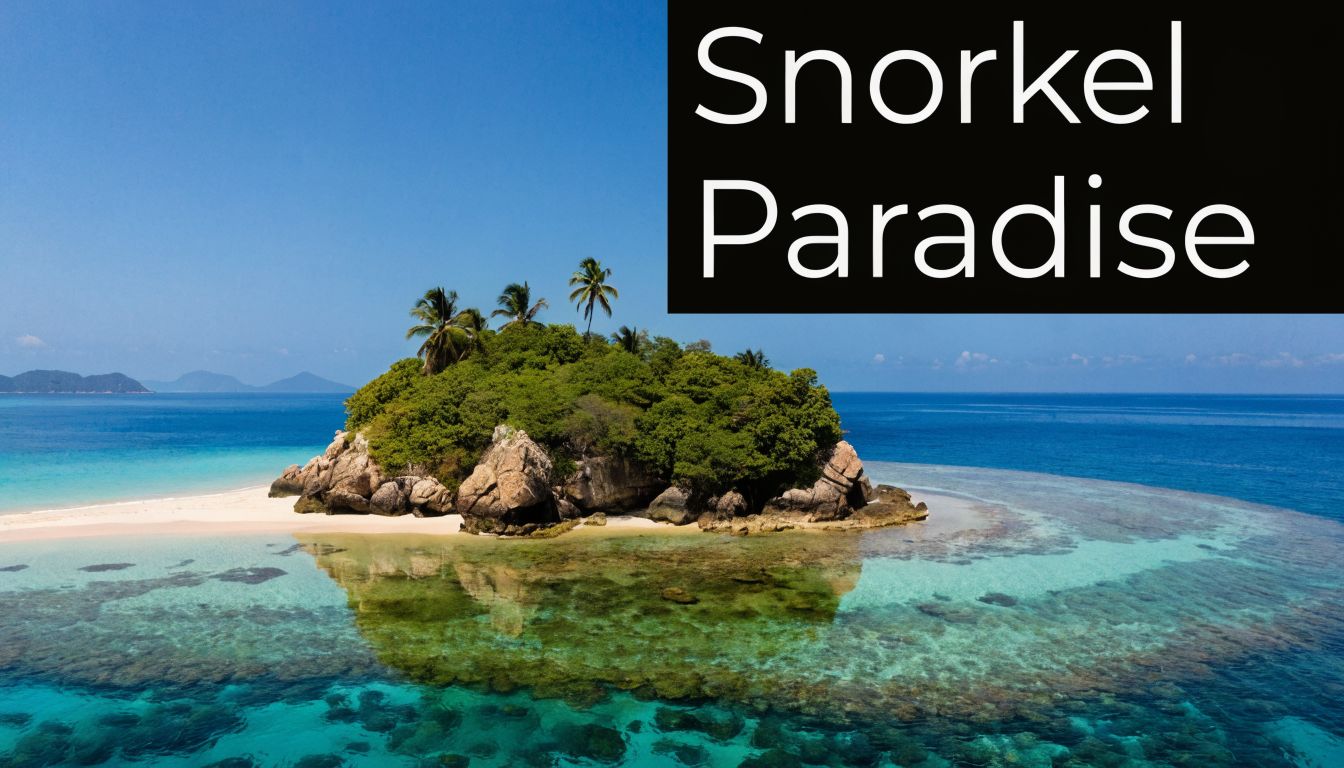
A common image comes to mind. Quiet Pacific water. A protected island offshore. A guide points out a turtle below you while everyone in your group feels present, not hurried.
Then the practical side shows up. You still need to get to the departure point on time. You still need to handle the boat ride well. You still need a group pace that suits your energy level, because a day on the water can feel elegant or exhausting depending on how it’s run.
That’s where many Caño Island trips split into two very different experiences.
One version is the standard tourist day. It works, and for plenty of travelers it’s enough. You join a shared boat, follow a fixed schedule, snorkel where the operator has space and permission, then head back satisfied but a bit spent.
The better version is more intentional. You treat the outing as a full-day coastal experience, not just an underwater stop. You choose the right home base, leave enough room in the morning, pack for the ride as much as for the swim, and match the excursion style to your group.
A great Caño Island day usually feels simple from the guest side because someone handled the complicated parts well.
That matters more than people think. Snorkeling Caño Island isn’t difficult in theory, but it is exposed to weather, timing, sea conditions, and group dynamics. If you’re traveling as a couple, a family, or a small private group, those details shape the memory as much as the reef itself.
The island delivers. The question is whether the day around it does too.
Why Caño Island Is a World-Class Snorkeling Destination
Caño Island earns its reputation because it’s protected, tightly managed, and still ecologically compelling. It’s not popular because it’s easy. It’s popular because access is controlled enough to preserve the reason people come.
Caño Island is designated as the second-best snorkeling and scuba diving site in Costa Rica, known for exceptionally healthy coral reefs, and access is strictly regulated through guided day tours from ports including Uvita, which is about a 1.5-hour boat ride away according to this Caño Island overview from Copa de Árbol.
Protection is the point
The reserve’s value isn’t just scenic. Its rules shape the quality of the experience.
Visitor limits have been enforced since 2014, and permitted operators work within that framework. That means you’re not arriving at an open-access beach destination with casual traffic coming and going all day. You’re entering a marine reserve where the ecosystem comes first.
That protected status changes what you see underwater. Healthier coral structure supports more life. Clearer management also tends to create a better snorkeling rhythm because tours follow a known operating system rather than improvising around crowds.
Why the reef feels different
Caño Island is surrounded by low coral reef platforms and hard coral areas that support a broad range of species. The water can be strikingly clear, but what makes the site memorable isn’t only clarity. It’s the combination of reef shape, marine activity, and the sense that the environment is still functioning as a reserve rather than a theme park.
A few details matter here:
Guided access only: You don’t self-launch and wander. That keeps the experience structured and reduces pressure on the reserve.
Marine life remains protected: Visitors can’t remove marine life, dead or alive, which helps preserve the habitat.
The island itself isn’t the main attraction: Visitors come for the water around it, not for beach time on land.
Practical rule: If you’re evaluating whether the trip is worth the cost, don’t compare it to a casual beach snorkel. Compare it to access into a regulated marine ecosystem that still feels intact.
There’s also cultural depth. Caño Island includes pre-Columbian archaeological significance, including stone spheres and use as a native cemetery, which gives the place more weight than a simple reef excursion.
For travelers who care about regenerative and nature-led experiences, that combination is what enhances snorkeling Caño Island. You’re not just buying boat transport and fins. You’re buying access to a place that remains compelling because not everyone can move through it freely.
Best Seasons and Conditions for Your Trip
Timing shapes this trip more than most first-time visitors expect. The best month depends less on a universal “perfect season” and more on what kind of day you want to have in the water.
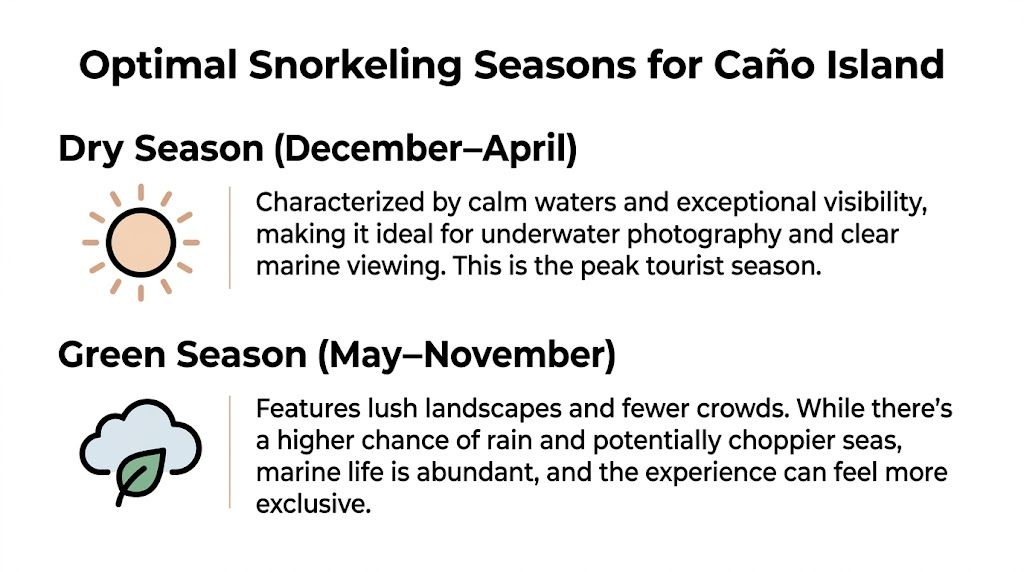
Visibility at Caño Island ranges from 40 to 90 feet, with the clearest conditions typically in the dry season from January through April, while marine life abundance often increases in the rainy months. Rash guards are also recommended because jellyfish can be more prevalent due to nutrient-rich upwellings, as noted in this seasonal snorkeling guide from Villas Costa Rica.
Dry season for clarity
If your priority is seeing the reef as cleanly as possible, the dry season is usually the easier choice. Less swell and less river runoff generally improve visibility, which helps with underwater photography and makes the whole experience feel calmer for newer snorkelers.
This is often the better fit for:
First-time open-water snorkelers who want the most visually legible experience
Couples looking for a polished day without too many variables
Travelers prone to motion discomfort who prefer calmer sea conditions when available
The trade-off is simple. Better visibility doesn’t always mean the most dynamic wildlife day. You may get a beautifully clear snorkel and still feel that the encounter was more serene than dramatic.
Green season for a richer wildlife feel
The rainy or green season asks for a little more flexibility. Water clarity can be reduced compared with the driest months, but many travelers find the overall marine activity rewarding enough to make that trade willingly.
Expectations matter. A less transparent water column doesn’t mean a bad trip. It means the experience shifts from “pristine aquarium” toward “living ocean.” For some travelers, that feels more real and more memorable.
A few practical considerations can make or break the day:
Season priority | What tends to work best | Main trade-off |
|---|---|---|
Clear water | Dry season timing | Busier travel windows |
Marine activity | Rainy season flexibility | More variable visibility |
Comfort on boat | Calmer periods within dry season | Less room for spontaneity |
Wildlife variety mindset | Green season planning | Conditions can change faster |
Conditions matter more than calendar labels. A well-timed departure on an average month often beats a poorly planned day in a “best” month.
There’s also the seasonal migration factor. Humpback whales may be seen during migration windows, including December to April in one source set and July to October in another reserve-focused description from the verified material. That means the boat ride itself can become part of the day’s appeal depending on when you travel.
For snorkeling Caño Island, the cleanest advice is this:
Choose dry-season travel if visibility is your top priority.
Choose green-season travel if you’re comfortable with more ocean texture and want a day that may feel biologically fuller.
Bring a rash guard either way. It helps with sun, comfort, and occasional jellyfish exposure.
The Underwater World What You Will Actually See
The best part of snorkeling Caño Island is that it rarely feels empty. You’re not scanning a mostly barren seascape hoping one turtle appears at the end.
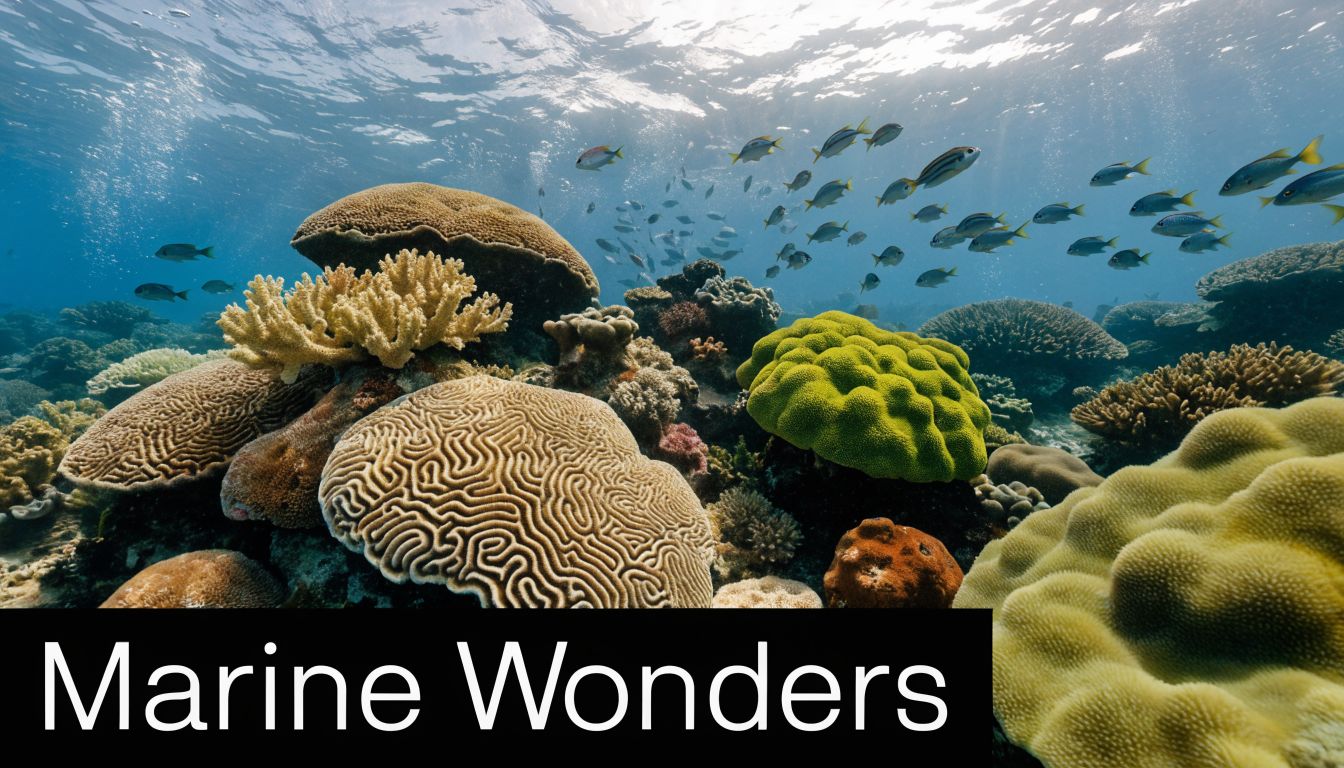
Snorkelers routinely observe over a dozen species, including sea turtles, eagle and stingrays, reef sharks, and colorful reef fish, across shallow depths not exceeding 18 meters (60 feet). Tours usually include two distinct snorkeling stops and a total of 2 to 3 hours of water time, according to this detailed Caño Island snorkeling review.
The first few minutes in the water
The opening moments usually tell you what kind of day it will be. You slide in, settle your breathing, look down, and the reef starts resolving into shape. Fish move first. Then you notice structure. Then the larger animals begin to stand out.
Sea turtles are often the emotional highlight because the encounter feels unforced. They’re not performing. They’re feeding, surfacing, or moving through the reef while snorkelers drift above. That calm behavior is part of what makes the site feel special.
Reef sharks create a different response. The sighting is often unexpectedly peaceful. You’re usually observing them below you, not in your space, and the experience is more awe than adrenaline.
What stands out most
Caño Island tends to reward patient snorkelers more than frantic ones. If you splash less, float more, and let your guide position you well, the scene opens up.
What guests often remember most isn’t a single species but the layering of the environment:
Turtles over reef shelves
Rays gliding over sandy sections
Moray eels tucked into structure
Dense schools of reef fish catching the light
Occasional dolphin or whale moments linked to the boat transit rather than the snorkel itself
If you’re pairing this day with other marine outings on the South Pacific coast, it fits especially well alongside whale watching near Dominical and Uvita, since the rhythm is complementary rather than repetitive.
A short look at the reef environment helps set expectations before you go:
Don’t judge the snorkel by whether you see one headline species. The quality of Caño Island is the overall density and health of the underwater world.
There are two common mistakes here. One is expecting every pass to feel cinematic. The other is underestimating how much the guide matters. A good guide doesn’t manufacture wildlife. They help you slow down, read the water, and notice more of what’s already there.
That’s why snorkeling Caño Island works best for travelers who enjoy immersion rather than instant gratification. The reward is cumulative. By the second stop, snorkelers are seeing the reef more clearly, moving more comfortably, and enjoying the water instead of just chasing sightings.
Choosing Your Excursion Group Tour vs Private Charter
Trip quality often gets decided here.
Most Caño Island tours are not bad. The standard format is proven for a reason. But if you care about pace, privacy, and how the day feels between snorkel sessions, the difference between a shared boat and a more curated outing is substantial.
Tours typically include two 40 to 50 minute snorkeling sessions at distinct sites. For guests departing from Dominical or Uvita, the boat ride is about 1.5 hours each way, and operators such as Dolphin Tour work with small groups up to 10 while providing gear, according to this practical tour breakdown from Mytanfeet.
What a standard group tour does well
A shared tour is usually the sensible choice for travelers who want straightforward logistics and solid value. The typical tour price falls around $100 to $150 per person, including snorkeling sessions, lunch, and equipment, based on the verified source material cited earlier in this article.
That setup works well when you:
Travel as a couple or solo and don’t mind sharing the day
Want a clear package with gear and lunch already included
Prefer a social atmosphere over a highly personalized one
The compromise is schedule control. You move with the group, not with your own energy. If someone in the boat needs more assistance, everyone adjusts. If your family likes a slower start, that won’t matter much once you’re on operator time.
The hidden friction usually isn’t underwater. It’s in transitions. Waiting to board. Matching fins. Regrouping after a snorkel stop. Managing mixed confidence levels in open water.
When private becomes the better value
A private charter or carefully curated small-group day is more expensive, but that’s not the only comparison that matters. The better question is what kind of friction you’re removing.
Private becomes the stronger choice when your group includes different ages, mixed swimming confidence, milestone travel, or people who do not enjoy rushed logistics. It also makes sense when the snorkeling day is one of the anchor experiences of the trip rather than a casual add-on.
A more customized outing improves the experience in ways that aren’t flashy:
Decision factor | Group tour | Private or curated outing |
|---|---|---|
Departure rhythm | Fixed | More personalized |
Group pace | Shared with strangers | Set by your group |
Guide attention | Split across participants | Focused on your party |
Comfort for mixed ages | More variable | Easier to adapt |
Overall feel | Efficient | Intentional |
Planning note: The longer the boat transfer, the more valuable seamless logistics become.
That applies even before you reach the water. If your wider trip already includes premium experiences, some travelers also pair the coast with more customized transport options such as a private air charter in Costa Rica, especially when time, comfort, and group coordination matter.
What doesn’t work well is paying for a premium stay and then treating a major excursion like an afterthought. Snorkeling Caño Island is one of those days where the wrapper matters almost as much as the core activity. A rushed breakfast, a stressful transfer, and a crowded boat can flatten an otherwise excellent destination.
If you care most about efficient access and good value, a shared tour is perfectly reasonable. If you care about how the day feels as a whole, private tends to justify itself quickly.
A Sample Caño Island Itinerary from Dominical
Travelers based in Dominical often underestimate how long this day feels in a good way. It’s not a quick add-on before lunch. It’s a full coastal outing with an early start, time on the boat, two immersion windows in the reserve, and a slower return.
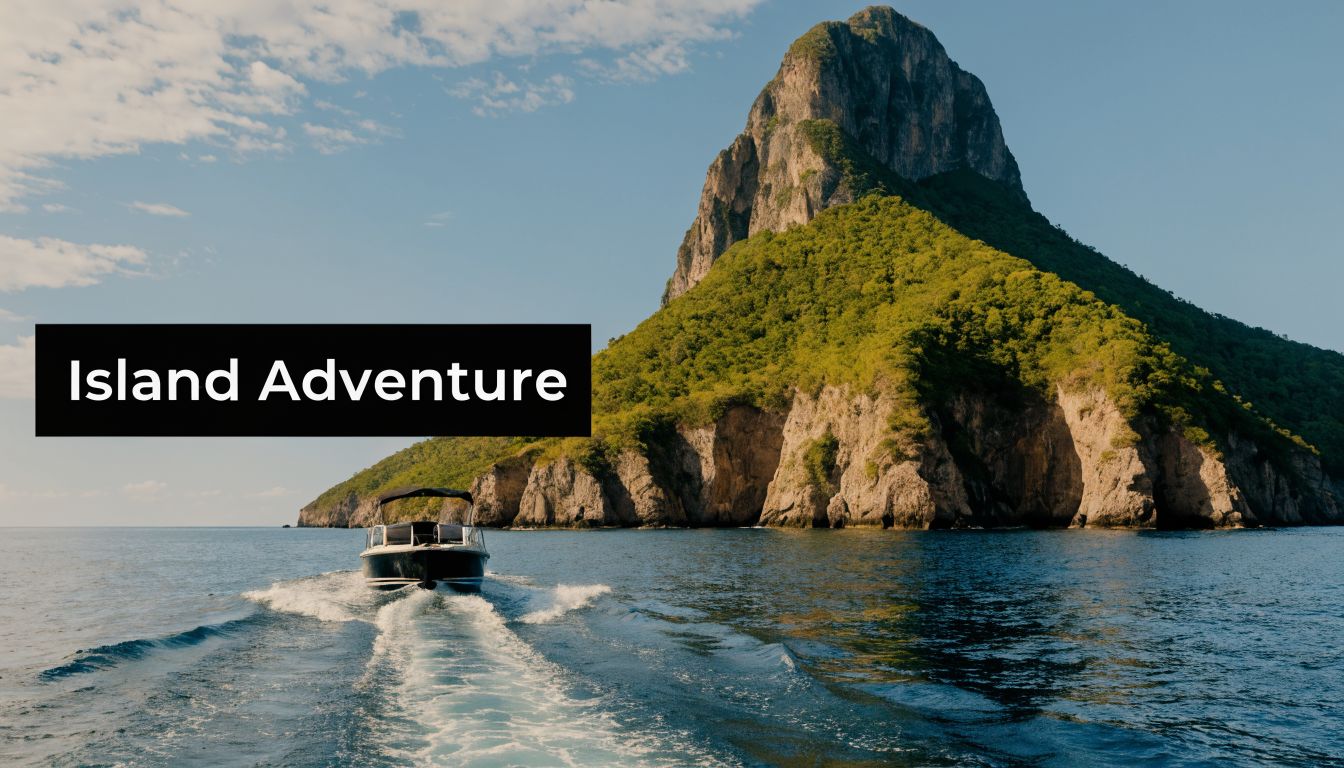
Morning departure and boat ride
A smooth day begins early. You leave Dominical with enough margin that nobody feels rushed, arrive in the Uvita area, check in, and get fitted with gear before boarding. From there, the ride to Caño Island generally takes about 1.5 hours each way from the Dominical or Uvita side, as noted in the verified tour material already cited above.
That crossing is part of the experience, not dead time. Some days feel calm and cinematic. Others are bumpier and demand a little more resilience. This is why a light breakfast, hydration, and motion-prep matter more than people expect.
Once you approach the reserve, the day usually settles into a clear pattern. Brief guide orientation. First snorkel stop. Back on board to reset.
Midday rhythm and return
Most tours are built around two separate snorkeling sessions. The pause between them often matters almost as much as the water time itself. Snacks, regrouping, warming up, and hearing what others saw can restore energy before the second stop.
After the snorkeling is done, lunch is commonly served back on the mainland rather than as a long, elaborate beach club experience. That’s one reason the day works well when you accept it for what it is: a marine excursion first, a leisure lunch second.
A practical rhythm from Dominical usually looks like this:
Early departure from your base so the morning doesn’t begin in a rush.
Boat transfer from the Uvita side with time to settle into the ocean conditions.
First snorkel session while energy and focus are fresh.
Short reset between sites to drink water, adjust gear, and regroup.
Second snorkel stop when swimmers are usually more relaxed in the water.
Return ride and late lunch with the rest of the afternoon kept intentionally light.
If you’re building a broader South Pacific itinerary, this pairs well with a land-based day such as Nauyaca Waterfall on a separate date. That balance keeps your trip from becoming too ocean-heavy or too physically repetitive.
For most travelers, the best post-snorkel plan is simple: shower, eat well, and don’t schedule something demanding that evening. Caño Island is invigorating, but it still takes a day’s worth of energy.
Essential Safety and Packing Checklist
Snorkeling Caño Island is manageable for many travelers, but it isn’t a zero-effort excursion. The biggest planning gap in most guides is accessibility. Boat entry and exit, open-water comfort, and changing sea conditions matter, especially for multi-generational groups, as highlighted in this accessibility-focused note on Caño Island planning.
What to bring yourself
Operators commonly provide the core gear, but comfort items are your job.
Reef-safe sunscreen: Choose one you trust and apply it properly before departure.
Rash guard: Useful for sun coverage and added comfort if jellyfish are present.
Hat and dry clothes: The ride back feels much better when you have something dry to change into.
Towel and water: Even if refreshments are included, bring your own basics.
Motion support: If you’re at all prone to seasickness, prepare before boarding rather than reacting once the boat is moving.
What to ask before booking
Don’t book this trip on marine life photos alone. Ask operational questions.
Boat entry method: Some travelers are comfortable with wading entry. Others need clearer assistance.
Guide support in water: Important for hesitant swimmers and families.
Physical demands: Be honest about stamina, shoulder mobility, and comfort climbing in and out of a boat.
Weather flexibility: Conditions can shift, and the right operator sets expectations clearly.
Guests who enjoy this day most are usually the ones who prepare for the boat ride as carefully as they prepare for the snorkeling.
A final rule is simple. If someone in your group isn’t a confident swimmer or has mobility limitations, say so before booking. The trip may still work well, but only if the operator knows what kind of support is needed.
If you want a Costa Rica stay that can help you build the right kind of Caño Island day, from timing and transport to a more intentional rhythm around the excursion, VIVARA is worth a look. It’s especially well suited to couples, families, and small groups who want nature-rich adventure without handing their trip over to generic logistics.