The Vivara Content Team
How to Plan a Vow Renewal That Actually Means Something
How to Plan a Vow Renewal That Actually Means Something

You're probably at the stage where the wedding is long over, the photos are framed, and the question has shifted from “Should we do something?” to “What would feel worth doing?” That's the right moment to plan a vow renewal. If you treat it like a smaller version of a wedding, you'll waste money, energy, and goodwill. If you treat it like a second-chapter experience, you can build something more intimate, more honest, and far more memorable.
What a Vow Renewal Really Is and Why Couples Are Rethinking It
A vow renewal is a relationship experience, not a legal event. Treat it that way from the start. There's no fixed anniversary rule, which is why couples often choose milestone years such as the 5th, 10th, 15th, 20th, 25th, and 50th. Guests can recognize those markers quickly, and the couple can tie the day to meaning instead of paperwork, as noted in this vow renewal planning guide.
That flexibility is the point. Couples are moving away from wedding-style pageantry because they do not want a repeat performance. They want a second-chapter ritual that reflects the marriage they have now.
The shift away from the old model
The old formula is dinner, speeches, and a polite nod to the original wedding. That only works if the couple wants a public replay. If they want something honest, they need a format with a clearer purpose, a private reset, a small gathering, or a trip built around the renewal itself.
Practical rule: plan the ceremony around the relationship you have now, not the guest list you feel pressure to impress.
That matters for couples who are tired of planning noise, reluctant to spend for the sake of appearances, or stuck on the question of why they should do this at all. The answer does not need drama. It needs a real reason. Mark a milestone, honor a hard season, or build a shared experience that gives the marriage a new chapter.
Recent coverage shows the split clearly. Some couples fold the ceremony into a trip. Others attach it to an existing gathering and keep the tone low-impact with reused attire, plant-based catering, and locally sourced flowers, as discussed in this vow renewal trend overview. That shift changes the planning question. Stop asking how to make it look like a wedding. Start asking how to design a weekend that works.
For couples considering a destination experience, intimate retreat settings in Costa Rica can help frame the move from event planning to experience design.
A small renewal should feel deliberate, not inflated. Keep the group tight, usually under 20 people, and build the weekend around conversation, rest, and one strong ceremony moment. Anything larger starts pulling the event back toward wedding mode.
Design for meaning first, logistics second.
Choosing Your Date, Tone, and Guest List First
Start with the date, but don't let the venue bully you into picking it. A good vow renewal date is tied to a milestone, a transition, or a season that fits the experience you want. The common anniversary markers, especially 10th, 15th, 20th, and 25th, work because they feel legible to other people and meaningful to the couple. If the anniversary itself feels forced, choose the weekend that best supports the tone you want.
Lock the emotional frame before anything else
Tone comes before décor, before vendor calls, and before invitation design. Decide whether this is a couple-only retreat, a family-centered gathering, or a friends-and-family event with a clear intimacy cap. If the ceremony is meant to feel reflective or restorative, keep the circle smaller. If it's about community celebration, build in enough room for that energy without turning it into a wedding replica.
The guest list needs a hard rule, not a vague feeling. If you don't decide who makes the cut, obligation will do it for you. That's how small events swell into stressful ones.
A few practical filters work better than emotional debates:
Immediate family only: Best when the renewal is private, symbolic, or tied to a hard chapter.
Close friends and family: Best when you want warmth and conversation without a formal production.
Couple only, or just a few witnesses: Best when the renewal is part of a reset, retreat, or destination experience.
Children deserve a deliberate decision too. Don't leave that conversation until invitations are out. If children are attending, they should be included on purpose. If they're not, say so early and kindly.
Decision test: if you can't explain why each guest is there, they probably don't belong on the list.
This is also where couples overcomplicate things by chasing “fairness.” Fairness is not the goal. Fit is the goal. A well-sized renewal feels generous because people can relax into it. A bloated one feels performative, no matter how nice the food is.
If you're planning around travel or a destination setting, use the date to work with seasonality, family schedules, and flight logic, not against them. That's the difference between a smooth renewal and one that looks beautiful on paper but becomes a coordination headache in practice.
The 12 Month Planning Timeline That Keeps It Simple
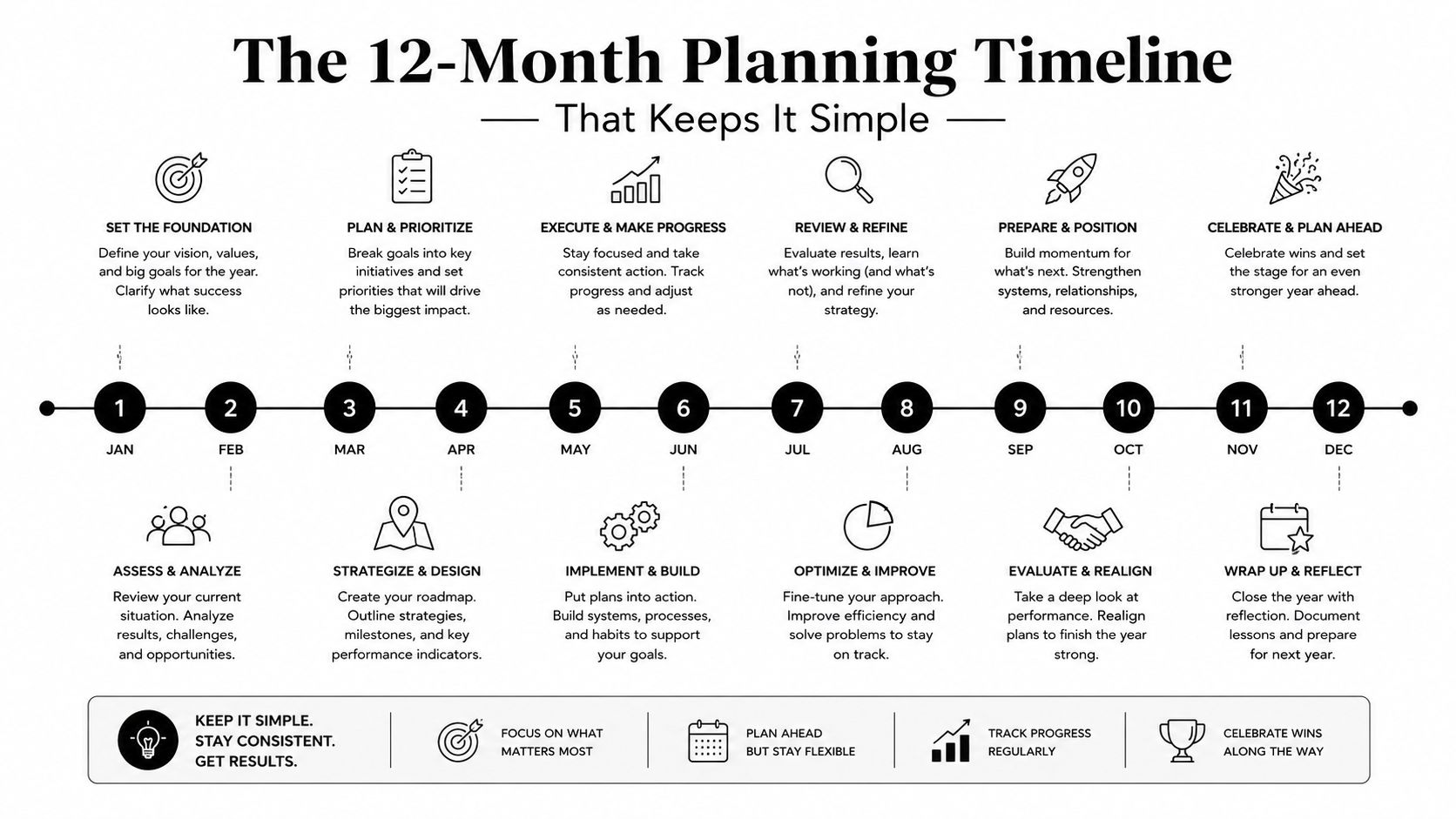
The mistake most couples make is compressing the work too late. Vow renewal planning is lighter than wedding planning, but the timeline still matters, especially if guests are traveling or the event is destination-based. The cleanest approach is to lock the concept early, then handle the logistics in a controlled sequence.
9 to 12 months out
Decide the format, the guest count, the tone, and the venue shortlist. This is when you book the core pieces that can't be replaced easily, especially the photographer and the main venue or property. If you delay photography, you'll get stuck choosing from whoever's left.
6 to 9 months out
This is the time to book vendors, open travel planning for guests, and send save-the-dates if people need flights or hotel blocks. Destination vow renewals often need more runway because guests have to coordinate time off and transportation. The practical planning window is longer than a dinner party because you're managing people, not just a dinner reservation.
3 to 6 months out
Finalize the ceremony script, attire, food, and any shared activities. If it's a destination renewal, handle paperwork and any destination-specific requirements now, not later. This is also when dietary headcounts start to matter, because caterers need real numbers and you don't want to be guessing.
Final 90 days
Confirm every vendor, finalize seating or layout, and walk through weather contingencies. Travel disruptions, transport buffers, and on-site timings should all be set before the final month. The small details that slip on real projects are usually the boring ones, the guest flights, the photo schedule, and the food counts.
Do this early: lock the photographer before you lock the menu. Guests remember the images long after they forget the canapés.
Invitation timing is part of this rhythm. Common guidance puts local invitations at 6 to 8 weeks out, destination invitations at 3 to 4 months out, and save-the-dates around six months ahead, according to vow renewal invitation etiquette guidance. That timeline makes sense because renewals often involve travel, optional activities, and guests who need to plan more than one evening.
Picking the Right Format from Home to Destination Retreat
The format decides the emotional experience before the flowers ever do. Home, local venue, and destination retreat are not interchangeable. Each creates a different kind of pressure, and each rewards a different kind of couple. If you choose the wrong one, you'll spend the whole event compensating for it.
Home works when presence matters more than production
A home renewal is the strongest choice for couples who care more about emotional honesty than design. It keeps the group small, lowers the number of decisions, and makes the day feel lived-in instead of staged. The tradeoff is that the couple absorbs more of the hosting load unless they keep the plan extremely simple.
Local venues sit in the middle
A local venue is the middle path for couples who want a polished setting without the complexity of travel. It works best when the guest list is still intimate and the couple is willing to build in private time after the ceremony, not just a reception room and a few toasts. If they don't protect that private space, the day can feel busy but not meaningful.
Destination retreats are the cleanest fit for small groups
For couples under 20 guests who want built-in downtime, a destination retreat is usually the best answer. It naturally supports a hybrid celebration-plus-retreat structure, where the ceremony is only one beat in a longer weekend. That's also where some couples make the most common mistake, they treat it like a destination wedding and inflate the logistics until the intimacy disappears.
The right format is the one where the lowest-stress version of the day still feels significant. If the stripped-down version of the plan feels flat, the format is wrong. If the simple version already feels like a real celebration, you've chosen well.
If you're comparing retreat-style properties, use this overview of Costa Rica wedding resorts as a reminder that not every beautiful place is designed for a renewal. The better properties think in terms of pacing, privacy, and shared experience, not just ceremony space.
Building a Realistic Budget for an Intimate Renewal
Budgeting for a vow renewal works best when you stop pretending every line item deserves equal attention. Small renewals under 20 guests usually fall into one of three practical tiers. A $3,000 to $5,000 home celebration can work if the guest list is tight and the event is light on production. A $10,000 to $15,000 local venue event gives you more structure and polish. A $25,000 to $40,000 destination retreat is the full experience-driven version, especially when you're buying out a property for two or three nights.
Where the money actually goes
At home, the money usually goes to photography, food and beverage, attire, and a dedicated officiant, with very little spent on décor if the space already has personality. At a local venue, you add venue fees, better catering, and more support for setup and flow. At a destination, the venue or property buyout often becomes the single dominant line item, and it can replace catering, décor, and entertainment all at once.
That's the cleanest part of the destination model. When the property itself carries the experience, you don't need to manufacture one event after another. The weekend already has a built-in rhythm.
The line items couples overestimate are usually favors and décor. Nobody is moving across the country because of table signage. The things that deliver the most emotional return are the ones that preserve the memory cleanly, especially a private photographer and a dedicated officiant who can shape the tone of the ceremony.
A simple way to pressure-test the plan is this:
Venue or property: pay for the setting that creates the mood naturally.
Photography: protect the memory of the day.
Officiant: choose someone who can carry the emotional tone without making it stiff.
Food and drink: keep it appropriate to the format, not inflated to perform abundance.
Travel and accommodation: accept that destination renewals live or die on guest comfort.
Budget rule: if the renewal costs more than a meaningful vacation for the couple, the format is wrong.
For destination planning, this private villa buyout guide is a useful reference point for how buyouts change the structure of a gathering. The same logic applies here. A buyout should simplify the event, not complicate it with extra filler.
A Sample 3 Day Itinerary for a Destination Vow Renewal
A destination renewal works best when it feels like a small retreat with a ceremony inside it, not a compressed wedding weekend. The couple should have room to breathe, and the group should stay small enough to keep the energy personal. A guest list of 10 to 16 guests usually gives you that balance.

Day 1 arrival and welcome
Guests arrive in the afternoon and settle in without a packed agenda. Keep the welcome dinner relaxed and light. That first night is about orientation, easy conversation, and letting people shift into the weekend's pace. Give them the basics, where to be, what time to show up, and what kind of tone to expect.
Day 2 ceremony and dinner
Build in a 90-minute private window before the ceremony. Couples need that time to get ready without an audience and to give the photographer clean, unforced coverage. The ceremony itself should stay tight, around 20 minutes of words and one ritual. Anything longer starts to feel like a full wedding, which is not the point.
Plan the ceremony for late afternoon. The light is better, and guests are not stuck managing heat or a rigid schedule. Afterward, let dinner run without a fixed end time. That flexibility matters because it keeps the evening focused on connection, not on keeping up with a clock.
Day 3 breakfast and departure
A group breakfast closes the weekend in a calm way and keeps the emotional thread intact. If the property or destination naturally supports it, add one optional shared activity. Keep it easy and low-pressure. Then let people depart with a clear finish, which matters more than couples often expect.
Where the money goes
The costs in this kind of itinerary are not the little extras. They are the setting, the photography, the officiant, the food and drink, and the guest travel and accommodation that make the whole experience workable. Favors and decorative clutter do not carry the weekend. A private buyout or retreat-style property changes the structure of the gathering, and this private villa buyout guide is a useful reference for that approach. A buyout should simplify the event, not load it with filler.
The logistics hidden inside this itinerary are the ones that protect the experience. Transportation needs buffer time, weather needs a backup plan, and one guest should be the point person for last-minute coordination. That keeps the couple out of the weeds.
What this itinerary leaves out matters just as much. There is no rehearsal day, no bachelor or bachelorette event, and no registry table. Those belong to a first wedding. A second chapter renewal needs less noise and more clarity.
Your Final Checklist and Next Step
The final check is not whether the event sounds beautiful. It's whether the plan is complete enough to run without chaos. If you've answered the core questions, who is coming, where it's happening, when it happens, how much you're spending, and what tone you're setting, you're ready to book. If not, you're still in the idea stage.
Use this checklist by timing
At 12 months out, confirm the format, guest count, and venue shortlist. At 6 months out, secure vendors, travel holds, and save-the-dates. At 3 months out, finalize the script, attire, menu, and guest communications. In the final week, confirm every payment, walk through weather plans, and check transport details one last time.
Keep the working files simple
You need four documents, not fourteen. A printed day-of timeline, a packing list for destination travel, a payments and confirmations tracker, and a contingency note for weather, vendor no-shows, and travel disruptions. That's enough to keep the event moving without turning the planning folder into a second job.
Delegate the right things
Don't delegate the decisions. Delegate the tasks that don't need your voice. Guest reminders, transport coordination, final vendor confirmations, and room or meal tracking can all sit with someone else if you choose a trustworthy point person.
The biggest planning mistake is trying to fix uncertainty with more bookings. That only makes a weak plan more expensive. A strong plan starts with a narrow brief, a realistic budget, and a format that fits the actual couple, not the fantasy version of the couple.
If you can't answer the five core questions, who, where, when, how much, and what tone, don't book anything yet. Tighten the concept first, then make the event real.
VIVARA designs intimate Costa Rica stays for couples who want their vow renewal to feel like a real shared experience, not a scaled-down wedding. If you're comparing private, design-led settings for a second chapter celebration, visit VIVARA and see how a retreat can give the ceremony room to breathe.

