The Vivara Content Team
San Carlos Costa Rica: A 2026 Guide for a Deeper Trip
San Carlos Costa Rica: A 2026 Guide for a Deeper Trip

You're probably looking at San Carlos, Costa Rica because you want more than a standard Arenal stop. You want rainforest, thermal water, good design, excellent food, and enough space in the itinerary to feel different by the end of the trip. You also don't want to land in a place that looks extraordinary online and then spend your days in traffic, in tour queues, and in hotels that could be anywhere.
That tension is real in San Carlos. It can deliver one of the most energizing and restorative experiences in Costa Rica, but only when the trip is designed with intention. Most visitors orbit La Fortuna, book the obvious tours, and leave saying they loved the volcano, yet still missed the region itself.
San Carlos is much larger, more layered, and more consequential than the average travel roundup suggests. It is the largest canton in Costa Rica by area, covering 3,348 km², with a population projected to reach 209,455 by 2026 according to San Carlos canton data). That scale matters because your experience changes dramatically depending on where you sleep, how much movement you build in, and whether you treat the area as a sightseeing circuit or a place to reconnect.
Beyond the Volcano An Intentional Guide to San Carlos
A familiar version of this trip goes like this. You arrive in La Fortuna, check into a polished resort, race through a hanging bridges tour, squeeze in the waterfall, take a shared shuttle to hot springs, and grab dinner in a restaurant built for volume rather than atmosphere. The volcano appears for twenty minutes, disappears behind cloud, and suddenly the stay feels busy rather than meaningful.
The better version of San Carlos, Costa Rica starts with a different question. Not “what should we see?” but “what do we want this trip to do for us?” That answer changes everything. A couple recovering from burnout needs a slower cadence than a family with teenagers. A founder planning a reset needs privacy and flexibility, not an activity grid. A friend group may want adrenaline by day and a strong dining scene at night.
What an intentional stay looks like
The strongest itineraries in this region don't stack every marquee attraction. They create contrast. One big adventure. One water-based experience. One long, unscheduled afternoon. One meal that feels rooted in place. That's when San Carlos begins to work on you rather than entertain you.
For travelers focused on wellness, that distinction matters even more. The most effective wellness retreats in Costa Rica prioritize personalized adaptive programming over fixed schedules, as noted in this Costa Rica wellness retreat explainer. In practice, that means the best stays don't force every guest through the same version of rest, movement, or reflection.
Practical rule: If a retreat or hotel offers the exact same wellness schedule to every guest, expect a polished product, not necessarily a transformative one.
An intentional San Carlos trip usually works best for travelers who want at least two of the following: nature immersion, adventure with some comfort, relationship time, soft wellness, and a sense of local texture beyond the resort gates. It's also a strong choice for people who want to pair active days with recovery, especially in a setting where forest, rain, thermal water, and mountain air are part of the experience rather than background scenery.
If that's the goal, it helps to think of the region not as “Arenal” but as a wider expanse of energy, water, agriculture, and quiet pockets still overlooked by mainstream planning. That's where experiences tied to nature and wellness in Costa Rica start to feel less like a trend and more like the right way to move through this part of the country.
Who San Carlos is best for
Couples who want depth: Best when you want romance without a static beach holiday.
Families who travel well together: Ideal if your group values nature, soft adventure, and downtime.
Wellness-minded travelers: Strong fit for people who want restoration without a rigid retreat structure.
Celebration groups: Good for milestone travel when you want shared activities but not nonstop social programming.
The Lay of the Land Arenal La Fortuna and Río Celeste
Land in San Carlos late in the afternoon and the planning mistake shows up fast. A hotel near central La Fortuna can put you close to dinner and tours, but also close to traffic, tour vans, and a busier social scene than many travelers expect. Shift twenty to forty minutes in the right direction and the same region feels quieter, greener, and far more restorative.
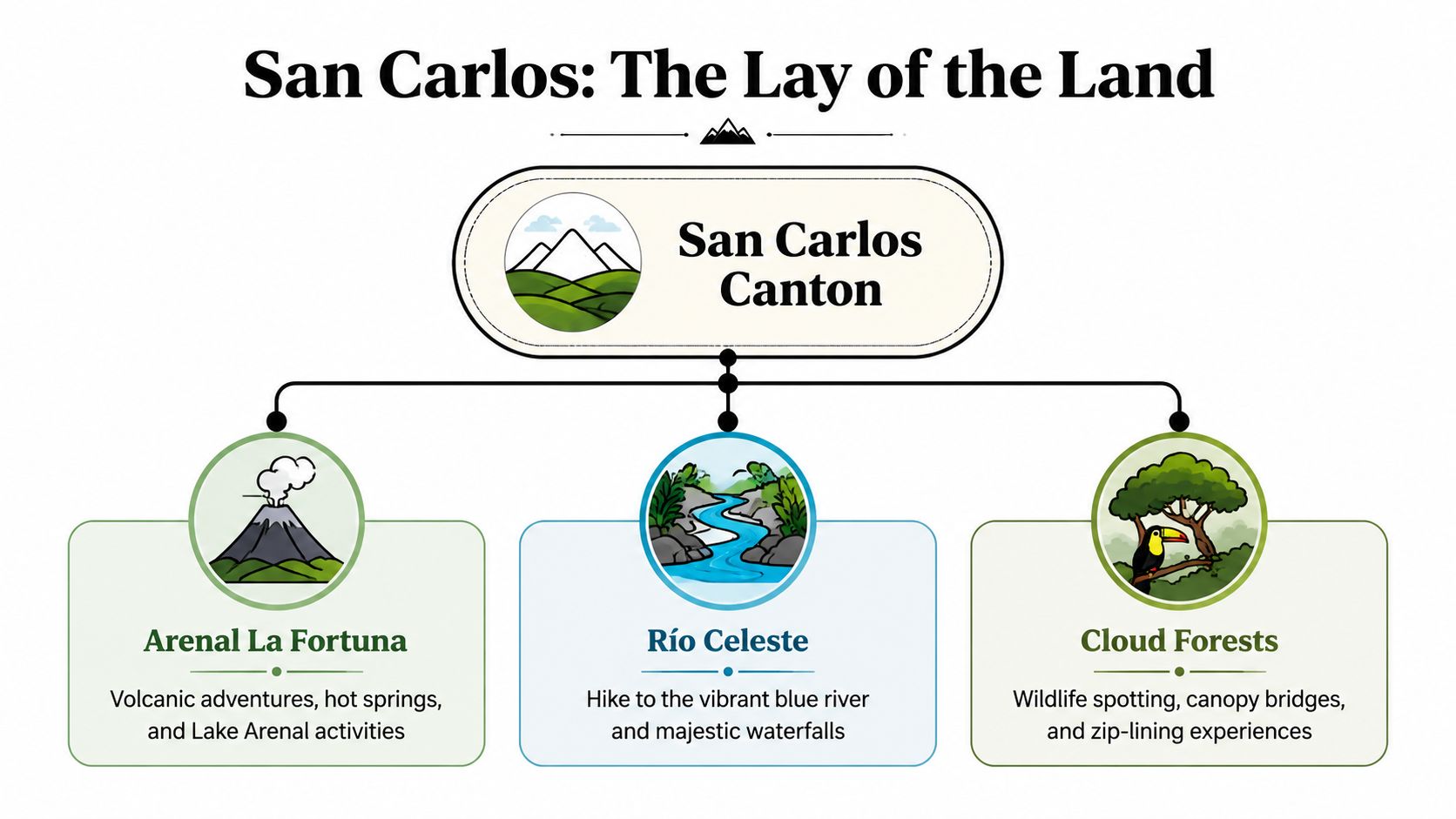
San Carlos rewards travelers who choose a base with intention. Guidebooks often flatten the region into “Arenal,” but that shorthand hides real differences in pace, weather, road time, and atmosphere. Those differences shape the trip more than the headline attractions do.
La Fortuna and the Arenal corridor
La Fortuna is the operational center of the region. It has the strongest tour infrastructure, the widest hotel range, and the easiest access to guided activities, restaurants, and thermal properties. For a first visit, or for travelers who want to combine adventure with comfort, it is usually the most efficient base.
Efficiency comes with trade-offs. Some properties feel polished but exposed to noise, traffic, and a steady flow of day visitors. The better strategy is to stay just outside the busiest pocket of town or choose a hotel with enough privacy and grounds to buffer the pace.
Lake Arenal edges and quieter stays
Around the lake, the mood shifts. Stays here often feel less transactional and more spacious, with wind, water, and wide views replacing the constant movement around town. This part of San Carlos suits couples, repeat visitors, and anyone who wants room for slow mornings and unstructured afternoons.
It also asks more from the itinerary. Dining options are fewer, weather can change quickly, and some drives take longer than they appear on a map. That extra distance is often worth it for travelers who care more about atmosphere than convenience.
Río Celeste and the northern fringe
Río Celeste and the Bijagua side of the region feel wilder and wetter. The famous blue river draws attention, but its main appeal is the shift in energy. Forest takes over, roads feel more rural, and the trip starts to favor immersion over volume.
This area works best as a focused stay of one or two nights, or as a deliberate contrast to La Fortuna. Travelers who prefer birds, forest trails, and fewer commercial touchpoints often find it more memorable than a packed schedule built around back-to-back excursions. If waterfalls are part of your planning, compare the marquee stops with more route-driven options such as these Costa Rica waterfall hikes.
In San Carlos, one well-chosen base usually works better than multiple hotel changes. Day trips are easier to recover from than repeated packing, check-ins, and road transfers.
Choosing your season by feel
Dry season versus green season is too simple for San Carlos. Conditions vary by micro-area, and the better question is what kind of atmosphere you want around the trip.
Priority | Better fit | Trade-off |
|---|---|---|
Clearer volcano views | Drier periods | More traffic and less solitude |
Lush landscapes and moodier atmosphere | Greener periods | More rain and less predictability |
Photography and active touring | Mixed weather with flexible planning | Requires itinerary agility |
Quiet restoration | Shoulder periods | Some days will demand backup plans |
Travelers who need every day to run on schedule often do better with shorter transfers and a tighter base strategy. Travelers who can accept shifting weather usually get a richer version of San Carlos, one where thermal water, cloud cover, forest sound, and changing light are part of the experience, not an inconvenience.
Curated Experiences From Thermal Springs to Cloud Forest Canopies
The right experiences in San Carlos, Costa Rica should leave you feeling more connected, not checked off. That usually means choosing fewer activities and choosing them well.
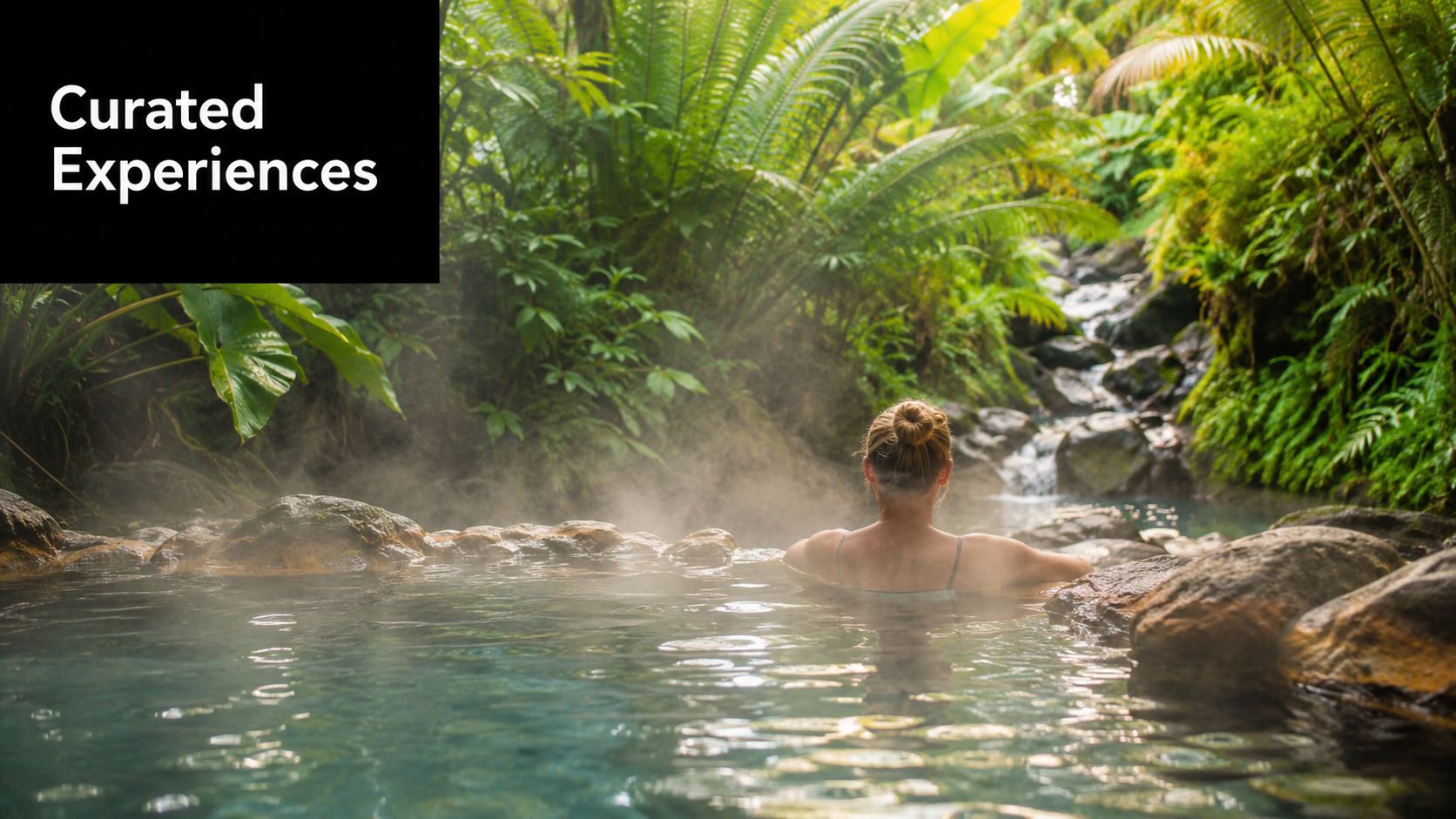
Thermal experiences that match your travel style
Not all hot springs feel the same. Some are social, expansive, and resort-driven. Others are quieter and better for couples or travelers who want the thermal soak to feel restorative rather than performative.
Here's the useful distinction:
Large-scale thermal resorts: Best for travelers who want amenities, multiple pools, cocktails, and a full-service atmosphere. These work well for first-timers and mixed-age groups.
Smaller, more intimate springs: Better for couples, wellness travelers, and anyone who values calm over spectacle.
Naturalistic thermal stops: Good for travelers comfortable with a less polished setting and a more local feel.
Tabacón remains iconic because the landscaping and water experience are dramatic. Ecotermales often appeals more to travelers who want a smaller-scale environment and less sensory overload. Baldi suits guests who enjoy a livelier resort atmosphere. None of these is universally “best.” The right choice depends on whether you want romance, social energy, or simple recovery after an active day.
Water and rainforest immersion
La Fortuna Waterfall is popular because it earns its reputation. The descent is part of the experience, and the setting has enough visual drama to justify building it into a first trip. The mistake is timing. Midday can feel crowded and rushed. Early starts generally deliver a more grounded experience.
Río Celeste is different. It's less about swimming and more about entering a world that feels almost surreal. Go when you're willing to hike, tolerate changing conditions, and let the journey be part of the payoff. If your group dislikes mud, humidity, or variable trail conditions, it may look better on paper than it feels in practice.
What feels transformative and what feels transactional
A good rule in San Carlos is to avoid stacking attractions that deliver the same emotional note. Waterfall plus hot springs can work beautifully. Hanging bridges plus a wildlife-focused float can also pair well. But three packaged tours in one day usually flatten the destination into logistics.
Best use of a day: one physically active experience in the morning, a long lunch or rest period, then one restorative outing in the late afternoon.
Adventure becomes more memorable when it's calibrated. A canopy tour can be exhilarating or generic depending on group size, pacing, and setting. Travelers who want a more immersive forest perspective often do better with a carefully chosen hanging bridges walk or a canopy option that emphasizes scenery and rhythm over volume. For travelers comparing zip-line options, this look at Titi Canopy Tours is a useful benchmark for what a more thoughtfully designed canopy experience can feel like.
Elevated adventure without overload
The region shines when you pair one high-energy outing with one quieter nature experience. Some examples work especially well:
For couples: hanging bridges, thermal soak, private dinner
For families: rafting or safari float, wildlife walk, relaxed pool time
For wellness travelers: waterfall hike, massage or thermal circuit, slow evening
For friend groups: zip-line, long lunch, springs at sunset
Later in the stay, it's worth stepping back from the resort bubble and considering the wider local context.
Travel content often ignores that San Carlos has high poverty vulnerability, and that socially conscious travelers can support community initiatives through where they stay and how they spend, including efforts tied to living wages, lifeguard training, and turtle conservation, as discussed in this community-focused video on travel impact in Costa Rica. For premium travelers, that's not a reason to avoid the region. It's a reason to choose operators and properties with more care.
The Art of Staying Well Accommodation and Retreats
In San Carlos, where you stay determines the tone of the trip more than almost anything else. Travelers often sort hotels by price first, but that's not the most useful filter here. The smarter filter is outcome. Do you want immersion, polished comfort, or full restoration?
Eco-lodges for deep nature immersion
This style suits travelers who want to hear the forest, accept a little weather, and feel close to the land. The experience is often strongest when the property doesn't over-program your day. You trade some polish for atmosphere, and for many travelers that's the correct trade.
Eco-lodges are especially good for birders, soft adventurers, and travelers doing digital detox or creative reset trips. They're less ideal if your group needs lots of varied dining, children's facilities, or high service density.
Boutique hotels for curated comfort
This is the sweet spot for many affluent but practical travelers. Hotels such as Nayara, Amor Arenal, Tabacón, and The Springs appeal because they remove friction while still making room for nature. You get thoughtful design, stronger dining, easier excursion planning, and the ability to move between activity and rest without much effort.
A boutique stay works best when you want comfort that supports the destination rather than insulating you from it. For couples, this tier often offers the strongest value because the experience feels special without requiring a full private-estate buyout or a rigid retreat format.
Private villas and wellness-forward estates
These are best for groups, milestone celebrations, small retreats, and families who want shared space with a more personal rhythm. The primary advantage isn't just privacy. It's control. You choose meal times, activity levels, and social cadence. That flexibility matters for multi-generational travel and for travelers who want a trip to feel bespoke rather than scheduled.
Private villa stays tend to outperform standard hotel bookings when the group wants both togetherness and room to disappear for a while.
Don't choose on budget alone
A lower nightly rate can look attractive until it creates daily transport hassles, noisy surroundings, or a layout that doesn't support how you travel. A more expensive property can be the better value when it shortens transfer times, improves sleep, and reduces the need to “fix” the trip with extra bookings.
Use this filter instead:
Stay style | Best for | What to watch |
|---|---|---|
Eco-lodge | Nature immersion, quiet, slower travel | Weather exposure, fewer amenities |
Boutique hotel | Couples, first-timers, balanced trips | Can feel busy if near high-traffic corridors |
Private estate | Groups, wellness stays, celebrations | Needs careful planning for service quality |
One more point matters in San Carlos. Travel content often overlooks that the canton has high poverty vulnerability, and thoughtful lodging choices can support community initiatives such as lifeguard training, turtle conservation, or living wages, a gap highlighted in the earlier video reference. For socially conscious travelers, accommodation isn't only about thread count or plunge pools. It's one of the clearest ways to align comfort with impact.
That matters for brands and retreat hosts too. If you're bringing a community to Costa Rica for a workshop, founder gathering, or wellness experience, your property choice shapes the trust people feel in the program. Guests notice whether the experience is rooted in place or merely staged against a beautiful backdrop.
Sample Itineraries Designing Your San Carlos Journey
Rigid itineraries often underperform in San Carlos because weather, energy, and transport timing all matter. The strongest trips use a framework. You anchor the stay with a few meaningful experiences, leave breathing room, and avoid turning a rainforest destination into an appointment book.
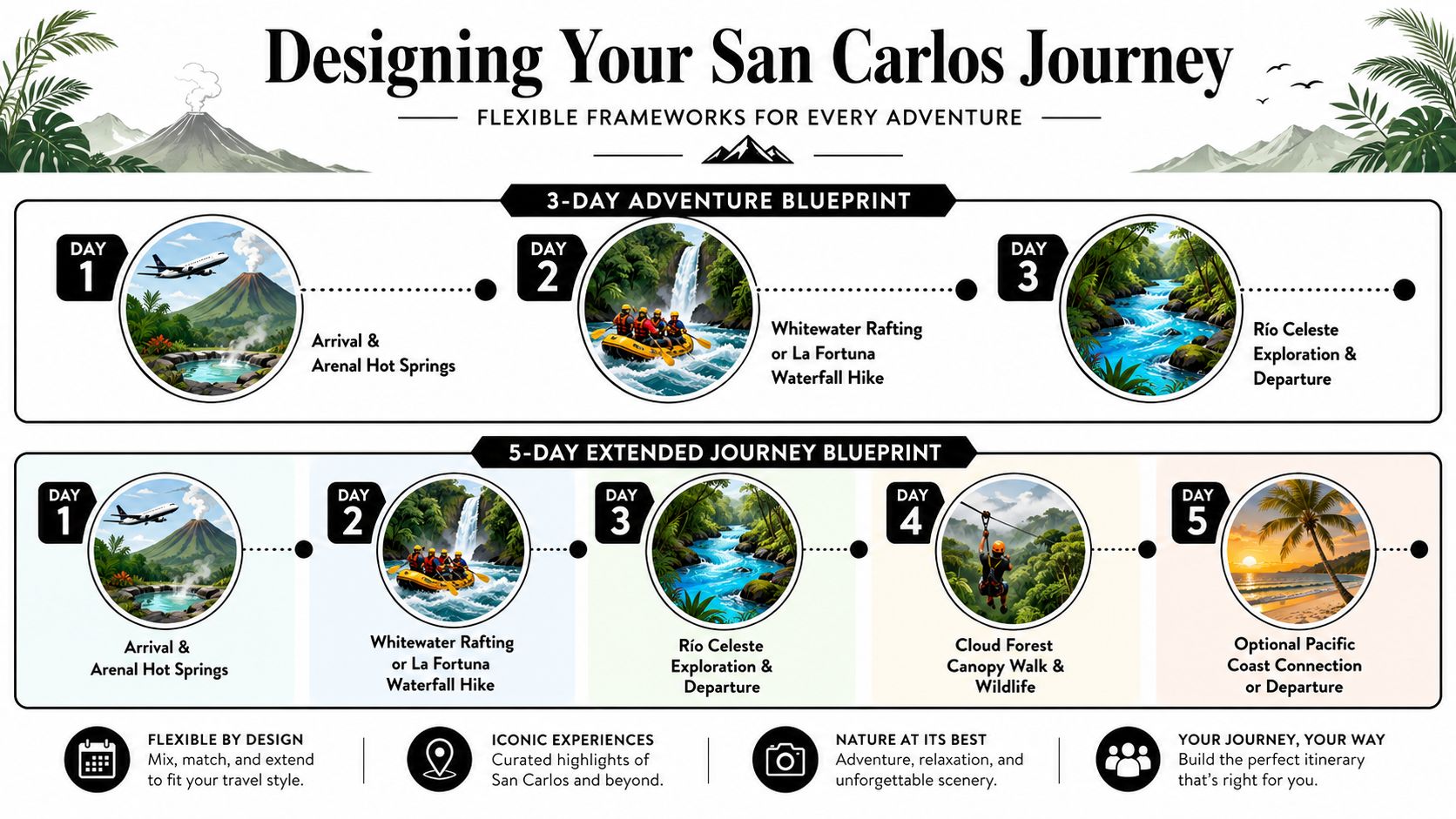
The couple's reset
This works best over four to five nights. Shorter stays can still be lovely, but they often become transfer-heavy.
Start with one arrival day built around rest, a good meal, and thermal water rather than a tour. On the next day, choose one signature outing. Hanging bridges, a waterfall hike, or a wildlife-focused excursion all work. Keep the afternoon light. On another day, add a second major experience such as Río Celeste or a guided nature walk, then preserve one unstructured late afternoon for spa time, reading, or staying in.
A good rhythm for couples looks like this:
Arrival and exhale: Settle in, soak, sleep early.
One memorable outing: Choose either adventure or scenic immersion.
One recovery window: No compulsory activity before lunch.
One special evening: Private dining or sunset-facing drinks.
Departure without rush: Avoid squeezing in a final tour.
The multi-generational family adventure
Families do best when logistics stay simple. One base is usually better than multiple hotel changes. Choose a property with enough space for everyone to decompress, then build the itinerary around broad-appeal activities.
The reliable combination is one water-based day, one wildlife or canopy day, and one low-demand day with pools, casual meals, and optional short excursions. Children and grandparents rarely need the same thing at the same pace, so the goal is overlap, not uniformity.
Families remember the moments between activities as much as the activities themselves. Build in afternoons that don't need a ticket.
A flexible family blueprint might include:
Day one: Arrival, pool, early dinner
Day two: Safari float or gentle guided nature outing
Day three: Hot springs and relaxed lunch
Day four: Optional zip-line for some, spa or garden time for others
Day five: Waterfall or scenic drive, depending on energy
The wellness immersion
This isn't about doing less for the sake of it. It's about choosing experiences that restore attention. A wellness-focused San Carlos stay works well over five to seven nights, especially for travelers emerging from a demanding season of work or life.
The best pattern is alternating activation and recovery. Hike one morning, rest the next. Book bodywork after physical outings, not before. Keep at least one meal per day unrushed and offline. If your hotel or retreat offers movement classes, use them selectively rather than turning the stay into a performance of health.
A simple blueprint:
Day range | Focus | Best use |
|---|---|---|
Days 1 to 2 | Arrival and nervous-system downshift | Thermal water, sleep, light movement |
Days 3 to 4 | Nature immersion | Waterfall, forest walk, scenic outing |
Day 5 | Open space | Journaling, massage, reading, pool |
Days 6 to 7 | Integration | One final excursion, slower departure |
The 3-day versus 7-day decision
Three days can work if San Carlos is one stop within a wider Costa Rica itinerary. Focus on two core experiences and don't overreach. Seven days works when the goal is a deeper reset, especially for couples, creators, small private groups, or brands hosting community gatherings in a nature-rich environment.
The main planning mistake is assuming every day must be “worth it” through visible activity. In this region, value often comes from protecting space. A late breakfast with a volcano view can be more restorative than a fourth booked excursion.
The Pacific Contrast Pairing San Carlos with a Southern Stay
After four or five days in San Carlos, many travelers hit a useful threshold. They have had the volcano views, the thermal soaks, the forest activity, and the weather that changes by the hour. At that point, the smartest next move is often not another inland stop. It is a shift south, where the trip can breathe differently.
That contrast is what gives a Costa Rica itinerary shape. San Carlos is dense and immersive. You wake early for birds, watch clouds close over ridgelines, and plan around rain, transfers, and excursion timing. The southern Pacific slows the tempo. The horizon opens up. Afternoons stretch. Dinner matters more than departure times.
Why the pairing works
The value is not just mountain versus beach. It is what each region does to your pace and attention.
San Carlos is strong at engagement. You move, explore, recover, and repeat. The southern coast is strong at absorption. It gives travelers space to process the first half of the trip instead of racing into another round of logistics. For couples, that usually means adventure first and intimacy second. For private groups, it means shared structure up north and more natural social time by the sea. For retreat hosts and brand planners, it creates a cleaner emotional arc.
The best two-stop itineraries feel deliberately sequenced, not stacked.
How to connect the two regions without wasting a day
This transfer is longer than many travelers expect, so the choice matters. A self-drive works for guests who like flexibility, are comfortable with rural roads, and do not mind giving one day of the trip to transit. A private transfer is usually the better call for shorter itineraries, anniversary trips, or anyone who wants to arrive rested rather than manage directions, weather, and stops. Charter flights can make sense for small celebratory groups or travelers protecting limited time, but only when schedules align cleanly with the rest of the itinerary.
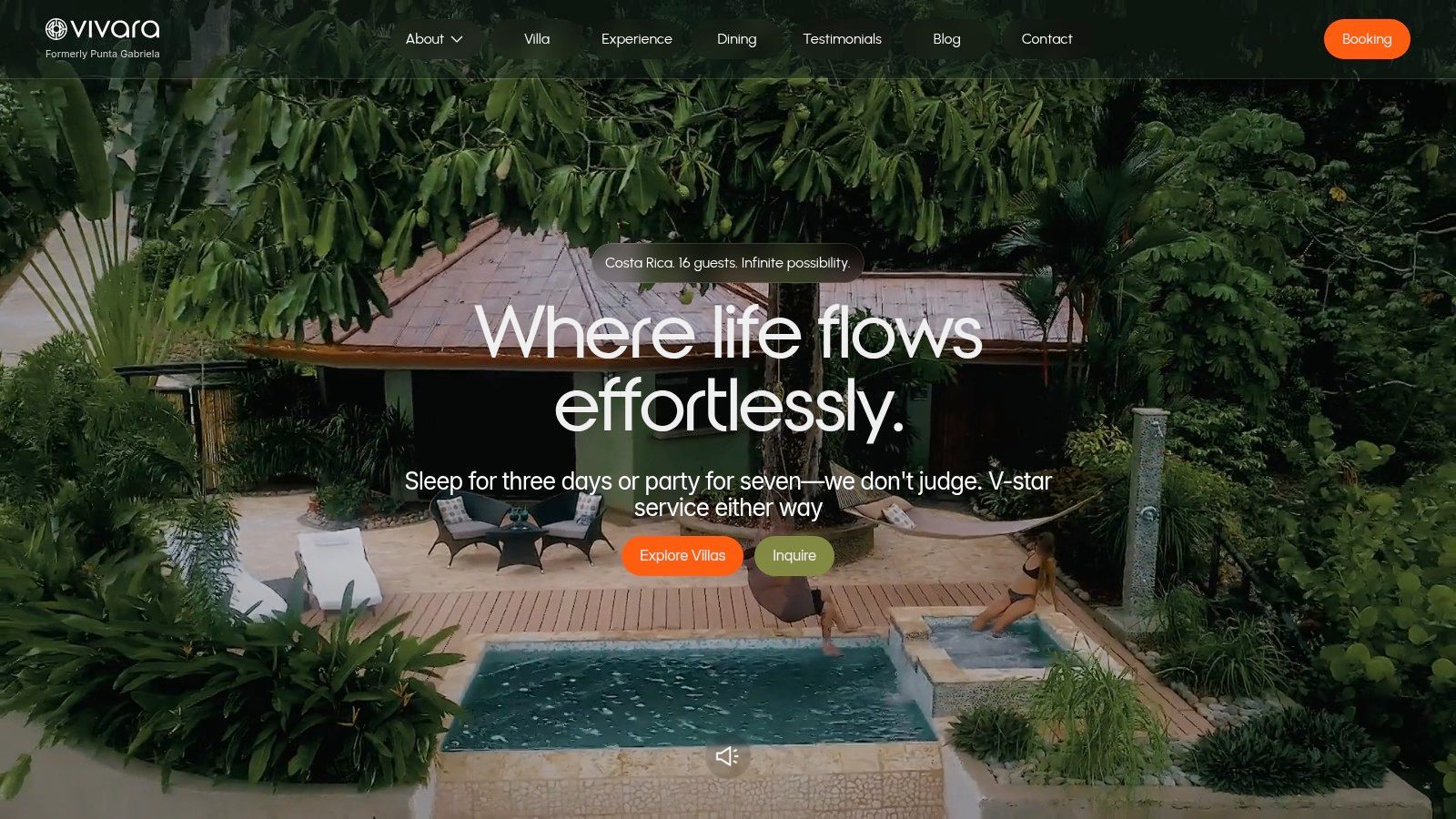
Where you stay on the southern Pacific side matters just as much as the transfer itself. After Arenal traffic, tour schedules, and the steady movement that San Carlos invites, a more private coastal property often lands better than a busy beach strip hotel. The goal is not to repeat the same style of luxury in a second setting. It is to change the feel of the trip. More privacy. More stillness. More room for long meals, ocean air, and unstructured time.
That is why this pairing works so well for travelers who want Costa Rica to feel transformative rather than merely full. One region wakes you up. The other lets the experience settle in.
Logistics and Local Insights For a Seamless Trip
San Carlos rewards good planning. It also exposes weak planning quickly. The region is large, weather patterns can shift your timing, and not every pretty hotel location is practical for the experiences you want.
Transportation choices that actually work
A rental car gives you freedom, especially if you want to dine outside your hotel, explore at your own pace, or connect multiple zones. It's often the right move for confident drivers and families who don't want to coordinate every transfer.
Private shuttles work better for couples on shorter stays, celebration groups, and travelers who want the trip to feel easy from the start. If your priority is rest, not control, outsourcing ground logistics is worth it.
Dining and regional character
Quesada, the main town within the canton, had a population of 42,060 in 2011 and serves as the primary administrative and commercial center, while the local dairy industry produces about 65% of the milk consumed in Costa Rica, according to this Quesada overview. You feel that agricultural identity across the region. This isn't only a tourism setting. It's a working one.
That's why some of the best meals aren't in the flashiest rooms. A polished resort dinner can be excellent, but don't ignore well-run sodas and farm-connected restaurants when you want food that feels more rooted in the region.
The planning point guidebooks usually miss
For long stays, retirement scouting, or travelers with meaningful medical considerations, healthcare access deserves attention. Public health realities in northern Costa Rica can be difficult, and this matters more than most glossy destination guides admit. One reported issue tied to San Carlos Hospital described orthopedic appointment waits of up to 26 years, with some appointments scheduled between 2030 and 2052, as covered in this San Carlos travel context article. That doesn't define the visitor experience for a short leisure trip, but it should inform long-term planning and traveler expectations.
A final local consideration is environmental reality. The San Carlos basin covers 2,620 km² and shapes flood hazard patterns and infrastructure resilience in northern Costa Rica, particularly around road design and exposure, as noted in this flood hazard and resilience update. In practical terms, leave buffer time on travel days and don't build your itinerary so tightly that one weather event unravels the entire trip.
San Carlos, Costa Rica is worth doing well. Not fast, not blindly, and not as a generic Arenal box to tick. When you match the right base, the right pacing, and the right combination of nature, comfort, and intention, it becomes one of the most rewarding inland journeys in the country.
If you want the second half of your Costa Rica trip to feel as intentional as the first, VIVARA offers a compelling southern-coast complement to San Carlos. It's especially well suited to couples, families, private groups, retreat hosts, and brands that want a more intimate setting where design, nature, flexible experiences, and community impact all connect.