The Vivara Content Team
Small Destination Weddings: The Complete Planning Guide
Small Destination Weddings: The Complete Planning Guide

You are choosing between a venue you love and a guest list that keeps shrinking once flights, passports, time off, and child care enter the picture. That pressure is the true test of a small destination wedding. The ceremony may look intimate, but the decision lives in logistics, attendance, and total-trip cost.
Small destination weddings have moved into the mainstream. One industry summary estimates that destination weddings made up 17% of all weddings worldwide, with the market valued at €42.8 billion in 2024 and projected to reach €162.1 billion by 2029 (industry summary). The point is clear. Fewer guests does not make the choice smaller, it makes it sharper.
Why Small Destination Weddings Are the Smarter Choice
A couple plans a beautiful weekend in Costa Rica, then realizes the core question isn't whether the ceremony will feel intimate. It's whether the right people will get there, stay comfortably, and enjoy the trip without feeling rushed. That's where small destination weddings become strategic instead of sentimental.
Intimacy works because travel filters the crowd
Destination settings naturally trim attendance. The Knot's 2026 Real Weddings data shows hometown weddings average 123 guests, domestic destination weddings average 92, and international destination weddings average 69 (The Knot). That gap isn't cosmetic, it's operational. Travel friction, time off work, child care, and cost all reduce the number of yes responses, especially when the event crosses borders.
That's why smaller celebrations often feel more intentional. You spend less time managing distant acquaintances and more time with the people who know your story. The guest list stops being a social obligation and starts becoming a design choice.
Practical rule: if you care more about atmosphere, conversation, and shared memory than about table count, small is the right size.
The market shift backs that up. An India-focused industry report cites survey data showing nearly 55% of respondents preferred a smaller intimate wedding, and WeddingWire India found that more than 33% of millennial and Gen Z couples wanted a smaller wedding of about 100 guests (IMARC Group). That preference makes sense. Younger couples want privacy, personalization, and a celebration that feels like a lived experience, not a performance.

Less headcount usually means more clarity
Smaller groups let you make better decisions faster. You can choose a property that fits the people you care about, rather than forcing a venue to stretch for a crowd that doesn't belong there. That matters in Costa Rica, where the best experiences are often built around setting, pace, and proximity to nature, not around sheer scale.
A well-run intimate wedding also gives you more control over tone. You can make room for a long dinner, a meaningful welcome gathering, or a slow morning without worrying that half the room is stranded in a ballroom shuffle. The result feels more like a retreat with a ceremony at its center, which is exactly what many couples want now.
Understanding the Numbers Behind Intimate Celebrations
The planning mistake is assuming a smaller wedding automatically costs less. Sometimes it does. Often, the budget shifts from guest count to quality, while travel changes who can attend.
Invitation count is not attendance
For destination weddings, plan around yield, not the invite list. Industry benchmarks show that intimate destination weddings often sit in the 50 to 150 guest band, while one 2026 guide says only about 35% to 50% of invited guests typically attend (Condor Ferries). A 200-person invitation list can realistically produce a 70 to 100 person event. That is the math couples need to respect. The invite list is only a starting point.
Wedding Type | Average Invitation List | Typical Attendance Rate | Expected Guest Count |
|---|---|---|---|
Local hometown wedding | 123 | Higher realized attendance than destination settings | Close to the invite list, depending on family and local travel |
Domestic destination wedding | 92 | Lower than hometown weddings because of travel friction | Materially below the invite list |
International destination wedding | 69 | Lower still, because of border, flight, and time-off constraints | The smallest realized headcount of the three |
The table reflects the attendance pattern reported in the verified data, not a promise. Use it to size room blocks, meals, and event flow conservatively. If you overestimate attendance, you overbook space and overspend on food.
Small does not always mean low spend
A recent industry summary estimates the average destination-wedding spend at €17,924. That figure matters because destination weddings bundle travel, lodging, events, and guest experiences into one trip.
Smaller groups can reduce total headcount costs, but they often increase spend per guest. Couples usually spend more on hospitality, food, transport, and shared activities because every detail is more visible when the group is tight.
A destination wedding gets expensive when couples try to make it feel generous without being organized. Decide early what you are paying for, ceremony, meals, lodging, transport, experiences, or all of the above.
The smartest couples do not ask how to make the wedding cheap. They ask where the guest experience creates real value. In Costa Rica, that usually means choosing one strong property, limiting transfers, and putting money into food and shared time instead of scattering the event across too many vendors.
Navigating Legal Requirements and Paperwork Abroad
Legal marriage abroad is where good intentions get tangled. Couples get seduced by venue photos and then discover the hard part is not the vow exchange. It's the paperwork, lead times, and whether the legal marriage even needs to happen on site.
Decide on legal or symbolic first
For many couples, the cleanest path is to handle the legal marriage at home and hold a symbolic ceremony abroad. That choice removes a lot of friction, especially if your destination has document translation rules, notarization requirements, or ceremony restrictions. If you're working with a tight timeline or a mixed-nationality guest list, symbolic is often the sane option.
Costa Rica is one of the more straightforward examples for foreign couples. Foreigners can legally marry there without residency, and the standard 90-day tourist stamp is sufficient. The process is typically handled by a licensed Costa Rican notary, and no medical exams, blood tests, or vaccinations are required for the marriage itself (Expat.com).
Know the core documents before you commit
For foreign couples, the core documentation is usually limited to valid passports plus a sworn declaration confirming single status. Some legal guides also note that a certified birth certificate and, if previously married, divorce or death certificates may be requested, with witness requirements sometimes applying for the ceremony (Jarnia Scyril). That's manageable, but only if you start early and keep every document organized.
The decision tree is straightforward:
If you want the least stress, get legally married at home and celebrate abroad.
If you want the ceremony to be legally recognized in Costa Rica, confirm every document requirement with your planner and officiant before booking.
If you're unsure, treat the ceremony as symbolic until the legal path is verified in writing.
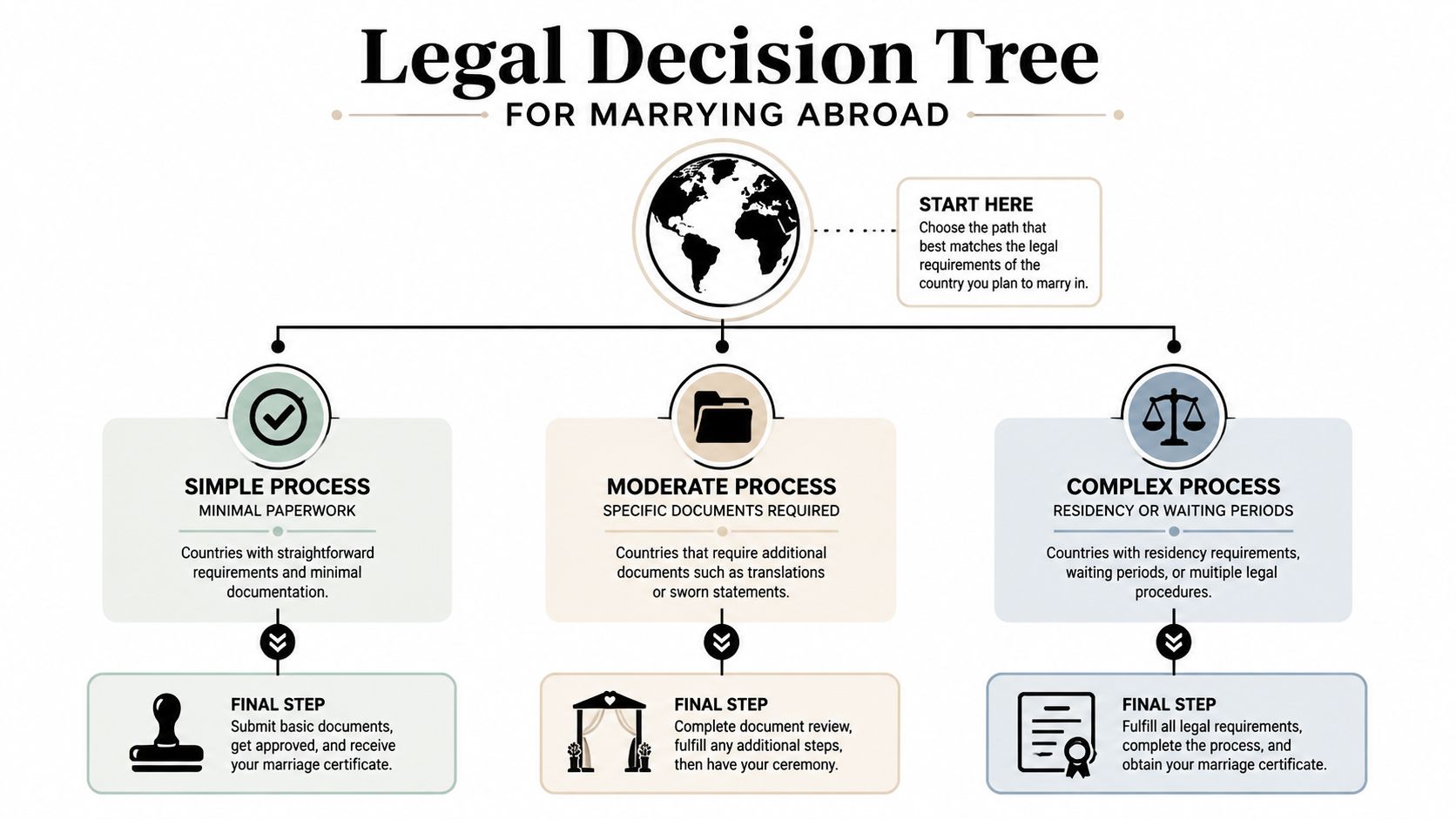
Most high-level wedding content glosses over this part, but it's where trips succeed or fail. If your destination makes legal marriage simple, great. If not, don't force it. The symbolic ceremony is still a real ceremony when the planning is good and the experience is thoughtful.
Choosing the Right Venue Format for Your Group
Venue type shapes everything, privacy, guest flow, vendor control, and how relaxed the weekend feels. For small destination weddings in Costa Rica, the question isn't “Which venue is prettiest?” It's “Which format matches the way your group behaves?”
Compare the formats before you fall in love
Resort buyouts are useful when you want coordination to be centralized and you don't want to manage every moving part. The downside is obvious, they can feel less intimate and often cost more because you're paying for convenience at scale. That trade-off works for couples who want one-point contact and a familiar hospitality structure.
Private villa rentals give you the most control and the most flexibility. You can design the weekend around your own rhythm, but you'll need to source more vendors and keep a closer eye on logistics. This format works well for couples who are comfortable making decisions and want the event to feel like a private home gathering rather than a hotel program.
Boutique retreat properties sit in the middle. They usually bring curated design, built-in charm, and a stronger sense of place, but capacity can be limited and package structure may be fixed. That's not a problem if your guest list is tight and your priorities are clear.
Hybrid formats try to combine the best parts of both. They can be excellent for groups that want privacy and amenity, but they're also the most complex to coordinate. More moving parts means more chances for something to slip if the venue team isn't strong.
If you're looking at a property like VIVARA's intimate wedding venue, the key question is whether its scale and service model match your group size and the level of control you want over the weekend.
What to ask before you sign: Who handles vendor coordination, what's included in the buyout, how many private spaces guests actually have, and what restrictions apply to music, catering, and ceremony timing.
Red flags in the contract
Watch for hidden minimums, vague overtime language, and unclear cancellation terms. Those are the clauses that turn a beautiful property into a budget problem later. If the proposal doesn't spell out food, staffing, setup, and guest accommodation boundaries, keep asking until it does.
For intimate groups, the best venue is rarely the one with the loudest marketing. It's the one that can hold your people comfortably without forcing you into a template.
Building a Realistic Planning Timeline and Checklist
Destination weddings punish late planners. Travel, vendor coordination, legal paperwork, and guest decisions all take longer than people expect, and they don't wait for your emotional readiness.
Start earlier than you think
Twelve to eighteen months out, secure the venue and the main date. At that stage, you're not decorating, you're claiming the calendar and making sure the property fits your guest profile. If you already know your weekend will be intimate, say so early, because a venue designed for a different scale will waste your time.
Ten to twelve months out, send save-the-dates and book core vendors. That's also the moment to align with a local planner who knows the destination well enough to spot bad assumptions before they become expensive. Couples who wait for inspiration before locking logistics usually pay for it later.
Six to nine months out, handle legal paperwork and travel planning. Use this window to confirm whether the ceremony is legal or symbolic, finalize guest room blocks, and answer the questions your family will start asking anyway. Two weeks before departure, confirm every booking, collect arrivals, and pack the materials you can't easily replace abroad.
The checklist that matters looks like this:
Venue and date: lock first, because everything else depends on it.
Guest communication: tell people early whether the trip is expected, optional, or family-only.
Legal documents: verify requirements in writing, never by assumption.
Travel timing: coordinate around the guests who need the most notice.
Rehearsal logistics: keep it simple enough that no one needs a printed manual.
The VIVARA vow renewal guide is a useful reference if you're comparing ceremony formats, especially when you want a low-friction event that still feels intentional.
A good timeline isn't about doing more. It's about removing avoidable surprises before your guests buy flights.
Designing Multi-Day Experiences Beyond the Ceremony
A small destination wedding earns its keep when the whole trip feels worth taking, not just the ceremony hour. That doesn't mean you need a packed schedule. It means the weekend should create real shared time without exhausting anyone.
Build around one or two anchor moments
Start with a welcome dinner or casual first-night gathering. That gives guests a low-pressure way to reconnect, especially when people arrive from different places and don't all know each other well. Then choose one group activity that reflects the destination, not your own to-do list.
In Costa Rica, that could mean adventure for one cohort and restoration for another. Some groups want zip lining, canyoning, horseback riding, or a whale-watching outing. Others want a slower rhythm, with wellness sessions, a private meal, or time near the water. The destination should make those options feel easy, not forced.
Protect downtime on purpose
The biggest mistake is over-programming. Guests need free time to rest, socialize, or step away with family, and older relatives often appreciate that more than another excursion. A good itinerary has clear anchor events, but it leaves room for people to choose their own pace.
Here's the structure I like for intimate groups:
Arrival day: easy welcome, drinks, and informal introductions.
Main celebration day: ceremony, dinner, and a clean transition into dancing or conversation.
Departure day: brunch or a relaxed closing meal.
That format works because it respects different energy levels. It also turns the wedding into a shared retreat experience, which is where destination events become more memorable than local ones.
Small groups are especially good for this kind of weekend because the logistics stay human. People aren't waiting in line to be entertained. They're spending time with each other, which is the whole point.
Why Costa Rica Delivers for Intimate Wedding Groups
A small Costa Rica wedding works because the country keeps the logistics manageable while still giving guests real variety. You can build a weekend around nature, wellness, and adventure without asking people to survive a complicated trip.
The country already supports wellness-led travel
Costa Rica has built a strong reputation around wellness travel, and tourism coverage points to steady growth in that space (TicosLand). A neutral tourism publication also places the country squarely within wellness-focused travel, backed by its nature-first appeal (Turismo de Bienestar en Costa Rica). That matters because a wedding weekend is a hospitality operation as much as a celebration, and Costa Rica already has the settings, vendors, and guest expectations to support it.
It fits mixed groups better than many tropical destinations
Costa Rica makes sense when your guest list includes hikers, spa people, parents, and older relatives who want beauty without chaos. One guest can take a canopy or coastal outing, while another keeps the day quiet with a massage, a good meal, and a view. That kind of split keeps attendance higher because people can opt in without feeling trapped by the schedule.
The country also works well for intimate hospitality. Boutique properties, outdoor dining, and nature-forward programming fit the format. For couples who want the weekend to feel restorative instead of overproduced, that is a real advantage.
If you are comparing formats, the Costa Rica wedding resorts guide helps you sort out which properties support a small group, rather than just looking pretty in photos. A resort is not required, but the venue must match the way your guests will move, eat, and stay together.
Costa Rica is scenic, yes. More important, it is built for small weddings that depend on easy transfers, flexible downtime, and a guest experience people will say yes to.
Your Next Steps to Start Planning with Confidence
Stop shopping for inspiration and start making decisions. Before you contact venues, answer three questions clearly. How many people are likely to attend, what kind of paperwork burden are you willing to carry, and do you want the weekend to feel like a celebration, a retreat, or both?
Then spend your first 30 days on the basics. Tell family what size of guest list you're planning, hire a local planner if you're going abroad, and compare venue proposals by what's included, not just by photos. If a proposal is vague, it's not ready.
The right property should feel like a fit for your people, not just your taste. If you want a small destination wedding that's private, experience-led, and grounded in Costa Rica's natural beauty, make the next conversation about logistics, service, and how the weekend will run.
VIVARA in Dominical is built for intimate gatherings, with private-group stays for up to 14 guests, personalized experiences, and full-estate buyout options that suit small weddings and retreat-style celebrations. If you want a Costa Rica setting where nature, food, and guest experience are treated as one event, visit VIVARA and start comparing whether the property fits the weekend you want to host.

