The Vivara Content Team
Canyoning Costa Rica: A Complete Guide for Travelers
Canyoning Costa Rica: A Complete Guide for Travelers

You're probably weighing two very different instincts right now. One says to book the waterfall day because it sounds unforgettable. The other says to keep the itinerary flexible because nobody wants a beautiful adventure to turn into a logistics headache.
Both instincts are right. Canyoning in Costa Rica is one of those activities that looks simple on a booking page and becomes very specific once you care about comfort, pace, weather, and who's in the group. If you're planning a couple's escape, a multigenerational trip, or a retreat with room for both rest and adrenaline, the question isn't whether canyoning is worth doing. It's which version of it fits your trip, your tolerance for wet rock and vertical space, and your appetite for uncertainty.
A First Look at Canyoning in Costa Rica
The best way to understand canyoning is to stand at the lip of a waterfall and feel the guide count you down. Your helmet brushes the rock wall, water hammers the harness, and the rope takes your weight as you lean back into the drop. In that moment, canyoning Costa Rica feels nothing like a hike, a zip line, or a rafting run. It's vertical, wet, and completely decision-based, which is why it stays memorable long after the day ends.
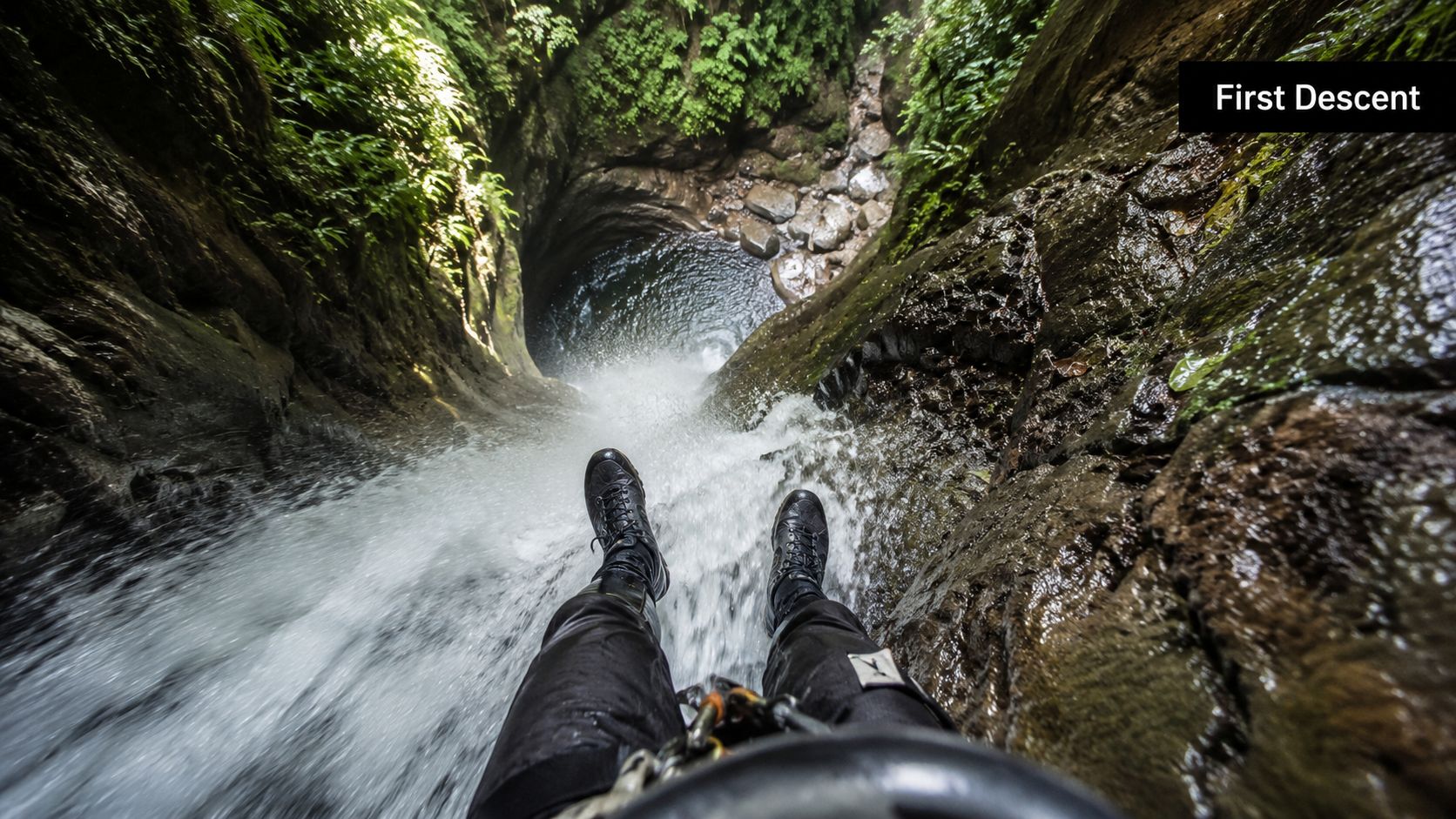
Two common styles define the country's canyoning scene
Costa Rica's better-known format is waterfall rappelling in rainforest river canyons, especially around the northern tourism corridor. That's the version many travelers picture first, and it's the one that has become a standard, bookable product in the Arenal and La Fortuna area, where descents commonly reach up to 60 m (195 ft) and tour pricing clusters around US$105–US$119 per person for canyoning-plus-adventure packages, according to Arenal tour pricing and route descriptions from the region's operators and guides (Arenal tour details). The structure is approachable, usually built around 3 to 5 rappels, moderate hiking, and guided technical descent.
A second style shows up in higher, cooler terrain, where the descents feel longer, more technical, and more alpine in character. That difference matters because it changes everything, from the pace of the day to the kind of traveler who should book it. If you want a calm, curated adventure that still gives you a real jolt, the waterfall format is the smarter choice. If you want a harder physical outing with a stronger edge, the more technical canyons are the better fit.
My rule: If you're bringing mixed ages or mixed fitness levels, choose the version with the clearest logistics and the shortest transfer. The scenery is only enjoyable when the day runs smoothly.
What Canyoning Actually Involves
Canyoning is basically a controlled way of moving through a canyon where rope work matters as much as the natural scenery. In Costa Rica, the clearest entry point is waterfall rappelling, because it shows the activity in its most accessible form. You're not just walking to a viewpoint, you're descending through a moving water system with a guide managing safety, timing, and technique.
The usual sequence
A good operator starts with gear fitting, not with the first drop. You'll get a helmet, harness, gloves, and often a wetsuit, and the guide should check that each piece sits correctly before anyone leaves the staging area (gear and safety briefing). After that comes a dry-land briefing, where you learn how the rope works, how to keep your body angled, and how to brake.
Then the day unfolds in a pattern: a short hike into the canyon, a rappel down a waterfall, a transition through pools or stream beds, and then the next descent. One guide describes the terrain as more than just a rope line, because you're also walking slippery canyon and stream beds, which makes the outing more demanding than rappelling alone (terrain and effort). That's accurate. The effort is not upper-body strength. It's balance, trust, and the ability to follow instruction while standing on wet rock.
Why technique matters more than brute force
On rope, the key skills are controlled descent, edging, and brake-hand control. Guides may add safety lines or belays depending on the route and the guest's comfort level. None of this should feel theatrical. It should feel methodical.
Related activities help define the category by contrast. Hiking gets you to a viewpoint. Zip lining gives you speed across distance. Rafting moves through water horizontally. Canyoning does all of that's vertical version, and that's why it feels so intimate. You're inside the canyon, not observing it from a trail above.
The best first-timer tours make the technique feel simple without pretending the terrain is simple.
Where to Go for the Best Canyoning
If you're choosing where to base yourself, don't ask only where canyoning exists. Ask where the day fits naturally into the rest of your trip. That's the ultimate test for affluent travelers, because a canyoning outing should feel like a cleanly planned part of the itinerary, not a long transfer bolted onto a random morning.
Regional character changes the whole experience
Dominical and the South Pacific suit travelers who want a warm, family-friendly canyon day with easy access from beach stays and boutique lodges. The terrain tends to feel welcoming rather than punishing, which is why it works well for beginner-to-intermediate guests and mixed-age groups.
Arenal and La Fortuna are the most straightforward choice for travelers who want a half-day adventure with strong infrastructure, hot springs nearby, and plenty of lodging options. This region is also where canyoning has become especially standardized, with packaged tours, repeatable routing, and accessible waterfall rappels in the local market (Arenal tour details).
The Central Highlands around Turrialba lean more technical and alpine-feeling. Choose this zone if your group wants a longer, more serious descent and doesn't mind that the day reads more like an expedition than an easy add-on.
Monteverde has fewer canyoning-focused options, though some operators combine canyoning with other activities. The Nicoya Peninsula and Caribbean side offer limited choices, so I wouldn't build a canyoning-centered trip around them.
Canyoning Regions at a Glance | Terrain Style | Best For |
|---|---|---|
Dominical and South Pacific | Warm rainforest canyons, approachable descents | Families, beginners, mixed groups |
Arenal and La Fortuna | Waterfall rappels near lodges and hot springs | First-timers, couples, half-day planners |
Central Highlands around Turrialba | Longer, more technical canyon lines | Stronger hikers, experienced adventure travelers |
Monteverde | Fewer dedicated options, occasional combo tours | Travelers already based in the cloud forest |
Nicoya Peninsula and Caribbean side | Limited access and fewer established routes | Only if canyoning is a secondary goal |
VIVARA's location near Dominical is a real logistical advantage for travelers who want canyoning without turning the day into a transfer marathon. That proximity matters more than headline pricing when you're planning for comfort, timing, and group energy. For travelers comparing nature-based outings, waterfall hikes can also complement the canyon day without repeating it.
Difficulty Levels and Who Each Route Fits
Not every canyon is built for the same traveler, and pretending otherwise is how people end up wet, tense, and slower than the group. The right move is to match the route to the least comfortable person in your party, not the bravest one. That's especially important for families, couples traveling with parents, and groups mixing hikers with non-hikers.
Three honest tiers
Beginner waterfall rappels usually feature shorter drops, lighter swimming, and simple footing. These are the ones that make sense for cautious first-timers and older kids, and they're often the most polished in terms of guide rhythm and pacing.
Intermediate multi-rappel canyons demand more comfort on rope and more tolerance for repeated transitions between descent, walking, and water. These are the trips that ask for stronger swimming confidence and a better head for heights, because the day feels more sustained.
Advanced full-day expeditions are for travelers who want a more serious physical outing. The vertical exposure is greater, the swims are longer, and the pace is less forgiving. If the group is even slightly hesitant, skip this tier.
Canyoning Difficulty Tiers at a Glance | Rappel Height | Fitness Level | Minimum Age | Swimming Required | Best For |
|---|---|---|---|---|---|
Beginner | Lower to moderate drops | Light to moderate | Typically 8 to 12 depending on operator and route (age benchmark) | Limited | Families, first-timers, cautious travelers |
Intermediate | Mixed descents, often including longer walls | Moderate | Usually in the same 8 to 12 range depending on operator and route (age benchmark) | Yes | Active couples, confident beginners |
Advanced | Longer, more exposed descents | Strong | Usually older teens or adults, route dependent | Yes, sustained | Experienced adventure travelers |
What actually makes a route feel hard
The hard part is usually not the rappel itself. It's the slippery terrain, the wet rope, and the mental adjustment of leaning back over space. Hard basalt and softer ash layers shape the canyon walls in the Arenal area, which helps create stable anchors and predictable rappel geometry (volcanic geomorphology), but the rock is still wet and often slick. That's where most slowdowns happen.
Be honest about injuries. Recent shoulder problems, back issues, or a real fear of heights should rule out anything aggressive. If the operator's harness range or route limits don't fit your body comfortably, choose a gentler day. A good guide wants a calm descent, not a dramatic rescue story.
When to Go for the Experience You Want
The common advice says canyoning is available year-round. That's true, but it's lazy advice. The primary decision is whether you want reliability or intensity, because those are not the same thing in Costa Rica.
Dry season rewards certainty
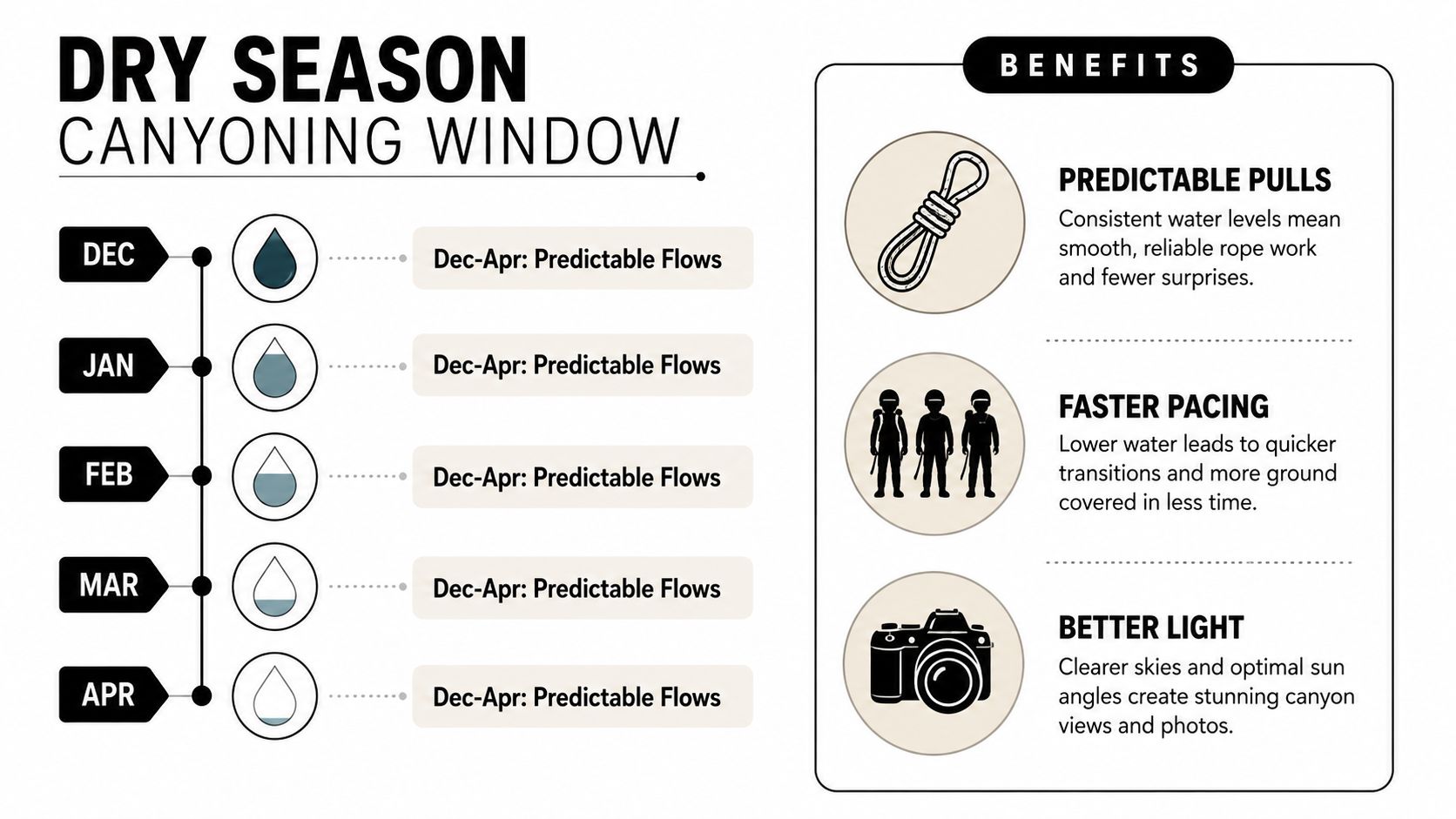
Costa Rica's dry season runs roughly from December to March or April, according to official climate guidance (climate overview). That's the window when ropes feel more predictable, group pacing tends to move faster, and the canyon is usually easier to photograph because the light is cleaner and the water is calmer. For luxury travelers, especially those planning around weddings, family reunions, or once-a-year retreats, this is the safest scheduling choice.
December and January are especially popular because the trails are driest and demand is high. If you want the calmest operational conditions, aim for January through March.
Green season brings drama, but also more variables
The green season runs roughly from May through November, with September and October typically the wettest months in the Pacific region (climate overview). During that period, waterfalls can be more dramatic. One Costa Rica travel source notes that green-season canyoning can bring 60% to 80% more waterfall volume, which is exactly why the experience feels so cinematic (seasonal waterfall volume). The tradeoff is real, though. Water clarity drops, route closures become more likely when flows turn unsafe, and the day can change at short notice.
Official U.S. government guidance also flags Costa Rica's rainy season as a period with added travel risk, and operators respond by checking weather conservatively, rescheduling when needed, or closing routes outright during extreme conditions (rainy-season safety guidance). If you're traveling with guests who hate uncertainty, book canyoning early in the trip so you have room to move it if needed. I'd reserve the late-wet months for return travelers who want the more dramatic version and don't mind flexibility.
For readers comparing seasonality in broader trip planning, the green season guide is worth reading alongside the canyoning date.
What to Pack and What Your Operator Should Provide
A good canyoning operator should handle most of the technical load. That's essential. You should show up ready to move, but not burdened with gear decisions that belong to the guide team.
What should be waiting for you
A reputable outfitter provides the core safety kit: wetsuit or rash guard, helmet, harness with descender, neoprene socks, and gloves, plus a proper fit check before the descent begins (operator gear checklist). If the team is vague about gear or rushes the fitting, that's a warning sign.
What you should bring
Quick-dry swimwear: Wear it under the suit so you're not changing in layers before the hike.
Secure footwear: Choose shoes with a heel strap. Skip Crocs and skip bare feet.
A dry bag for valuables: Keep your phone, room key, and small items protected.
Reef-safe sunscreen: Put it on before departure, not after you're already soaked.
A dry change of clothes: Leave it in the vehicle for the return.
Cotton is the mistake I see most often. It stays wet, gets heavy, and makes the post-tour ride back feel longer than it is. If you want photos, ask about helmet or chest mounts for your GoPro. Handheld cameras don't make sense when both hands need to stay on rope.
If you wear glasses, sort that out before the tour. A sport strap helps, and daily lenses are even simpler if you're comfortable with them. Bring water too, because a half-day outing should still leave you thinking clearly, not dragging through lunch.
Choosing the Right Operator or Private Experience
This is the section where most travelers should be more picky, not less. A canyoning day can look identical online while feeling completely different on the ground. Differences are guide quality, flexibility, and how well the operator handles weather, pacing, and nervous guests.
What separates solid operators from careless ones
Look for international rope standards, local permits, transparent equipment, and clear pre-rappel briefings. A serious company should let you inspect harnesses, helmets, and descenders before anyone suits up. It should also explain hand signals, belay logic, and what happens if one guest wants a slower pace.
Group tours are fine when the route is straightforward and the travelers don't mind a fixed schedule. Semi-private runs work better for couples or families who want a bit more control without booking an entire day privately. Fully private experiences make the most sense when the group has mixed comfort levels, a special occasion, or a strong preference for pacing.
Ask the operator what happens if someone freezes at the lip of the rappel. The answer tells you more than the website copy does.
If you're comparing options in Dominical or the South Pacific, proximity matters as much as price. A short drive keeps the whole day smoother, which is especially important for guests who'd rather spend energy on the canyon than on the transfer.
Questions worth asking before you pay
How many rappels are included? You want to know whether the route is compact or drawn out.
Can the route change if someone tires early? Good operators can adjust.
What's the weather cancellation policy? If the answer is fuzzy, keep looking.
Do you have age cutoffs per rappel? Families need this in writing.
What about non-participants? That matters for multigenerational trips.
For travelers exploring a guided option, canyoning and rappelling experiences are worth comparing against other private adventure formats. One practical option in Dominical is VIVARA, which offers guided canyoning and rappelling as part of a broader retreat stay, along with transportation, photos, and a route built around waterfall descents, natural pools, rock slides, and cliff jumps.
Building Canyoning Into a Longer Costa Rica Stay
Canyoning works best when it's not trying to carry the whole trip. Treat it as one strong, high-energy day inside a wider rhythm of rest, good food, and quieter nature time. That's how it stays exciting instead of exhausting.
Put the rappel in the middle of the stay
I'd book canyoning after the first day or two, not on arrival day. Guests are usually better when they've slept once, adjusted to humidity, and settled into the pace of the property. That timing also gives you room to move the activity if weather changes.
The cleanest pairing is a canyoning morning followed by a lighter afternoon. Think spa time, a slow lunch, a beach walk, or quiet downtime at the lodge. For travelers staying in Dominical, surf mornings, jungle rest, and a later dinner work especially well because they let the body reset after a wet, active outing.
Make the day serve the trip, not dominate it
If you're planning a retreat or a milestone getaway, the value is in contrast. One intense vertical descent feels stronger when it sits beside stillness, ocean air, and good meals. That's also why canyoning is a smart community-builder for brands and teams. Shared risk, clear instruction, and a visible finish line create fast bonding without forcing a manufactured workshop vibe.
A thoughtful itinerary leaves space for weather pivots too. If rain pushes the canyon day back, you still have beach time, wildlife drives, sunset sailing, or a long lunch to protect the value of the day. That flexibility is the ultimate luxury.
If you want a private, nature-rich base in Dominical where canyoning can sit inside a larger retreat week, VIVARA is built for exactly that kind of pacing. Come for the vertical thrill, stay for the slower hours around it.
Book the canyon day only after you've decided what kind of experience you want, calm and reliable or wetter and more dramatic. If you're planning a retreat, family gathering, or milestone trip in Dominical, VIVARA gives you a base where canyoning fits naturally beside better meals, slower afternoons, and time together that doesn't feel rushed. Visit VIVARA to plan a stay that balances adventure with recovery, and build the canyoning day into an itinerary that supports the rest of your trip.

