The Vivara Content Team
Green Season in Costa Rica: What It Really Means
Green Season in Costa Rica: What It Really Means

Most advice about green season in Costa Rica is lazy. It treats rain like a cancellation notice, when it's actually much more useful for serious travelers. It's the country's most flexible, most atmospheric, and most underrated travel window if you know where to go and how to plan around the weather.
Costa Rica's green season is the rainy season, typically May through November on the Pacific side, with mornings often clear and showers arriving later in the day, not all day long (My Costa Rica). That matters because the country isn't built around four classical seasons, it's built around a dry season and a green season, and the tourism industry uses that word for a reason. The scenery gets dramatically lusher, the pace slows, and a smarter traveler gets more room to breathe.
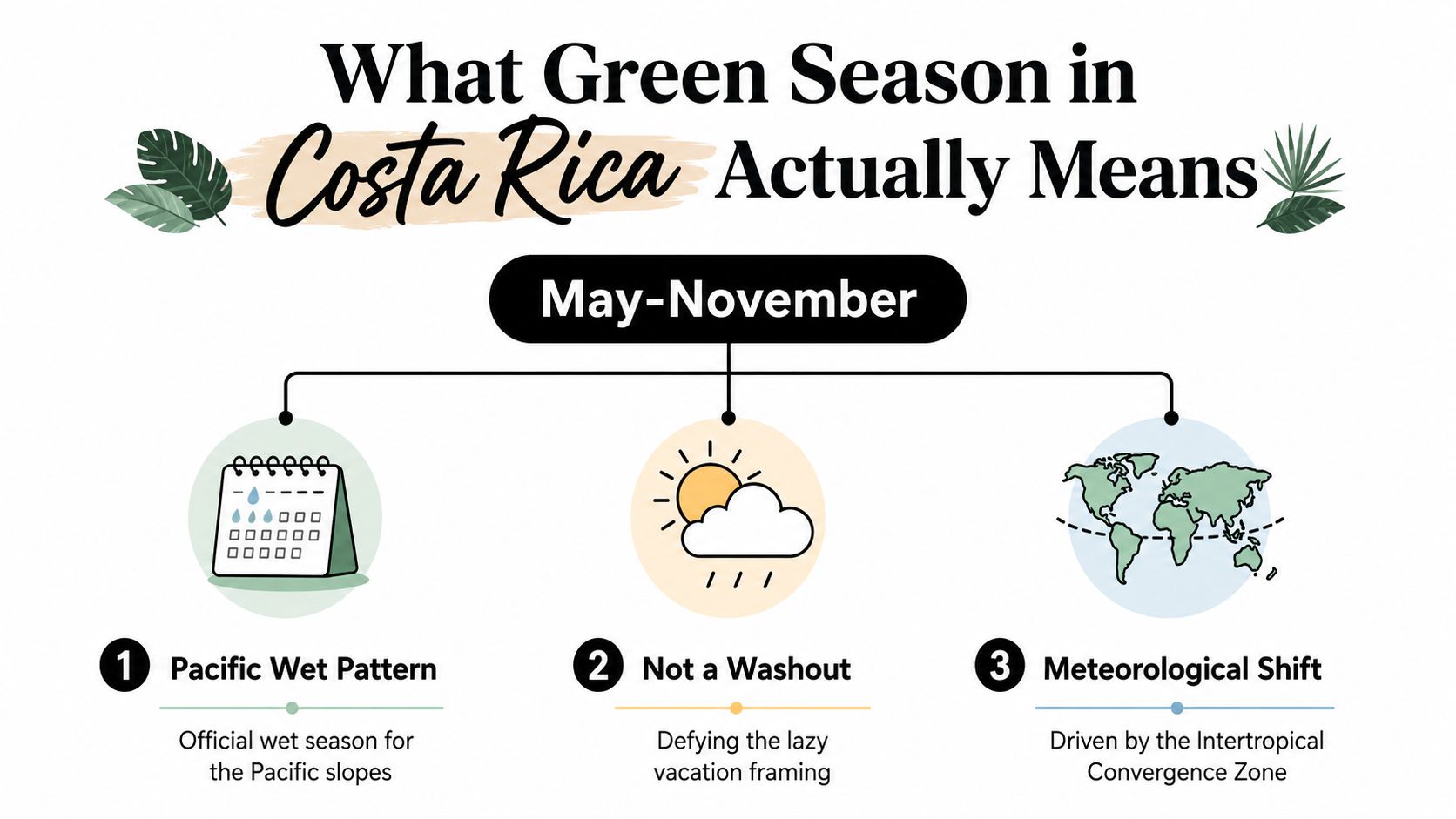
What Green Season in Costa Rica Actually Means
The phrase sounds softer than “rainy season” because that's the point. It's a tourism framing, but it's not a lie. On the Pacific side, May through November is the wet stretch, and the pattern is usually predictable enough to work with, not fear, because rain often builds later in the day while mornings stay usable for hikes, surf checks, transfers, and wildlife viewing (Visit Costa Rica).
The weather is the point, not the problem
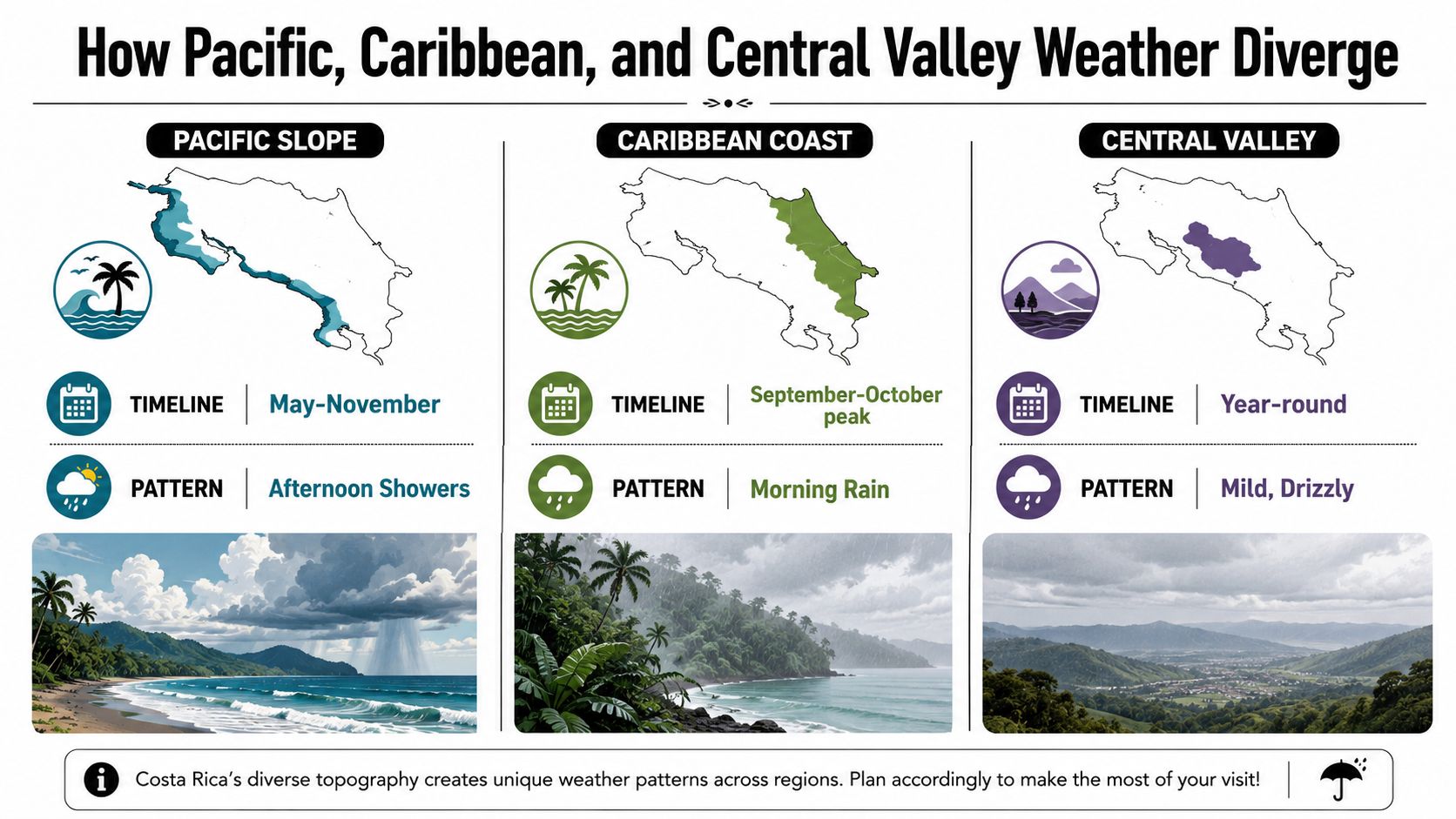
The lazy assumption is that green season means you lose the day. In practice, what you lose is the illusion that every day should behave like a beach postcard. What you gain is a country that looks alive, with fuller rivers, heavier canopy, and a much easier pace to design around. The Pacific side is the place many refer to when they talk about green season, while the Caribbean coast and the Central Valley run on different rhythms altogether, which is why one-country weather advice keeps failing travelers.
Practical rule: if you can start early, stop pretending rain is a full-day event, and treat afternoons as a flexible window, green season stops feeling like a risk and starts feeling like an advantage.
The climate driver is seasonal moisture and atmospheric heating, and the result is the same every year, the country tips into its wetter half. That's exactly why the term matters for retreats, not just tourists. It shapes occupancy, guide availability, wildlife movement, and the quality of shared experiences at boutique properties.
The best travelers use the label correctly
Green season isn't a discount code. It's a planning signal. If you want fewer people around you, softer light, and a more intimate pace, this is the season that rewards you. If you want dry, predictable beach days from breakfast to sunset, you're asking the wrong part of the calendar to perform.
The cleanest way to think about it is this, green season in Costa Rica is when the country becomes more textured and less crowded, which is exactly why experienced travelers stop calling it a drawback.
Month-by-Month Weather and Travel Conditions
Don't treat the season as one flat block. May, June, July, August, September, October, and November each behave differently, and that's the part miss when they book on instinct instead of timing.
Month | Avg. Rainfall (Pacific) | Typical Rainy Days | Crowd Level | Best Use |
|---|---|---|---|---|
May | Qualitatively lighter than later months | Fewer than peak season | Low | Shoulder travel, first green landscapes |
June | Building rain | More frequent afternoons | Moderate-low | Beach plus flexible outdoor plans |
July | Brief drier spell known as veranillo | Some relief in the wet pattern | Moderate | Surf, family trips, active itineraries |
August | Heavy Pacific rain | Frequent afternoon showers | Low | Value-driven stays, surf, privacy |
September | Heaviest Pacific period | Most consistently wet | Very low | Solitude, wildlife, strong surf windows |
October | Peak wet stretch on the Pacific | Frequent rain systems | Very low | Caribbean side focus, slower retreat pacing |
November | Transition back toward dry season | Variable, tapering late in the month | Low to rising | Late-season value, flexible departures |
The month that usually makes the sale
May is the cleanest entry point for people who want greener scenery without the full late-season intensity. It's the month when skeptical guests often realize the country is not shutting down, it's just changing tempo. By June and July, the afternoon rain pattern is more reliable, but there's still plenty of daylight to build a real trip around.
July also gives you a local break in the weather, the veranillo, or little summer, which often makes it easier to thread outdoor activities into a luxury stay. August and September are the stretch you choose when you want to be alone, or nearly alone, and when surf conditions and privacy become the bigger draw than beach-perfect predictability. October is the month I'd only send to travelers who understand the tradeoff and know they want the Caribbean side more than the Pacific.
The month to book around, not against
November is the bridge month. It can still be wet, but it's also when the season begins to loosen its grip and the country starts shifting back toward the drier rhythm. For practical travelers, that makes it useful. For retreat hosts, it's a smart time to design shorter stays, indoor wellness blocks, and flexible arrival plans.
The point is simple. If you're willing to match the month to your priorities, the calendar stops being a warning and starts being a tool.
How Pacific, Caribbean, and Central Valley Weather Diverge
Costa Rica does not have one rainy season with one personality. It has a set of regional weather behaviors that need to be planned separately, especially if you care about comfort, surf, wildlife, or the quality of a retreat schedule. I'd rather have a traveler understand that up front than spend a week trying to force the wrong itinerary into the wrong region.
The Pacific and the Caribbean do not play by the same rules
The Pacific slope is the classic green-season zone. It runs drier from December through April and wetter from May through November, with rain often arriving in the afternoon after a clear morning. The Caribbean coast is different, it stays wet much more consistently through the year, and September and October can offer a drier window there, which is why people who assume the whole country is soaked in those months are usually planning off the wrong coastline (toorizta).
The Central Valley, including San José and the coffee belt, sits cooler and mistier than the coast. It's where rain can feel less like a storm and more like a steady humidity-rich presence, which suits cloud forest travel more than beach lounging. That's part of why a place like Monteverde belongs in a green-season conversation even when beaches do not.
If you want the driest practical answer in green season, move your base with the weather instead of arguing with it.
Use the region, not the brochure, to make the call
Here's the decision matrix I give guests.
Choose the Pacific if surf, sunsets, and a classic retreat rhythm matter most.
Choose the Caribbean if you want to dodge the Pacific's wettest stretch and stay open to a different weather pattern.
Choose the Central Valley or highland zones if cloud forest, cooler air, and mist belong in the experience.
The wrong move is trying to make one region behave like another. The right move is matching your trip style to the climate that already exists. For travelers comparing options around the inland west, a useful planning reference is the San Carlos, Costa Rica guide, because that kind of regional reading is exactly what keeps a trip from becoming weather-chasing chaos.
Why the Green Season Is a Strategic Travel Window
The case becomes clear. Green season is not just tolerable, it's often the smarter choice for people who value access, privacy, and better trip design over rigid weather expectations.
You get more of the property, the park, and the guide
First, lower nightly rates often make higher-end stays easier to justify during green season, and independent travel guides note that hotel prices can drop by 20 to 40% in these months (Costa Rica Guide). Second, the crowds thin out, which matters in national parks and at boutique lodges where the whole point is to feel like you're not competing for space. Third, the best guides, drivers, and private experience operators usually have more breathing room.
That isn't a budget-travel argument. It's an access argument. When properties aren't fully slammed, you get better room choice, more custom timing, and less friction every time you want to adjust the day.
Wildlife and surf are part of the upside
The Pacific coast can produce better surf windows in the wetter months, and that alone changes the mood of a retreat for active travelers. Whale timing is another reason people choose this season strategically. On Costa Rica's Pacific coast, humpback viewing near Uvita and Marino Ballena is strongest from roughly mid-July to mid-October, with August and September often cited as peak months for sightings (Costa Rica Spirit).
Bottom line: green season pays off when you value the trip you actually get, not the postcard you imagined.
There's also a practical operator advantage. More availability means it's easier to build a retreat with private dining, guided outings, and slower pacing without planning a year out. Dry season can be beautiful, but it's more crowded, less forgiving, and usually more demanding on the calendar.
Factor | Green Season (May–Nov) | Dry Season (Dec–Apr) |
|---|---|---|
Rates | More favorable value at premium stays | Higher, especially at sought-after properties |
Crowds | Lower | Heavier |
Surf | Stronger on the Pacific | More variable |
Wildlife timing | Excellent for whales and lush habitat | Strong, but often busier overall |
Private guide availability | Easier to secure | Often booked far ahead |
Designing a Retreat Day Around the Rain Rhythm
The retreat mistake is obvious. Guests sleep in, wait too long, then complain that the day got “rained out.” That's not how green season works. The better move is to front-load the day, build in a real pause, and let the afternoon weather become part of the rhythm instead of an interruption.
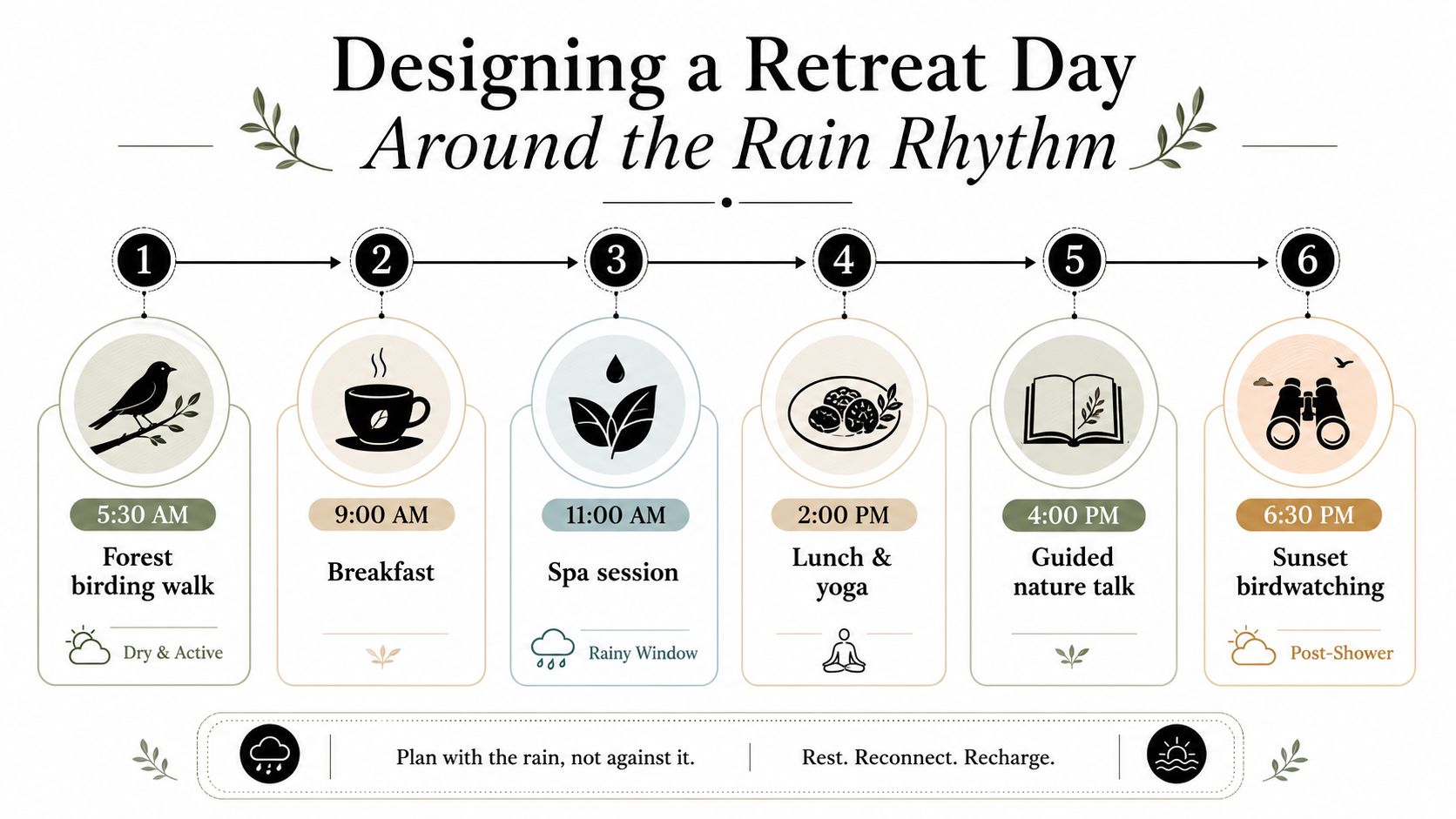
A day that actually works
Start with a 5:30 a.m. forest birding walk while the air is still dry and active. Breakfast belongs before 9:00, not at some vague late-morning hour that gets consumed by humidity and indecision. By mid-morning, move into spa time, pool time, or a slow coffee session while the first showers cycle through.
After lunch, stop pretending the afternoon needs to stay outdoors. Put the private guide back on the schedule around 2:00 p.m., especially if you're using a naturalist who understands local microclimates and knows where the day is still dry enough to move. At 7:00, dinner should already be locked, ideally chef-led, with no need to scramble once the sky changes.
Luxury gets better when the weather has a role
A place like VIVARA fits naturally, because the model is already built around private chef dinners, in-villa spa therapists, on-call drivers, and curated guides who can read the weather rather than pretend it's irrelevant. That's exactly the right kind of setup for green season, because it turns timing into part of the experience rather than a constraint.
For a longer outing, the Rio Celeste hike guide is the kind of planning reference that makes sense in this season. You want destinations that reward early starts and flexible pacing, not overpacked schedules that collapse after lunch.
The guests who convert on green season stop measuring the day by whether it stayed dry. They measure it by whether it felt intentional.
Packing and Logistics for Real Tropical Rain
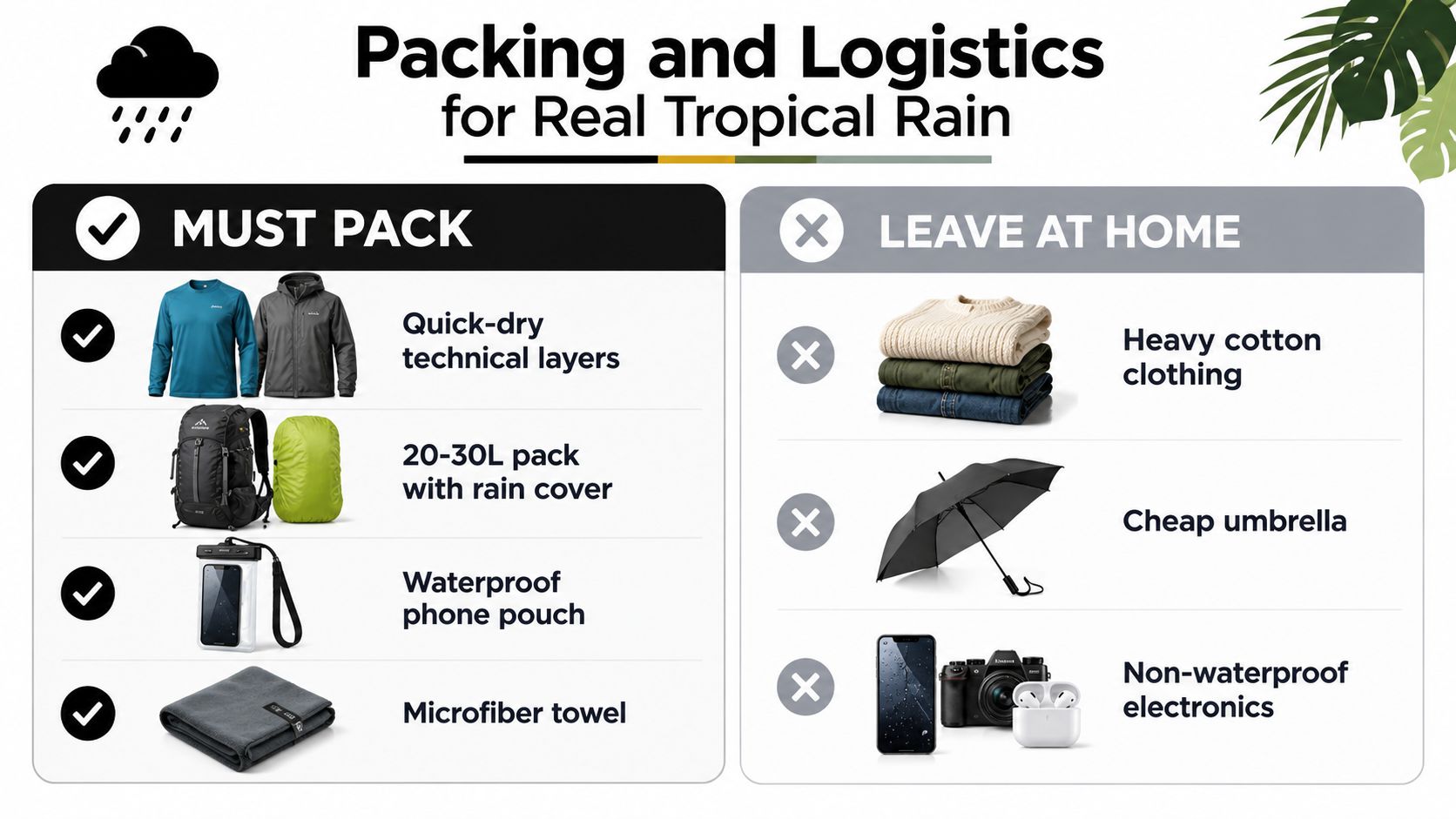
Pack for tropical reality, not vacation fantasy. Cotton holds moisture, weak shoes fail on slick paths, and unprotected electronics become expensive regrets the first time a shower turns into a downpour.
What belongs in the bag
Bring quick-dry technical layers, not heavy cotton. Carry a 20 to 30 liter pack with a rain cover, plus sealed dry bags for electronics. Wear trail runners with actual grip if you're doing hikes or river crossings, and add a waterproof phone pouch so your camera roll doesn't become a casualty of one storm cell.
Quick-dry clothing: Better for humidity, easier to rinse, faster to reuse.
Rain cover and dry bags: Protect the things you don't want drying overnight.
Trail shoes with traction: Better than fashion sneakers on muddy trails.
Compact umbrella: Fine for town, bad for serious hiking.
Light fleece: Useful in the Central Valley when the evening cools off.
You should also bring reef-safe repellent and skip the temptation to overpack bulky “just in case” clothes you'll never wear. If you're traveling with a retreat group, that matters even more, because everybody's comfort drops when luggage gets bloated and slow to move.
Logistics need a cushion, not optimism
Book flights with enough flexibility that a delayed afternoon storm doesn't put the whole departure at risk. Use 4x4 transfers when roads are exposed to flooding, especially in the wetter Pacific zones, and don't build a tight airport run into the final day. A 24-hour buffer is the right move for international departures.
For regional planning, don't pretend weekends behave like weekdays. Beach towns and airport corridors often feel tighter around school breaks, so lock transport and departure timing early if your dates overlap with busy travel periods.
Wildlife, Conservation, and Community Impact
Green-season travel does more than make your trip easier to schedule. It supports the people and areas that carry Costa Rica through its slower months, which is one reason I argue for it so strongly with guests who care about impact, not just comfort.
The season brings the animals closer to the decision
The wildlife case is strong. Sea turtle nesting peaks on both coasts, humpbacks move through the South Pacific starting in July and the North Pacific in October, scarlet macaws feed in the flooded wetlands of Palo Verde, and resplendent quetzals begin nesting in cloud forests. That's not trivia, it's the reason green season feels more alive than the brochure version of dry season.
The conservation angle is practical too. Visiting lowland corridors like Osa or Tortuguero during rains helps sustain anti-poaching patrols and jaguar monitoring when funding is tighter and guest volume is lower. The money flow matters because rural lodges, guides, and small operators depend on shoulder-season business to stay active between peak waves of demand.
Why this matters to high-end travelers
Affluent travelers often want a cleaner, more meaningful experience, but they don't always want to hear the operational side of it. They should. A retreat that stays full only when weather is perfect is a fragile business. A retreat that can serve guests through the green season is a stronger one, because it supports staff, keeps community programs moving, and gives the area a reason to stay economically visible when the crowds thin out.
That's why brands and founders increasingly use intimate Costa Rica retreats to connect with communities, teams, and customers in a more memorable setting. The right season makes that easier, not harder.
Who Green Season Is Right For and How to Book It
Green season is for travelers who can make a decision and live with it. If you're chasing surf, privacy, rainforest atmosphere, or a more intimate couple's trip, this is your window. If you're planning a restorative getaway, a small company retreat, or a family reset with real activity built in, it works beautifully when the schedule is flexible.
Who should book it, and who shouldn't
Book green season if: you want fewer crowds, better access to guides, and a trip that feels more curated than crowded.
Book green season if: you're fine moving early, pausing midday, and letting the weather shape the rhythm.
Wait for dry season if: you need a rigid itinerary, guaranteed beach weather, or easy access to every activity without backup plans.
That's the honest split. No one needs a romantic pitch. You either want the season that rewards flexibility, or you don't.
How to book without getting burned
Start 60 to 90 days ahead for most green-season stays, then ask the property direct questions before you lock anything. Confirm the rain policy, ask what indoor backup looks like, and find out which tours still run when showers roll in. If a lodge can't answer those questions clearly, it's probably not designed well for this season.
For travelers thinking about a more restorative trip, the restoration retreat guide is a useful lens because it aligns dates, pace, and purpose before flights get booked. That's the right order. Dates first, region second, activities third.
If you want to see green season in Costa Rica the way experienced hosts do, plan it around flexibility, privacy, and the right coastline. VIVARA builds intimate stays for groups who want nature, design, and curated experiences without wasting days to weather guesswork. Visit VIVARA if you're ready to match the season to the kind of trip you want to take.