The Vivara Content Team
Zip Lining Costa Rica
Zip Lining Costa Rica

You're probably trying to decide whether a zipline day in Costa Rica belongs on your trip at all, or whether it'll just be one more transfer, one more waiver, one more thing to coordinate. That question usually shows up when you're planning for a partner who's nervous, kids with different comfort levels, or a group that wants one shared adventure without turning the whole day into logistics.
The answer depends less on the marketing and more on the constraints. In Costa Rica, who can ride, how the gear fits, what the cables are built to do, and whether the operator is organized matter more than the brochure photos. A meaningful canopy day feels easy because the operator has already solved the hard parts.
What It Actually Feels Like to Zip Line in Costa Rica
The best way to understand zip lining Costa Rica is to start where guests start, in the harness room. A guest steps in, gets checked for fit, listens to the briefing, and hears the guide explain how the system stays controlled through redundant braking and layered anchors. Then the rhythm changes fast, from paperwork to movement, from standing under a roof to standing on a platform above the trees.
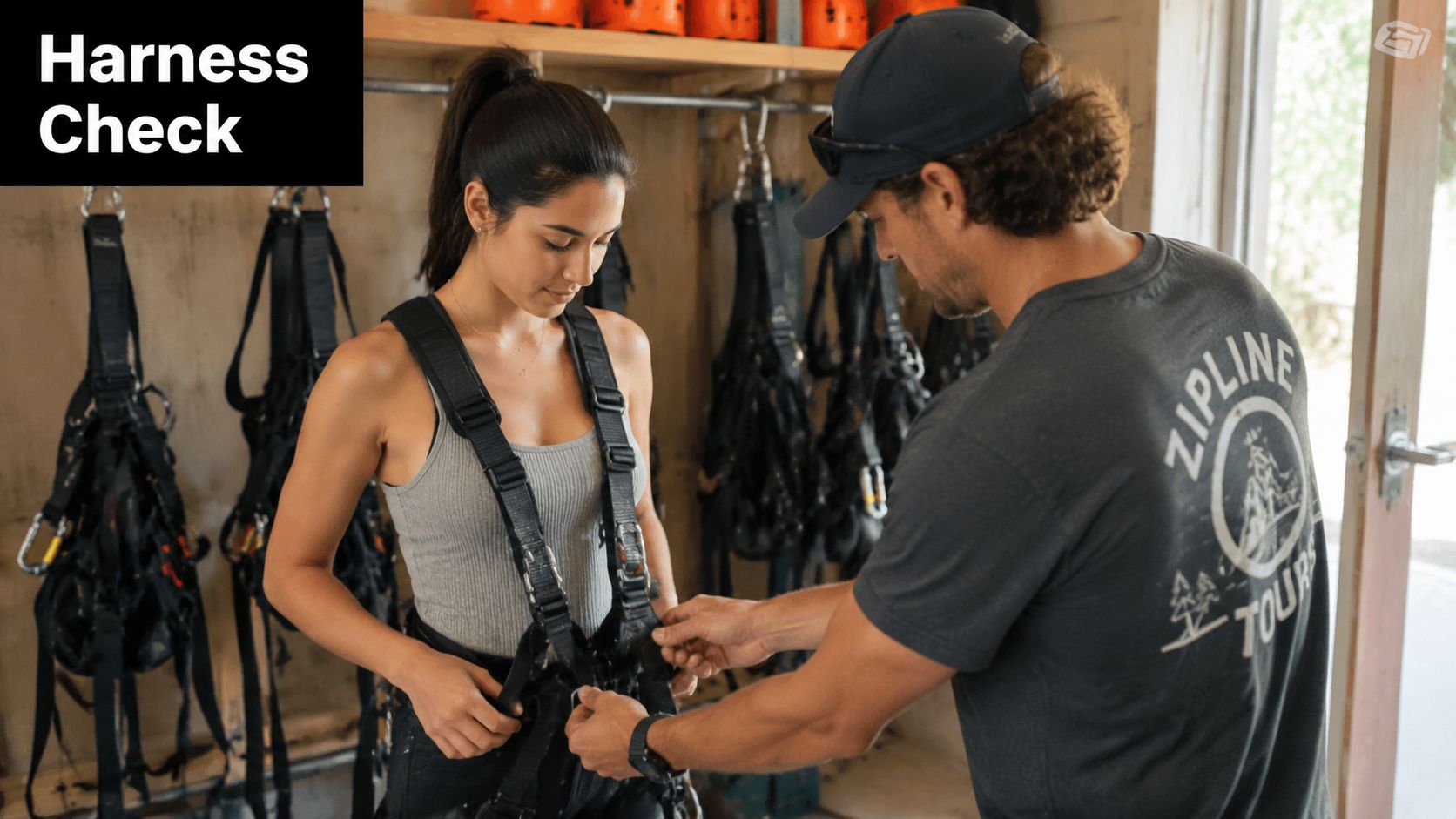
The first launch tells you everything
The harness settles at the hips before the line ever does. You hear the trolley click in, feel the guide's hand check the connection, and then there's that tiny pause where the body decides whether it trusts the system.
A short starter cable gives you the basic experience, the line ahead, the forest below, the quick glide. A longer run changes the mood entirely, because the cabin of noise falls away and the ride becomes less about adrenaline than suspension, the quiet stretch where you're just moving through green space.
The quiet between groups is part of the experience. Good operators don't rush it.
In Costa Rica, that pause matters. You'll often hear birds, feel the platform heat underfoot, and sometimes catch howler monkeys calling somewhere out of sight, which is one reason guests remember a canopy day more vividly than a standard excursion. If you want to see how a curated property folds that feeling into a broader stay, the experience page for Titi Canopy Tours gives a useful sense of how a day can be arranged around comfort instead of crowds.
The difference between a forgettable run and a memorable one isn't speed. It's whether the day feels cared for before you even leave the platform.
How Costa Rica Became the Home of Recreational Zip Lining
Costa Rica didn't become the reference point for canopy travel by accident. The country's origin story begins with research, not tourism. In 1979, U.S. biologist Donald Perry reportedly built the first canopy zipline at Finca La Selva near the Sarapiquí River, using more than 1,000 feet of rope and pulleys to study the rainforest canopy, and the shift from science to leisure didn't fully arrive until 1997, when Canadian entrepreneur Darren Hreniuk opened the first public canopy tour in Monteverde A Costa Rican Creation, The History of the Canopy Zipline.
Why the country led early
That roughly 18-year gap between the first scientific use and the first public tour matters. It shows the activity grew out of a practical need to access the upper forest, then matured into a travel product only after operators realized people wanted the same vantage point for pleasure.
Costa Rica already had pieces that made the transition smoother. Protected areas drew nature-focused visitors, guides understood wildlife, and ecotourism was already part of the country's identity. Monteverde became an anchor point because it offered the original cloud-forest setting, but the model didn't stay there. It spread, and Costa Rica still has the density of canopy operators that keeps the category visible and competitive.
What that means for today's traveler
For affluent but practical travelers, that history explains why ziplining here feels more developed than improvised. The category was shaped by decades of operator learning, not just a boom in demand. It also explains why the country still carries a reputation for canopy tours that feel tied to the natural environment, rather than detached from it.

A practical mental model helps here. Costa Rica is not just where zip lining is popular, it's where the category became legible to visitors who wanted nature, structure, and adventure in one day. That's why Monteverde still reads like a reference point, even when guests ultimately book somewhere else.
The Three Regions Worth Choosing Between
If you're comparing regions, don't ask which one is “best.” Ask which one fits the rest of the trip you're building. Monteverde, Arenal, and the southern Pacific around Dominical each deliver a different version of the same activity, and the right choice often comes down to whether you want mist, volcano views, or a quieter coastal rhythm.
Monteverde, Arenal, and Dominical feel different on purpose
Monteverde is the classic cloud-forest answer. It's cooler, more atmospheric, and visually denser, with that mossy, suspended-in-green feeling many guests associate with Costa Rican canopy travel. Arenal leans more family-friendly and first-timer friendly, especially for travelers who want the zipline day to sit beside hot springs or other volcano-area outings.
The southern Pacific around Dominical feels more private and less hurried. The forest is drier, the cables can feel longer, and morning departures tend to suit guests who want fewer people on site. That's a better match for travelers who care about pace, not just the thrill.
Costa Rica Zip Line Regions Compared | |||
|---|---|---|---|
Region | Scenery | Typical Ride Character | Best-Fit Traveler |
Monteverde | Cloud forest, mist, layered canopy | Atmospheric, classic, busier | Travelers who want the iconic reference point |
Arenal | Volcano setting, hot springs nearby | Accessible, balanced, family-friendly | First-timers and mixed-age groups |
Southern Pacific around Dominical | Tropical forest, river viewpoints, longer-feeling runs | Quieter, more private, often more flexible | Couples, small groups, and retreat travelers |
There's no need to rank them. A family staying around La Fortuna may want Arenal because the whole day stays easy. A retreat group based on the southern Pacific may get more value from a quieter, more customized departure. If you're mapping a broader stay in the north, this San Carlos travel guide helps place the region in context.
Choose the region that protects the rhythm of the trip you already want.
That's the better filter. The scenery matters, but the schedule matters more.
Age, Weight, and Harness Fit Rules That Decide Who Rides
The questions guests ask online are usually the wrong ones. They ask about the view, the adrenaline, or whether it's “family friendly,” but the actual decision gets made at harness fitting. In Costa Rica, official tourism guidance says riders must be at least 6 years old, at least 50 lb (22 kg), and 5 ft (1.45 m) in height, while some adult upper limits can reach 300 lb (135 kg) and 7 ft (2.15 m) depending on the operator Visit Costa Rica zipline guidance and operator policy ranges.
Fit matters as much as age
That's not just bureaucracy. It's about how the harness seats the body, how the braking geometry holds the load, and whether the rider can connect safely to the system. Another industry guide notes that some operators also use fit rules such as a 45-inch waist maximum and 31-inch thigh circumference maximum for safe harness use Enter Costa Rica harness limits.
Parents often miss that part. A child can clear the age threshold and still fail the fit check if the torso is too small or the harness can't sit correctly. On the other end, adults may be turned away if they're over the published operator limit, even if they feel physically capable.
Practical rule: if the largest, smallest, or most anxious person in your group might be near the edge of an operator's published limits, verify the exact rules before you book.
A few other details catch first-timers off guard. Closed-toe shoes are standard, hair usually has to be tied back, phones often stay behind, and pregnant guests are typically restricted. Back, neck, or mobility issues also need a real conversation with the operator, not a quick glance at a booking page.
A simple group decision rule
If everyone in your party fits the published size range, you can book one shared canopy day. If one person is borderline, call ahead and ask for the exact harness specs. If there's any doubt about age, height, weight, or comfort level, pick an operator that will confirm eligibility in writing before you arrive.
That one check saves the entire group from an awkward morning at the platform.
Safety Engineering Behind a Modern Canopy Tour
A modern Costa Rica canopy tour looks simple from below. Up close, it's a system of redundancies. Operators commonly use double anchor points at every platform, redundant braking systems, and cable testing to roughly 12 to 16 times the rated weight capacity, with annual or periodic engineer inspections and harness certification to standards such as EN 363 or equivalent Costa Rica zip line safety and pricing.
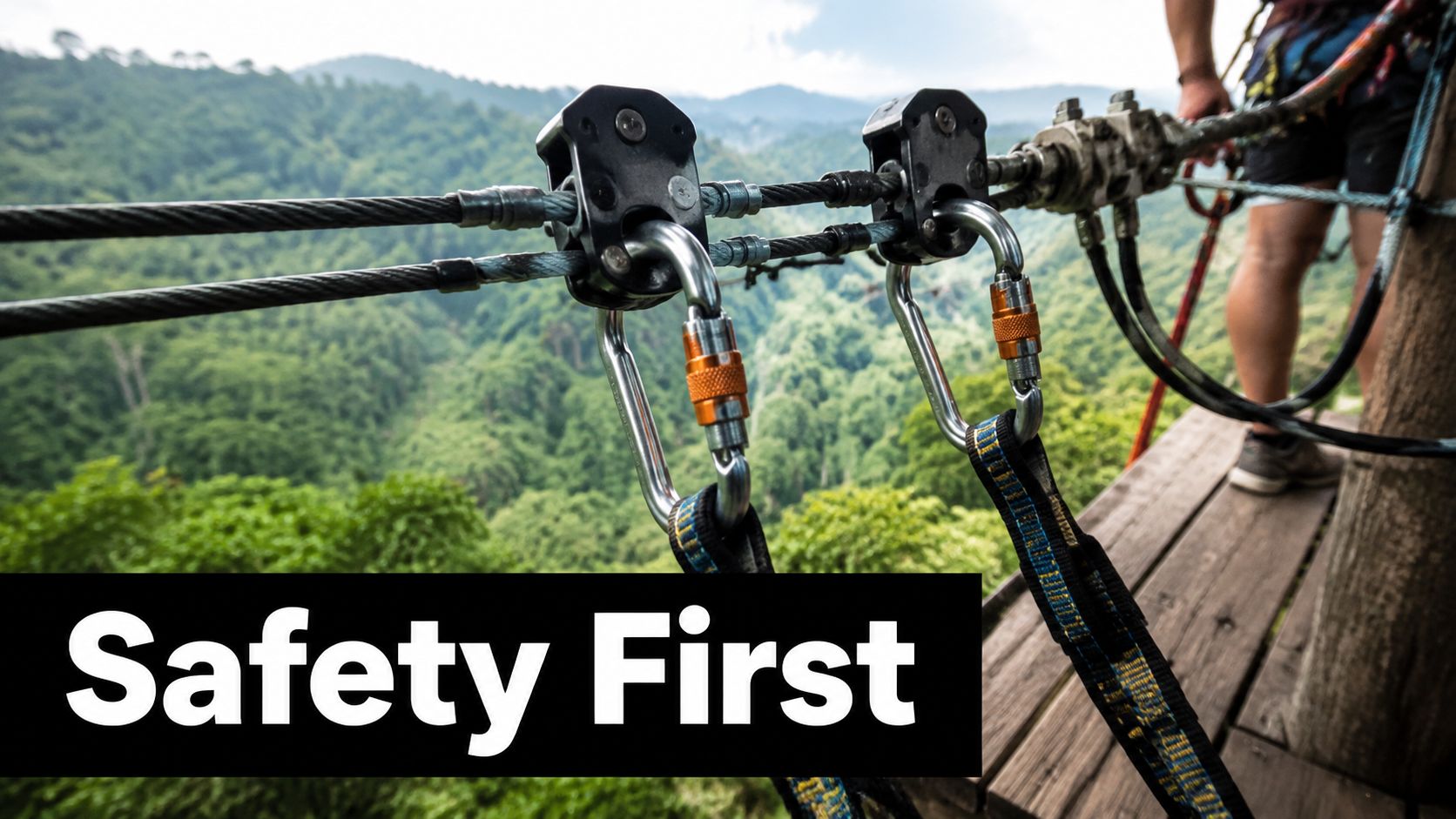
What redundancy looks like on the ground
The point of those layers is simple. If one attachment wears, another carries the load path. If one braking element doesn't behave as expected, another system slows the rider before the receiving platform. That's the difference between a line that only looks strong and a line that's built to handle use over time.
Costa Rica's better operators are careful about this because guests may never see the engineering, only the result. You feel it in the briefing. Serious guides explain the system, check the harness, and don't hurry the connection process just to move the group along.
A strong briefing sounds calm and specific. A checkbox briefing sounds fast.
What to watch for before launch
Look for guides who inspect every attachment, confirm your fit without rushing, and explain what happens if the first brake doesn't fully engage. Ask whether the operator documents current inspections and emergency procedures. Ask how often equipment gets replaced, not just whether it was “checked.”
The safest-sounding operator isn't always the one with the biggest platform or the longest cable. It's the one that can show you the system behind the ride. That's also why certification matters more than scenery alone when you're choosing where to book.
Pricing, Seasons, and What to Pack for a Zipline Day
Pricing in Costa Rica varies enough that travelers should stop thinking in one flat number. Budget circuits often sit around $50 to $65 per person, while flagship multi-cable experiences run $85 to $130, with private or small-group formats climbing higher. Those tiers matter because the price usually reflects guide time, transfer complexity, and whether the experience is built as a shared operation or a more curated run.
Seasonal timing changes the mood
The dry season, roughly December through April, usually gives clearer visibility and longer sightlines. The green season, roughly May through November, brings a lusher canopy and more afternoon rain, which can make a morning departure the smarter choice. If your trip is built around photography or a tighter schedule, that timing matters more than the brochure language.
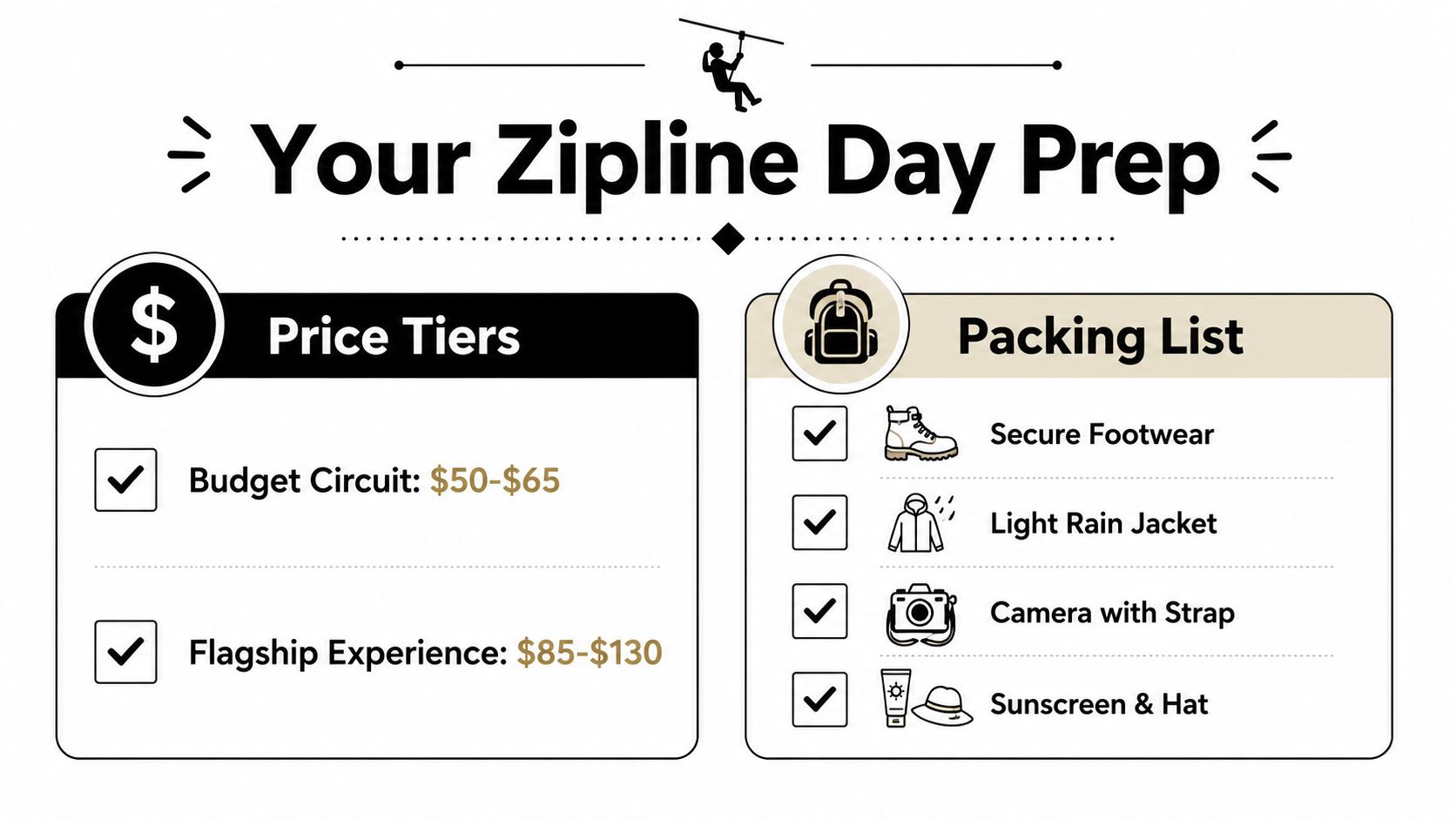
Pack for function, not for the camera
Quick-dry clothing works better than anything that holds moisture. Secure footwear matters because platforms and forest paths can be uneven. A small dry bag helps if you're carrying sunscreen, a bottle of water, or something you don't want bouncing around while you move between lines.
Reef-safe sunscreen and repellent are sensible, and a light rain jacket can save a day that starts clear and ends wet. Leave the phone in the locker unless the operator explicitly allows otherwise. That choice reduces distraction and avoids the awkward moment when someone tries to film mid-run and loses focus on the harness.
Before booking, ask three things: whether the equipment is current, what the guide-to-guest ratio looks like, and whether the group size is fixed or flexible. Those are the questions that tell you if the operator is organized enough to handle your day well.
If you want the experience folded into a stay instead of managed as a standalone excursion, a property like VIVARA can arrange it in a more private format, which removes the guesswork around pickups, timing, and whether the tour bus is full before you've even had coffee.
How VIVARA Builds a Zip Line Day Around You
A good canopy day fits the guest, not the other way around. That is the practical difference between a standard excursion and a retreat-led experience, and it matters most for travelers who want ziplining without the usual group-tour sprawl. At VIVARA, the process begins with a direct conversation about comfort level, fear of heights, and prior experience, then moves to a partner operator near Dominical or to a private jungle setup.
The day bends around the person
Once the timing is set, door-to-door transport removes the usual friction. Guests move from breakfast to a properly fitted harness without sorting out meet-up points, paper check-ins, or separate transfers. For a hesitant first-timer, the course can be kept shorter. For a repeat rider, the day can be shaped around longer cables or more dynamic runs, depending on the operator arrangement.
That flexibility matters in mixed groups. One guest may want a cautious first run, while another wants a faster pace and more airtime. A good operator can accommodate both without turning the day into a compromise that leaves everyone half satisfied.
VIVARA also screens partner operators through its conservation standards. The preference is for small groups, double-certified guides, and courses that do not fragment primary forest. That shifts the decision away from chasing the biggest cable and toward a canopy day that still feels coherent when it is folded into the rest of the stay.
Learn more about what to expect at VIVARA and how the retreat format shapes the full experience.
Why the bundled format changes the value
Bundled pricing cuts out a few common irritants. Guests are not surprised by photography add-ons, weight-related upgrades, or souvenir upsells at the end of the run. That kind of clarity helps couples, families, and founders planning a retreat, because the day can sit inside a larger rhythm of rest, food, and connection without extra booking noise.
The broader result is simple. Zip lining becomes part of a southern Pacific itinerary that can include beach time, waterfalls, or a slower return to the property, instead of becoming a separate project. For travelers who care about how the day feels from breakfast to dinner, that is the difference.
If you want a Costa Rica stay that can include zip lining without handing the day over to a bus schedule, VIVARA can build it around your group's pace, comfort, and level of adventure. Visit VIVARA to compare the retreat format with the way most canopy tours are sold, and see whether a more private, founder-led approach fits the trip you are planning.

