The Vivara Content Team
Dominical Costa Rica
Dominical Costa Rica

You may be looking at Dominical after deciding that a polished resort isn't what you need, but you're not ready to trade comfort for uncertainty. You want warm weather, meaningful time with the people you're traveling with, excellent food, and enough structure to make a retreat restorative rather than exhausting. Dominical, Costa Rica can deliver that balance, but only if you understand what the town is, what it isn't, and how intentionally you need to design your stay.
Dominical is a small beach town on Costa Rica's southern Pacific coast, in Puntarenas Province, at the mouth of the Barú River. It's about 40 km south of Quepos and Manuel Antonio according to this independent Dominical guide, and it functions as a gateway to the Costa Ballena, or Whale Coast. The appeal isn't polished uniformity. It's the freedom to build a private, nature-led experience around surf, jungle, waterfalls, wildlife, food, and genuine connection.
Understanding the Dominical Vibe and Setting
Arrival tells you more than a brochure can. You leave the main highway, pass palms and informal roadside businesses, and feel the air change as the Barú River and Pacific humidity meet the jungle. The beach road isn't a resort boulevard. It leads toward surf, small restaurants, local vendors, and a coastline that feels powerful rather than curated.
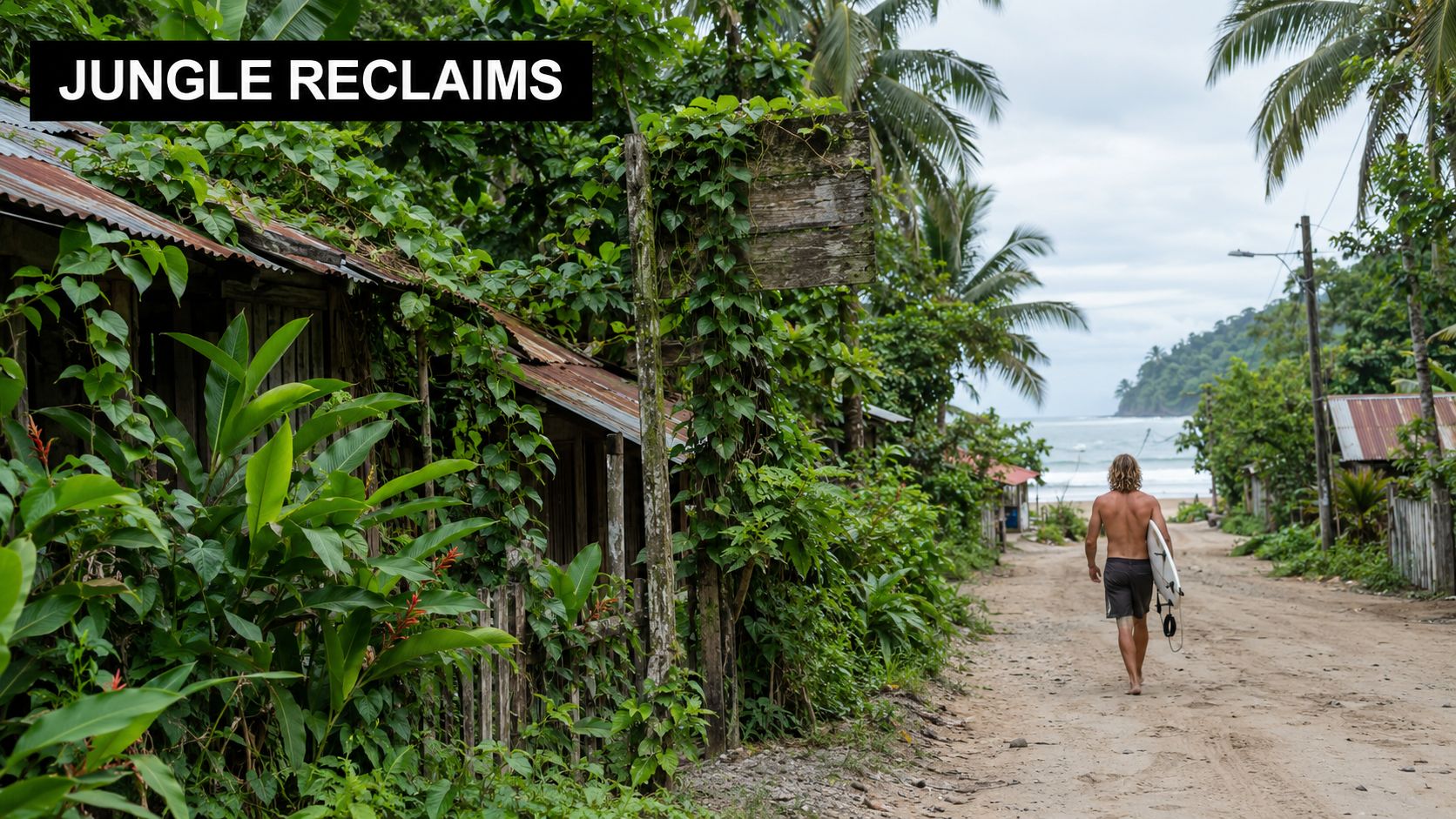
Dominical's permanent population is described by independent travel references as nearly one thousand or just over 1,000, a scale that helps explain its unusual character. A local overview of the town connects that small settlement with Marino Ballena National Park, protected marine habitat, and the area's annual whale migrations. You get a destination with a disproportionate amount of nature, but without the density of a major resort zone.
Raw nature is part of the comfort equation
The jungle doesn't sit politely behind a property boundary. It presses close to roads, villas, trails, and outdoor dining areas. You may hear insects before breakfast, see birds moving through the canopy, and notice that rain, surf, and humidity shape the day more than a concierge schedule does.
That doesn't mean Dominical is uncomfortable. It means comfort has to be designed around the environment. A private villa with thoughtful architecture, reliable service, good food, and shaded outdoor space can feel more luxurious here than a generic hotel with more visible polish.
Practical rule: Choose Dominical if you want privacy, sensory richness, and agency. Choose a conventional resort zone if predictable swimming beaches, dense retail, and standardized service matter more than place-specific character.
The town works particularly well for couples, families who value nature, friend groups, wellness leaders, and brands building intimate communities around shared experiences. It works less well for travelers who want every activity within a resort, a calm swimming beach outside the door, or a fully programmed holiday that requires no decisions. The premium feature is the blank canvas. Your host, itinerary, accommodation, and group culture determine whether that canvas becomes restorative or merely inconvenient.
Choosing the Right Season to Visit
Dominical's climate is hot throughout the year, but rainfall changes the operating conditions dramatically. Monthly rainfall typically ranges from about 24 to 49 mm in the driest months to roughly 440 to 599 mm in the wettest months, according to Dominical climate data from Weather2Travel. Most precipitation arrives during the Pacific green season, which generally runs from May through November.

Match the calendar to the retreat purpose
The drier window, broadly December through April, suits groups that need dependable conditions for surf sessions, outdoor ceremonies, coastal drives, and full days of excursions. The surroundings remain tropical, but the rhythm is easier for planners who need to coordinate multiple activities without building around afternoon weather.
The green season offers a different reward. Rain intensifies the vegetation, fills rivers and waterfalls, and creates a quieter atmosphere for reading, yoga, creative work, and deep rest. A downpour can interrupt a hike, but it can also make an open-air villa feel more alive and encourage guests to stop treating constant activity as the measure of a successful trip.
Wildlife planning adds another layer. The southern Pacific waters receive two humpback whale populations. Costa Rica whale-watching guidance places Northern Hemisphere whales generally in December through March and Southern Hemisphere whales from July through October, sometimes into November. The overlap around August and September is often the highest-density period on the Pacific coast.
Choose the drier months for activity-heavy retreats, outdoor production, and guests who prioritize weather reliability.
Choose the greener months for lush scenery, slower pacing, and a retreat built around restoration rather than constant movement.
Choose the whale corridor window when marine encounters are central to the experience, while keeping the itinerary flexible enough to respect ocean conditions.
Rain also affects roads, footwear, drying time, and the practicality of remote hillside accommodation. Ask whether your property has covered gathering areas, backup plans, and transport support. A well-designed retreat doesn't promise perfect weather. It gives weather a meaningful place in the experience without allowing it to control the entire stay.
Beaches, Wildlife, and Marine Encounters
Dominical's main beach rewards observation more than casual swimming. The coast is renowned for consistent, powerful surf, and local destination guidance warns that the main beaches aren't ideal for swimming because of strong currents and riptides, as explained by EnterCostaRica's Dominical destination guide. That distinction matters when you're choosing a retreat for children, older guests, or anyone expecting calm resort water.
The comparison is straightforward. Dominical offers a dramatic Pacific shoreline, surf culture, palms, sunset walks, and the visual energy of waves breaking close to town. Sheltered nearby coves may be more appropriate for gentler water activities, but guests still need local guidance and active supervision. Don't market this coastline to your group as a swimming-pool substitute.
The marine story becomes stronger offshore. Dominical sits within the Costa Ballena, where whale migrations shape the regional calendar. Uvita is commonly used as the primary launch point for whale-watching excursions, so a retreat itinerary should treat the boat transfer and sea conditions as part of the experience rather than assuming a departure directly from Dominical. For planning, review the available whale-watching excursion details and confirm current departure arrangements before promising guests a specific schedule.
Feature | Primary characteristic | Best time to experience |
|---|---|---|
Dominical Beach | Powerful surf, dramatic shoreline, strong currents | Year-round for surf culture and coastal atmosphere |
Nearby sheltered beaches | More protected setting for relaxed water time | When conditions and local guidance support it |
Humpback whales | Seasonal offshore migration in the Costa Ballena | December to mid-April and mid-July to November |
Whale migration overlap | Higher marine-life density in the southern Pacific | August and September |
Marino Ballena National Park | Protected coastal and marine ecosystems | Plan around park access and ocean conditions |
For affluent travelers, the value isn't just seeing an animal. It's the quality of the entire encounter, a knowledgeable operator, an unhurried boat experience, a considered meal afterward, and enough empty space in the day to let the sighting remain meaningful. Build around nature instead of forcing nature into a rushed schedule.
Outdoor Adventures and Active Retreats
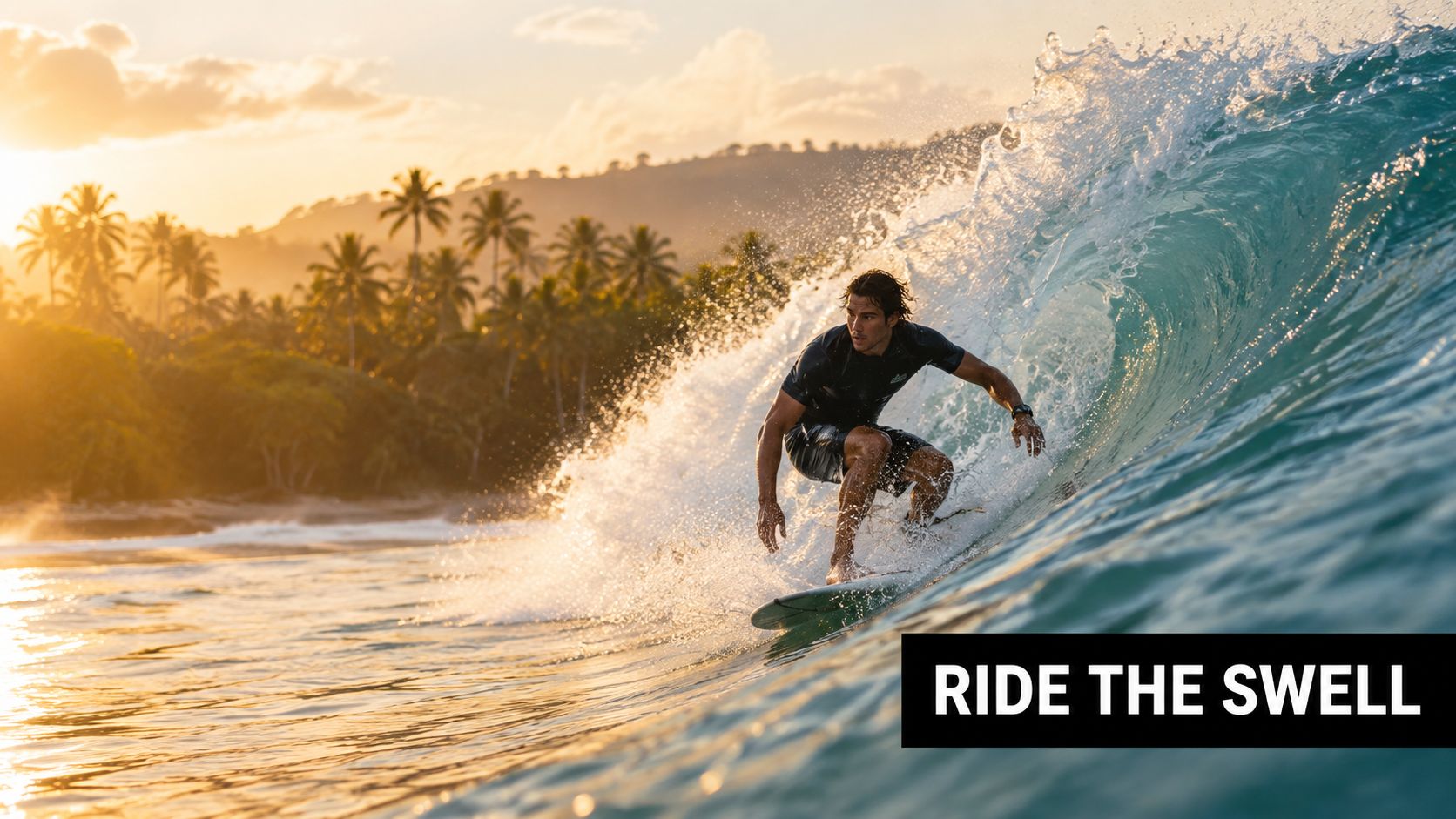
Dominical works for active groups because the mountains rise quickly behind the coast. A morning can begin with surf instruction, move into a rainforest or canopy experience, and end with a slow meal while the temperature drops. The key is not collecting every available activity. It's matching the intensity to the group's actual energy.
Build the day in layers
Start with one defining physical activity. Surfing suits guests who want skill-building and ocean confidence. Zip-lining delivers a more accessible adrenaline hit, while canyoning and waterfall routes demand greater comfort with wet conditions, uneven terrain, and exertion. Horseback riding offers a slower way to read the terrain, and paragliding appeals to travelers who want a concentrated burst of height and exposure.
Then protect the recovery period. A private lunch, massage, guided breathwork, or unstructured time beside the pool gives the nervous system somewhere to land. A retreat differs from an activity checklist in exactly this way. The contrast between challenge and restoration creates the emotional shape of the trip.
For a waterfall-centered day, compare transport, walking requirements, swimming conditions, and guest fitness before booking. Nauyaca Waterfall experience planning can help groups evaluate whether the outing fits their preferred pace and level of support.
A practical schedule might look like this:
Use the morning for skill or adventure. Surf lessons and guided outdoor activities benefit from early energy and cooler conditions.
Keep the middle of the day flexible. Weather, appetite, and group mood should influence whether guests continue or pause.
Make the afternoon restorative. Move toward bodywork, swimming where appropriate, journaling, or a long meal.
Reserve the evening for connection. A shared dinner or a short night walk can be more memorable than another high-output excursion.
Brands and retreat leaders should apply the same logic to community building. A group bonds through shared challenge, but it stays connected when the program leaves room for conversation, privacy, and different physical abilities. Dominical's range makes that possible, provided the itinerary doesn't confuse intensity with value.
Local Dining, Culture, and Community Infrastructure
Dominical is remote in atmosphere, not cut off from daily life. The town has restaurants, cafés, markets, medical services, ATMs, supermarkets, coworking spaces, and a community that includes local residents, long-term expatriates, surfers, families, and remote workers. Independent destination material also points to an international school, which broadens the area's relevance for families and longer stays. These details support a more accurate view of Dominical as a functioning small community rather than a temporary surf camp.
Food is one of the easiest ways to design a sense of place. A retreat can move between ocean-caught seafood, Costa Rican home-style cooking, tropical fruit, plant-forward dishes, and ingredients sourced from nearby farms or forests. The strongest dining experiences don't imitate a major-city restaurant. They respond to the setting, the catch, the harvest, the weather, and the needs of the group.
Comfort depends on preparation
Travelers should still distinguish between available infrastructure and instant convenience. A clinic or pharmacy can support ordinary needs, but serious medical planning requires knowing where the nearest appropriate service is, how transport works, and whether guests have relevant insurance. Connectivity has improved across the region, including fiber internet and cellular coverage in some areas, but retreat planners should verify the current setup at their chosen property rather than assume every hillside villa performs the same way.
The local culture is visible in small, repeatable interactions. Shop at community businesses, respect beach and river conditions, hire qualified local guides, and ask permission before photographing people or private spaces. A retreat's regenerative qualities should be evident in how it pays, sources, schedules, and shares access, not only in its marketing language.
A comfortable stay in Dominical doesn't remove the local character. It gives guests enough support to engage with it respectfully.
For families and longer-duration guests, practical questions matter. Is there a kitchen? Can dietary requirements be handled? Is there shade for children and older adults? How far are groceries and medical services? Can the group gather privately without disturbing neighbors? Answer these before booking, and the town's informality becomes an asset rather than a source of friction.
Getting There and Practical Logistics
Dominical is more accessible than its remote image suggests. The Costanera Sur highway has made the southern Pacific corridor practical for road travel, with airport-to-town journeys commonly estimated at roughly 3.5 to 4.5 hours, depending on the route and source, as noted by Costa Rica Spirit's Dominical information. That duration is long enough to plan carefully, but not so extreme that a premium coastal retreat becomes impractical.
Plan the transfer in four decisions
Choose the arrival airport and transfer style. A private driver reduces navigation fatigue and gives the group a smoother handoff. A rental car provides independence for guests who want to explore beyond town.
Match the vehicle to the property. Main routes are more straightforward than steep hillside access roads. Ask about the final approach, especially during the wetter months.
Group the excursions geographically. Avoid sending guests back and forth along the coast when one carefully planned outing can combine wildlife, food, and scenery.
Confirm the return buffer. Leave room for traffic, weather, fuel, and airport procedures rather than treating the drive as a fixed transfer.
Once in town, many central businesses are clustered near the main road and beach area, while hillside accommodation and activities may require a vehicle or arranged transport. That separation can be a benefit for privacy, but it changes how often guests can spontaneously walk out for coffee or supplies.
For celebrations, executive groups, or guests with limited tolerance for long road transfers, compare the cost and convenience of ground transport with a private air charter option. The right decision depends on group size, luggage, timing, and the value you place on preserving energy for arrival day. Don't choose air travel just because it sounds premium. Choose it when the time saved materially improves the experience.
Tailored Itineraries for Your Group Type
A retreat becomes easier to evaluate when you start with group psychology rather than a list of attractions. Couples often need privacy and unhurried transitions. Friends want shared milestones and enough flexibility for different appetites for risk. Families and wellness leaders need structure, safety, and spaces where guests can opt in or step back.
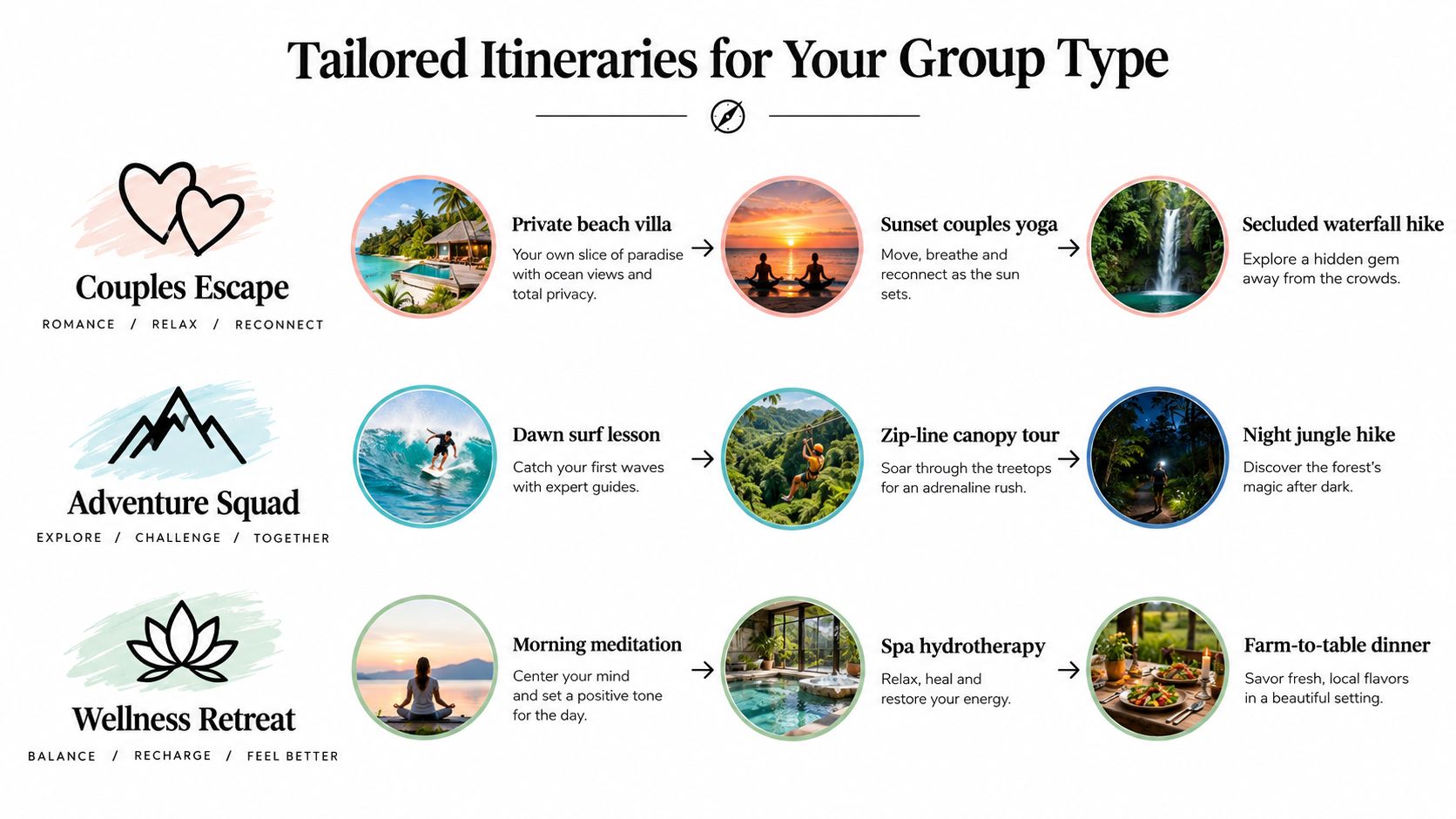
Couples escape
Prioritize a private villa, a slow breakfast, a sunset experience, and one meaningful excursion rather than filling every day. A waterfall walk or whale-watching trip can create a shared memory, while a secluded dinner gives the couple room to reconnect without performing the holiday for anyone else.
Adventure squad
Friends usually benefit from one anchor activity each day, such as a dawn surf lesson, canopy tour, canyoning route, or night jungle walk. Keep the evening social, but don't assume every guest wants the same level of physical challenge. A flexible itinerary lets one person rest while others continue.
Wellness retreat
Coaches and facilitators need a reliable container. Schedule meditation or mobility work in the morning, place demanding excursions after participants have settled in, and protect quiet periods before a communal dinner. The setting can support burnout recovery, creativity, relationship building, or a personal reset, but the program must make those outcomes possible through pacing.
For brands, the same framework supports community design. An intimate gathering can combine a distinctive place, guided activity, food rituals, and honest conversation without turning every moment into content. Guests should feel that the experience serves their connection first, while any storytelling or commercial output follows naturally from trust.
Why VIVARA Transforms the Dominical Experience
Dominical gives you the raw ingredients, but the quality of the retreat depends on how those ingredients are assembled. A powerful coastline isn't automatically restorative. A jungle setting doesn't guarantee privacy. A large menu of excursions can leave guests depleted. The right hospitality model turns natural intensity into a deliberate rhythm.
VIVARA is an intimate, founder-led hospitality retreat in Dominical designed for up to 14 guests across architecturally distinct villas. Its approach connects nature, design, and human connection, allowing a group to slow down, celebrate, work, or move between those modes without changing properties. The distinction matters for couples, families, teams, coaches, and brands that need an environment capable of holding more than one type of traveler.
Design, food, and service should work together
The villas provide the physical framework, while personalized V-star service shapes the daily experience. Guests can choose from activities such as whale watching, canyoning, zip lining, horseback riding, paragliding, sunset cruises, and private air charters, with the schedule adjusted to the group's rhythm rather than imposed as a fixed package.
Dining is led by Michelin-trained culinary leaders with experience in New York kitchens. There are no fixed menus. Instead, meals use farm-fresh, ocean-caught, and jungle-foraged ingredients to respond to guest preferences and the surrounding place. That flexibility is particularly valuable for wellness groups and families managing dietary needs.
The impact model gives the stay a practical regenerative dimension. Each villa sponsors a rescued animal, while guest presence supports lifeguard training, living wages, and turtle conservation. For a retreat planner, that creates a clearer connection between hospitality spend and local participation than a generic sustainability claim.
The larger point is agency. Dominical won't hand you a finished luxury narrative. It gives you surf, rain, wildlife, community, and space. A founder-led property can shape those elements into an experience that supports restoration, adventure, celebration, or shared purpose, while keeping the group small enough for service to remain personal.
VIVARA offers architecturally distinct villas for intimate stays in Dominical, with personalized adventures, flexible Michelin-trained dining, and founder-led support for couples, families, teams, and private groups. Visit VIVARA to compare your retreat goals with a nature-led experience that combines comfort, connection, and regenerative impact.

