The Vivara Content Team
Whale Watching Excursion in Costa Rica: What to Expect
Whale Watching Excursion in Costa Rica: What to Expect

You're probably weighing this as part of a bigger Costa Rica trip, not as a standalone marine outing. That's the right way to think about it. A whale watching excursion off Dominical or Uvita can be one of the most memorable mornings of a retreat week, but it works best when you treat it as one curated piece of a fuller stay that also includes rest, great food, jungle time, and enough breathing room for weather and wildlife to do what they do.
I've watched guests arrive with unrealistic expectations shaped by glossy tour marketing, then leave the boat moved by something simpler. A blow in the morning light. A mother and calf holding at the surface. The sound of everyone going quiet at once. That's the true draw. Not guaranteed acrobatics, not a marine theme park, and definitely not a schedule wild animals agreed to keep.
Whale watching has been a serious global tourism category for a long time, not a fringe add-on. One widely cited international assessment estimated about 9,020,196 participants across 87 countries and territories in 1998, generating roughly US$1.049 billion in total expenditures, and by 2008 that research line estimated more than 13 million participants in 119 countries, around US$2.1 billion in annual spending, and about 13,000 jobs supported worldwide (international whale watching assessment). That scale matters because it tells you this is a mature travel experience with real standards, real conservation implications, and a lot of variation in quality.
Costa Rica earns its place in that conversation because the southern Pacific coast gives you something many destinations don't. Two humpback seasons, easy pairing with wellness travel, and a coastline where a morning on the water can still fit cleanly inside a beautifully paced retreat day.
Setting the Scene Off the Osa Peninsula
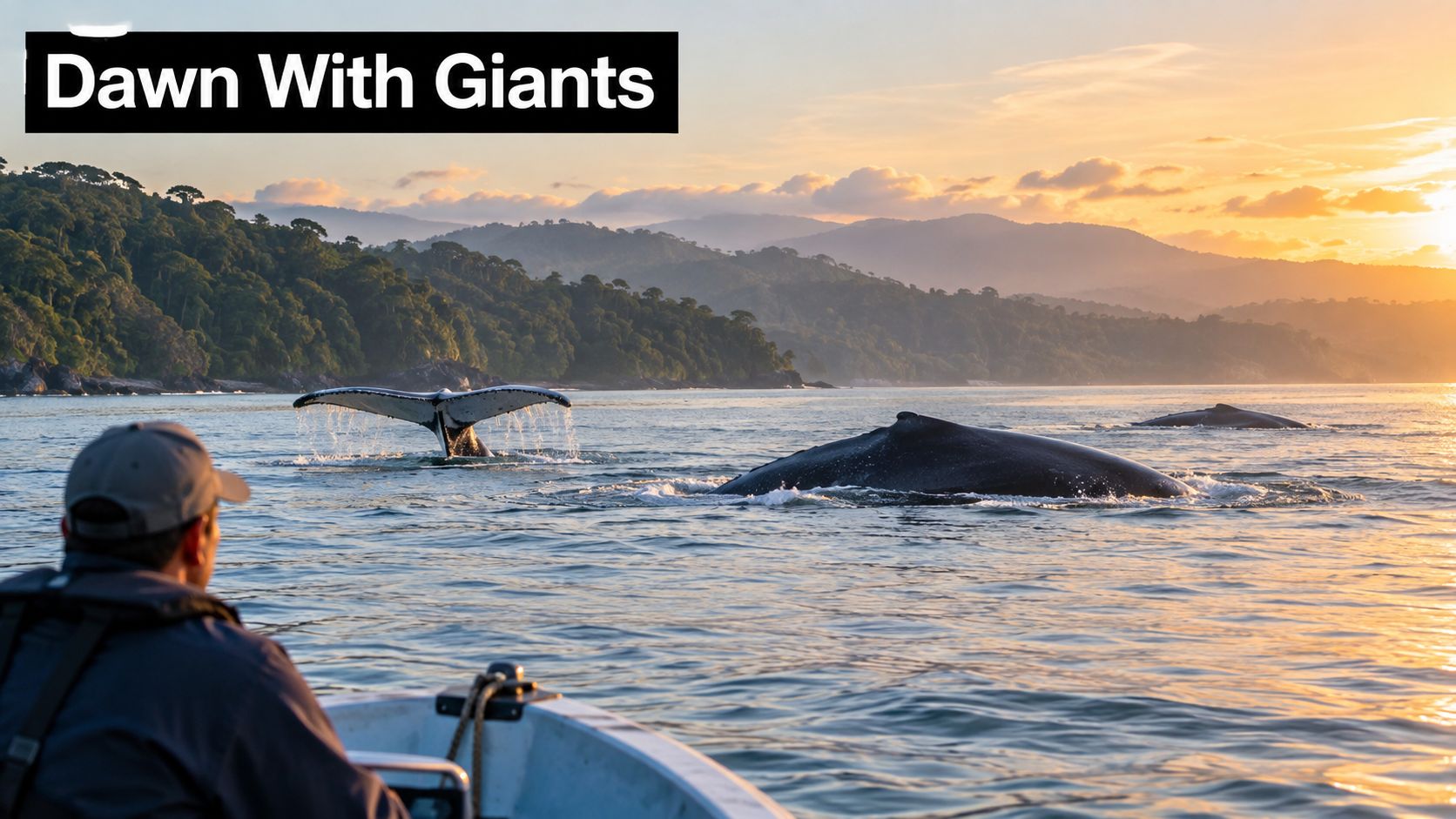
You leave Dominical in the half-light with coffee still warm in hand, and by the time the boat settles beyond the beach break the coast has started to reveal itself in layers. The forested ridgeline runs dark green behind you. Isla del Caño sits out in the haze like a cutout. Then someone points. Not loudly. Just enough to turn every head toward a low plume hanging over the water before the back of a humpback lifts and disappears.
That first moment is rarely dramatic in the way people expect. It's quieter than that. You hear the exhale before you really register the animal. The boat rocks gently on the Pacific swell, the morning light hits from the side, and the scale of what you're seeing arrives a beat late.
Why this coastline works
This stretch of Costa Rica's South Pacific isn't random luck. The waters near Marino Ballena National Park sit minutes from shore, and that easy access changes the feel of the experience. You're not committing to a punishing offshore expedition just to get into productive water. You can be on a boat after sunrise and back before lunch, which is exactly why it fits so well inside a retreat itinerary.
The area also benefits from protected coves and a coastline that gives migrating humpbacks a useful seasonal corridor. That's part of why this region around Uvita, Bahía Ballena, Dominical, and the wider Osa side of the coast has such a strong reputation for whale watching in Costa Rica.
If you're building a fuller marine day rather than a whales-only agenda, it also helps that Caño sits naturally in the same conversation as wildlife boat days and ocean excursions. If you want the underwater counterpart to a whale outing, this guide to snorkeling at Caño Island gives you the clearest sense of how people usually pair the two experiences.
The best whale excursions here don't feel like a checklist activity. They feel like a privileged look into a living coastline.
What the boat experience feels like
Small private and semi-private boats off this coast ride differently from larger sightseeing vessels in major cruise markets. You feel the chop more. You notice wind direction. A seat choice matters. Spray happens. For some travelers, that intimacy is the whole point. You're lower to the water, less insulated, and more alert to the environment.
For retreat guests, that's often the magic. You don't just spot whales. You drop into a different tempo for a few hours. No phones for a while. No social obligations. Just scanning the surface, listening to the captain, and waiting for the next blow line to catch the light.
Humpback Seasons and What You Actually See
Costa Rica gives you two distinct humpback windows on the Pacific coast. That's the headline. The more useful question is what each season feels like once you're on the water.
The Pacific coast of Costa Rica commonly sees southern hemisphere humpbacks from roughly late July through October, and northern hemisphere humpbacks from roughly December through March or April, with August and September often identified as the strongest months overall for sightings (Costa Rica humpback season guide). If you're planning around one boat day and want the strongest odds, those late-summer southern season months are the smartest place to start.
December through April
Northern humpbacks arrive in the Costa Rican warm season and this is the window many vacationers instinctively choose because it aligns with holiday travel and dry-season planning. On the water, this period often feels softer and more intimate. You're looking for breeding behavior, resting patterns, and mother-calf pairs.
January and February are especially appealing for travelers who care less about nonstop action and more about emotional wildlife moments. A calf surfacing beside its mother doesn't have the theatrical charge of a breach, but it lands harder for many travelers.
What you might see:
Mother-calf pairs close to calmer water
Spy hops and gentle surfacing sequences rather than constant spectacle
Longer quiet periods between sightings, followed by very rewarding close observations
Dolphins as a possible bonus, especially bottlenose
Late June through October
The southern season feels different. These humpbacks are part of a separate migration pattern, and many outings in this window have a more mobile, searching rhythm. August and September are often the strongest months overall for sightings on this coast, which is why they're such good candidates for a retreat week built around one marquee ocean day.
Expect longer scans, cleaner sighting runs, and a sense that the whales are moving through rather than posing for you. You may still get dramatic behavior, but don't build your booking around breaches. Build it around presence.
Practical rule: Book for season first, behavior second. Pick the month for the highest chance of seeing whales, then accept that no captain can promise the exact display.
Month by month reality
Month | Primary Species | Secondary Sightings | Reliability |
|---|---|---|---|
January | Northern humpback whales | Bottlenose dolphins, sea turtles | Strong |
February | Northern humpback whales | Bottlenose dolphins, occasional pilot whales | Strong |
March | Northern humpback whales | Dolphins, sea turtles | Good |
April | Late northern humpbacks | Dolphins | Mixed |
May | Transition period | Dolphins, occasional pelagic surprises | Lower |
June | Early southern humpbacks | Dolphins | Mixed |
July | Southern humpback whales | Bottlenose dolphins, pilot whales | Good |
August | Southern humpback whales | Dolphins, occasional false killer whales | Strongest |
September | Southern humpback whales | Dolphins, sea turtles | Strongest |
October | Southern humpback whales | Dolphins | Good |
November | Transition period | Dolphins | Lower |
December | Northern humpback whales | Dolphins, sea turtles | Good to strong |
The sightings reality most blogs skip
Sightings vary. A lot. One recent whale-tracking summary described a season as a “slower spring for sightings” across 395 excursions, while a Newport whale log also showed sharp day-to-day swings, including some June 2026 tours with 8 to 20 humpback whales and others with different species mixes. In the same broader context, one 2025 estimate valued the whale watching market at $2.6 billion, with boat-based tours accounting for 45.2% of revenue, which tells you demand remains strong even when daily sightings are volatile (recent sighting variability and market note).
That's the right mindset for Costa Rica too. Go in expecting a meaningful wildlife excursion, not a choreographed show.
A Day on a Private Excursion from Dominical
A private whale watching excursion from Dominical works best when the whole morning runs cleanly and nobody's rushing. That starts earlier than some guests expect.
The start matters
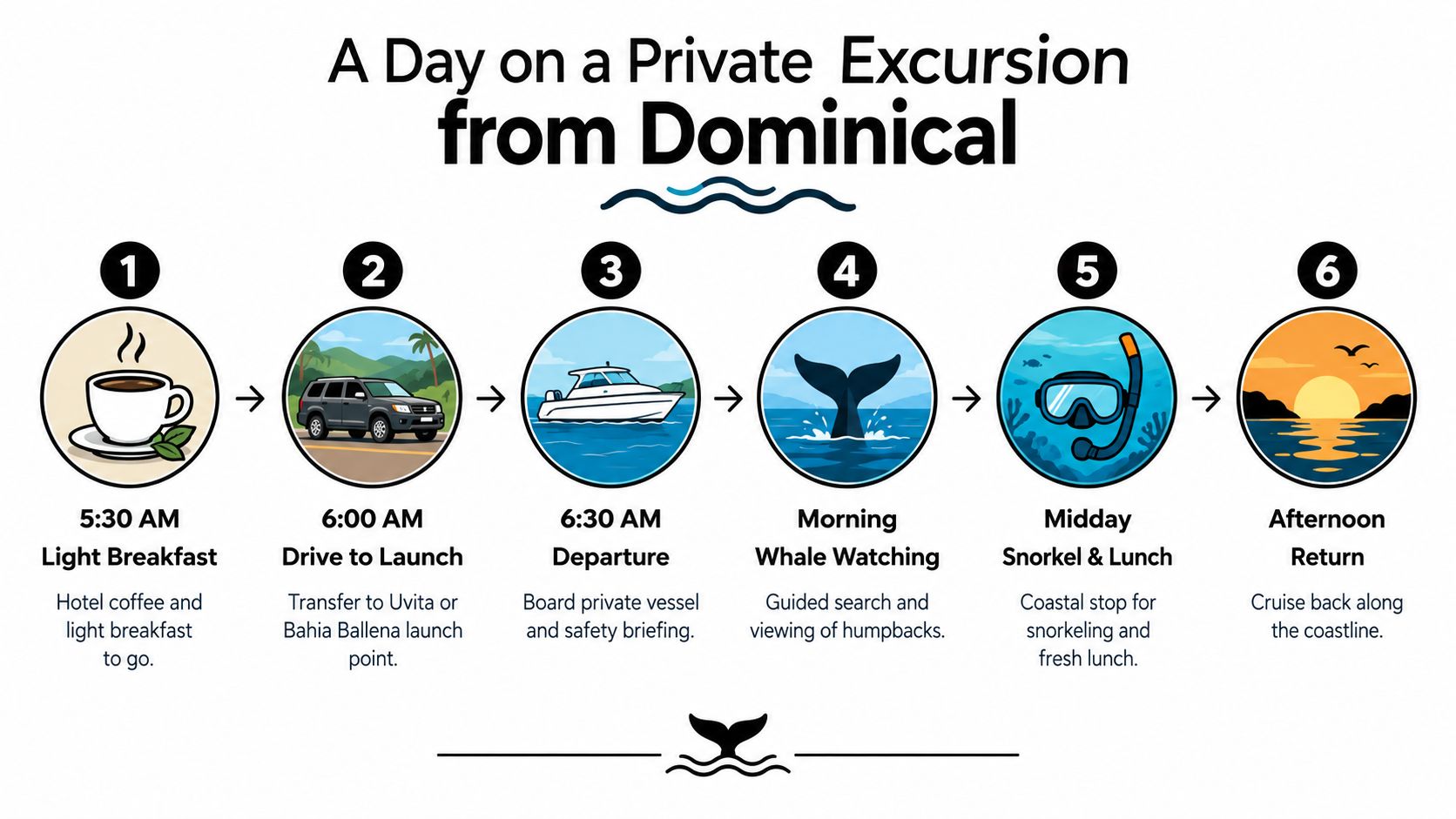
At 5:30 AM, you want a light breakfast, not a full resort feast. Coffee, fruit, maybe toast. Enough to steady you, not enough to regret once the boat starts moving. Then it's a short transfer at 6:00 AM toward the launch point in Uvita or Bahía Ballena, depending on tide, operator setup, and the day's plan.
By 6:30 AM, you're boarding. Good operators separate themselves here. You should get a proper safety briefing, life jacket fit, and a clear explanation of how recent sightings are shaping the route. A captain who pretends every day is the same is not the captain you want.
The working window on the water
The prime search period often runs from around 7:00 AM to 9:30 AM. This is the part guests romanticize, but in practice it's a disciplined search. You're moving slowly near the park boundary, scanning for blows, surface movement, birds, dolphin activity, and any cue the captain knows to trust. On stronger operations, there may also be passive listening with a hydrophone between surface events.
Then the rhythm changes. If whales have been active, the captain may stay with a legal, respectful observation window. If sightings have been sparse, they may widen the pattern and look for mother-calf pairs in calmer coves.
A drift snorkel stop can make sense later in the morning if sea state and guest energy line up. It should never feel forced. If the water is sloppy or the group is tired, skip it and keep the day elegant.
Return and reset
You're usually heading back between 11:00 AM and 11:30 AM, with towels, fruit, and a debrief that helps guests understand what they just saw. That conversation matters more than people think. A naturalist who can explain behavior turns a pleasant boat ride into a memorable wildlife experience.
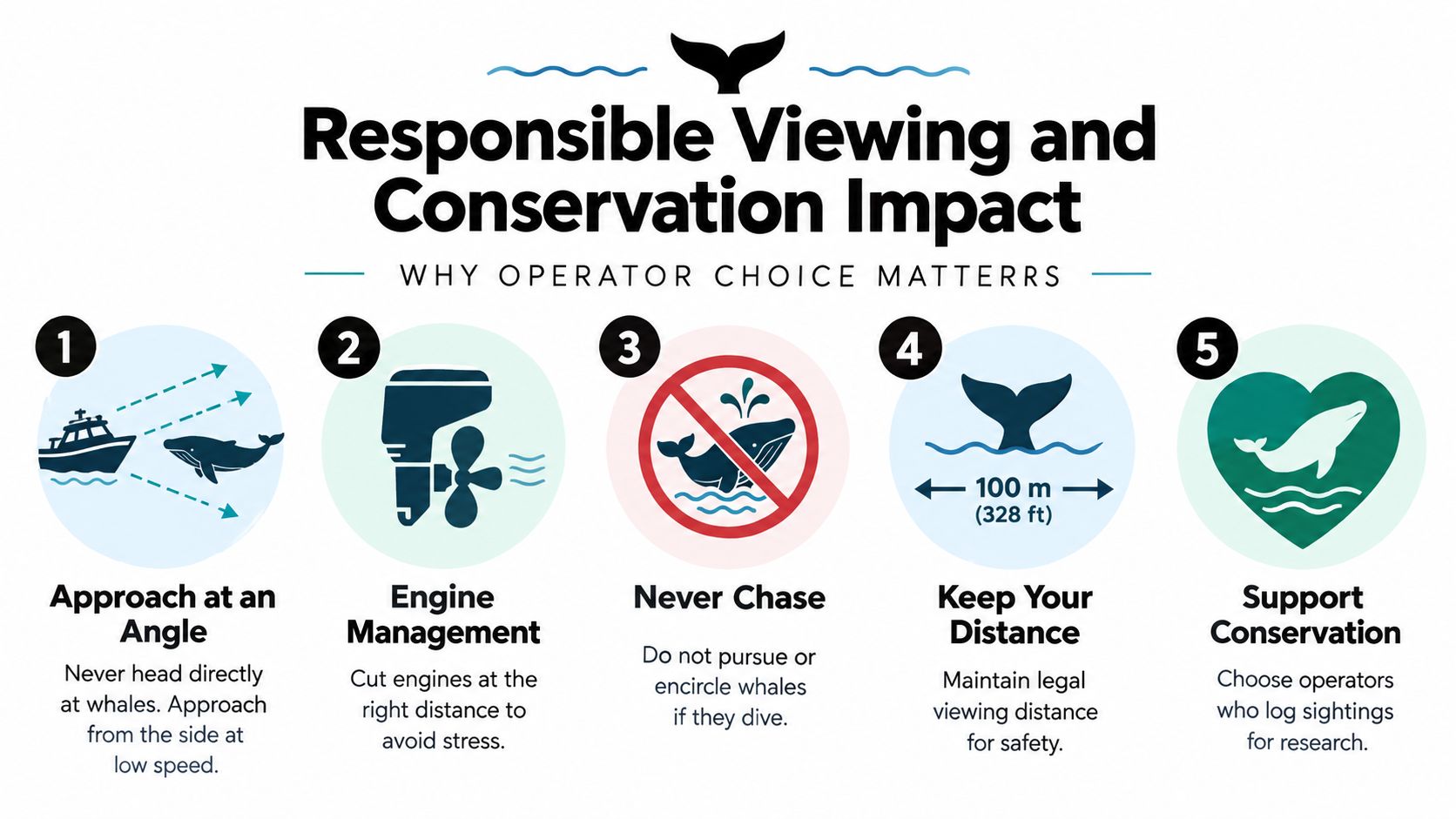
Some operators also encourage guests to log identifiable whales or sightings on platforms such as Happywhale. That's a nice touch when done well. It gives the excursion a longer afterlife and connects travelers to something beyond their own photos.
A well-run half day leaves you energized enough to enjoy lunch, a massage, or an afternoon nap. A badly timed full-day push can flatten the rest of your retreat.
One practical note. Starting from Dominical is convenient and retreat-friendly. Starting from farther afield can make sense for a dedicated wildlife itinerary, but once long transfers stack up, the day stops feeling restorative. That's a worthwhile trade only if whales are the main event of the whole trip.
What to Pack and How to Shoot From a Boat
People usually underpack for wind, overpack for fashion, and completely misjudge how hard boat photography is. Keep it simple and functional.
Pack for exposure, not for the hotel
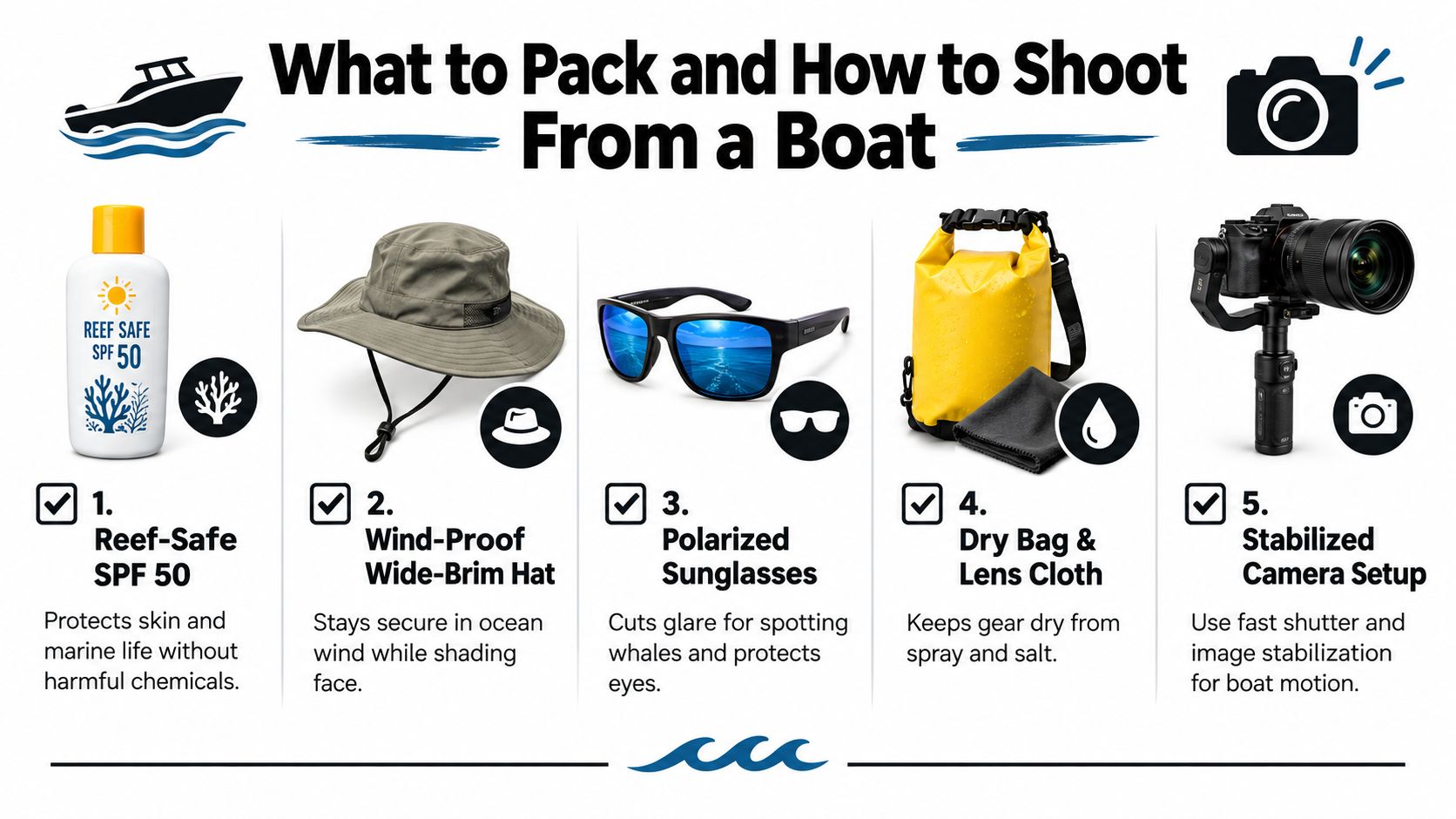
Bring the things that solve actual friction on a small vessel:
Reef-safe SPF 50 because reflection off the water burns people fast
A wide-brim hat that won't fly off because floppy style hats are useless if you spend the whole ride holding them
Polarized sunglasses to cut glare and help you spot blows sooner
A lightweight long-sleeve layer because early departures can feel cool even in Costa Rica
Quick-dry clothing because spray is normal, not exceptional
A dry bag and lens cloth because salt gets everywhere
Handle seasickness early
If you're prone to motion sickness, deal with it before boarding. Don't wait to “see how you feel.” That's amateur behavior and it ruins mornings.
A few practical rules help:
Take motion medication before departure so it has time to work
Choose a more stable seat near the center of the boat rather than the bow
Keep your eyes on the horizon when you're not actively shooting
Use ginger-based options if you're sensitive and prefer a lighter approach
Camera setup that actually works
For interchangeable-lens cameras, 70 to 200mm is a workable minimum and 100 to 400mm is the more useful range for flexibility. Set shutter priority around 1/1000s or faster because both you and the whale are moving. If your camera has image stabilization, use it. If it has burst mode, use that when a whale arches to dive or starts to breach.
Video is smarter than stills for many beginners, especially if your reaction time is slow. You can always pull memories from a sequence later. What you can't do is recreate a missed surfacing because you were fiddling with settings.
Most first-timers zoom too tight, lose the animal, and come home with a cropped chunk of gray back. Shoot wider than you think.
Compose better
The best frames usually aren't body-only records. They include context. The blow against morning light. The fluke with a sliver of shoreline. The whale placed inside the scale of the Pacific instead of filling the whole frame with no story.
Brace against the gunwale when you can, keep both elbows in, and follow the animal's rhythm rather than snatching at every splash. Boat photography rewards patience more than aggression.
What a Whale Watching Excursion Really Costs
Cost matters. Not because this should be cheap, but because whale watching quotes in Costa Rica can look similar until you inspect what's included.
What drives the price
The biggest cost factors are straightforward:
Tier | Group Size | Duration | Typical Price (USD) | What Is Included |
|---|---|---|---|---|
Shared coastal tour | Shared | Half day | Varies by operator | Usually boat, guide, basic refreshments, often park-related inclusions |
Small-group premium tour | Small shared group | Half day to extended half day | Varies by operator | Usually more space, more guide attention, upgraded service, sometimes snorkel gear |
Private charter | Private | Half day or custom | Varies by operator | Private vessel, flexible pacing, tailored route, premium hosting, often better comfort and privacy |
I'm keeping that table qualitative on purpose. Pricing shifts by season, launch point, vessel type, and what an operator bundles. If you see an exact quote online, check what's underneath it before comparing it to anything else.
What's worth paying for
A fair whale watching excursion price usually reflects:
Vessel type and condition. A clean, well-maintained boat with proper shade, communication gear, and safety equipment costs more to run.
Group size. Fewer guests means more space, better visibility, and less waiting for other people's logistics.
Guide quality. A captain alone is not the same as a captain plus bilingual naturalist or marine-focused guide.
Bundled inclusions. Some operators include water, fruit, snorkeling gear, safety equipment, and park-related fees. Others unbundle everything.
One factual example worth noting. VIVARA's whale watching experience is offered in shared and private formats and includes park entry fee, a bilingual tour guide, water and fruit, snorkeling gear, and safety equipment. That's useful not because it's the only option, but because it shows the sort of inclusion list you should benchmark against.
Hidden costs people forget
Ask about these before you book:
Transport to launch if you're staying in Dominical, Uvita, or farther south
Gratuity expectations for captain and guide
Drone surcharges or restrictions
Wet landing logistics if beach boarding is involved
Cancellation policy for weather changes
The value test
If a price looks suspiciously low, something usually gave way. It may be guide training, insurance clarity, safety equipment quality, or simple crowding.
A fair rate should include the essentials you cannot responsibly strip out. What it should never exclude is basic safety, legitimate guiding, and legal, conservation-aware operations.
Responsible Viewing and Conservation Impact
A whale watch can be the high point of a retreat week, or the one outing that leaves everyone with a bad taste. I have seen both. Guests come back glowing when the captain gives the animals room and lets the encounter unfold. They come back tense when a boat crowds a mother and calf just to keep phones pointed at the surface.
That difference starts with operator choice.
A careless approach changes animal behavior fast. Head-on positioning forces whales to divert. Pushing after a dive turns the outing into a chase. Lingering around a resting pair for too long turns a rare sighting into pressure. International whale-viewing guidance commonly calls for keeping distance from large whales, slowing to very low speed in approach zones, limiting time with the same animals, and approaching from the side rather than directly in front (NOAA marine life viewing distances and guidelines). That is basic fieldcraft, not red tape.
What good operators do on the water
You can spot a serious crew within minutes.
They set up an angled approach instead of driving straight at the whale
They control speed early and keep engine noise low when animals surface nearby
They do not pursue a missed breach just to create a better show
They limit time with one group even when guests want longer
They watch behavior closely and back off the moment the whales start avoiding the boat
Noise matters too. Research and operating guidelines have long noted that motorized vessels can disrupt cetacean behavior, especially when speed, idling, and abrupt maneuvers are poorly managed. Practical guidance is straightforward: keep speeds low in caution zones, avoid erratic course changes, and cut unnecessary engine noise (Australian national whale and dolphin watching guidelines).
For retreat travelers, this is not a side issue. You are not booking whales in isolation. You are placing one marine experience inside a week built around rest, good food, privacy, and a sense that your trip is aligned with the place you came to enjoy. If that matters to you, read VIVARA's perspective on biodiversity protection in Costa Rica hospitality before you choose an operator.
The reality is simple. A cheaper boat can cost more where it matters, in stress placed on animals and in standards guests never see until something goes wrong.
Choosing the Right Excursion for Your Trip
The right format depends less on your budget than on your trip's center of gravity. Are whales the reason you're coming, or are they one exceptional chapter in a more rounded Costa Rica stay?
If whales are the main objective
Choose a dedicated multi-day wildlife plan based around the Osa side, Drake Bay, or another marine-focused base. That gives you multiple weather windows, more than one chance on the water, and less pressure on a single outing to deliver everything.
This format suits travelers who care about photography, species variety, and range. It also suits people who don't mind transfers, shifting conditions, and a trip built around wildlife first and comfort second.
If you're already staying near Dominical
Add one curated whale watching excursion to a retreat week. That's the smarter move for couples, families, friend groups, and wellness travelers who want a premium nature experience without turning the whole trip into a marine expedition.
You keep your mornings purposeful, your afternoons open, and your overall stay balanced. For many affluent but practical travelers, that's the better trade.
A quick decision filter
Choose the retreat-embedded model if these matter most:
Shared time together over maximizing offshore range
Low logistical friction over chasing every possible sighting
A broader reset that includes food, rest, movement, and ocean time
Choose a dedicated whale-focused itinerary if these matter most:
Multiple boat days
Photography priority
Higher tolerance for travel complexity
If you want to compare a retreat-friendly option directly, VIVARA's whale watching experience in Costa Rica shows the structure many Dominical-area guests are looking for. One well-timed boat day, properly guided, integrated into a larger stay.
For brands, founders, and community leaders, this matters too. A whale outing inside a retreat week creates a shared memory people talk about long after checkout. That kind of experience design helps groups bond naturally. It also gives hosts a more meaningful way to connect with their audience than another generic workshop block in a beautiful room.
Questions Travelers Ask Before Booking
Will I definitely see whales?
No. You're booking during a seasonal window, not reserving a performance. Costa Rica's two humpback seasons improve your chances, especially in the stronger months, but no responsible operator should promise exact behavior.
What else might we see?
Dolphins are a common bonus. Sea turtles can also appear. False killer whales and pilot whales are possible but not something to count on. Treat them as welcome surprises, not itinerary items.
What if I get seasick?
Choose a steadier boat and be honest about your tolerance. If comfort is your top concern, prioritize vessel stability and a shorter coastal route over maximum offshore range. If you're committed to photography and fewer people, a smaller boat may still be worth it, but prepare properly.
How far ahead should I book?
For January, February, July, and August, book early if your dates are fixed. Those windows attract the most interest because they align with either strong humpback timing or popular travel periods. In shoulder months, you usually have more flexibility, but I still wouldn't leave a private charter decision to the last minute if this is a key part of your trip.
If you want a Costa Rica stay where whale watching fits naturally into a week of design-led villas, curated meals, and personalized adventure, VIVARA offers that kind of rhythm in Dominical. It's a strong fit for couples, families, friend groups, and retreat hosts who want one memorable boat day woven into a fuller experience, not a rushed excursion bolted onto the side of a vacation.
