The Vivara Content Team
All-Inclusive Couples Therapy Retreats Worth Booking
All-Inclusive Couples Therapy Retreats Worth Booking

You and your partner may still care for each other, yet spend most evenings managing schedules, answering messages, and circling back to the same unresolved argument. Weekly therapy can help, but a short appointment often ends just as the important conversation begins. That's why more couples are considering all-inclusive couples therapy retreats, which combine concentrated therapeutic work with lodging, meals, restorative practices, and time away from the routines that keep them stuck.

An all-inclusive retreat isn't a romantic holiday with a counseling session added. The strongest programs create a protected container for relationship repair, emotional regulation, shared experience, and follow-up. Some couples arrive for preventive maintenance, others are trying to address entrenched conflict, emotional distance, or the effects of trauma. The right format depends on the couple's current level of distress, safety, and willingness to participate.
This guide will help you evaluate what “all-inclusive” covers, why intensive formats can create momentum, which therapeutic approaches may fit different needs, and what a realistic Costa Rica itinerary looks like. You'll also find practical guidance on pricing, privacy, group size, seasonality, and the questions worth asking before you book. For a broader introduction to retreat-based wellness experiences, this guide to what a wellness retreat is offers useful context.
Introduction to All-Inclusive Couples Therapy Retreats
Modern couples therapy developed in stages rather than appearing as a single finished discipline. A PubMed review of couple therapy describes four phases, from the formation of marriage counseling between 1930 and 1963, through psychoanalytic experimentation, family therapy incorporation, and the ongoing period of refinement, diversification, and integration. Retreat-style intensives emerged later as a focused specialization, including a couples retreat model that began in Berkeley in 1990 and later expanded to rural Sonoma County.
That history matters because a retreat is best understood as a delivery format for structured relational intervention, not as a substitute for therapeutic quality. The same review found that the average person receiving couple therapy was better off at termination than 70% to 80% of individuals not receiving treatment. The finding doesn't mean every couple will have the same experience, but it does show why a carefully designed intensive can be more than a lifestyle indulgence.
A useful distinction: the destination creates space, but the therapeutic method creates direction.
Consider a couple who has tried weekly sessions. They understand that they interrupt each other, withdraw under pressure, and revisit old grievances, but the pattern returns between appointments. A retreat gives the therapist enough continuity to observe the cycle as it unfolds, slow it down, and help both partners practice a different response before they return home.
The keyword attracts several kinds of searchers. Some want a private marriage retreat after a breach of trust. Others want a couples counseling getaway that combines professional support with nature, food, and privacy. Still others are looking for relationship maintenance before resentment becomes a crisis. “All-inclusive” appeals to each group because it reduces logistical friction, allowing the couple to focus on the work rather than coordinate a hotel, meals, activities, and an outside clinician separately.
Costa Rica adds a particular kind of setting. Forest, ocean, wildlife, and open-air living can help couples step out of familiar roles, but scenery shouldn't be mistaken for treatment. A good program uses the setting to support reflection and reconnection while keeping clinical goals, boundaries, and post-retreat integration visible from the beginning.
What All-Inclusive Really Means for Couples
“All-inclusive” can describe very different experiences, so couples should read the program details carefully. In a therapeutic retreat, the phrase may cover accommodation, farm-fresh meals, private therapy intensives, educational workshops, guided wellness practices, nature activities, transportation within the program, and some form of integration support. It doesn't automatically mean that every excursion, private service, flight, or additional therapy session is included.
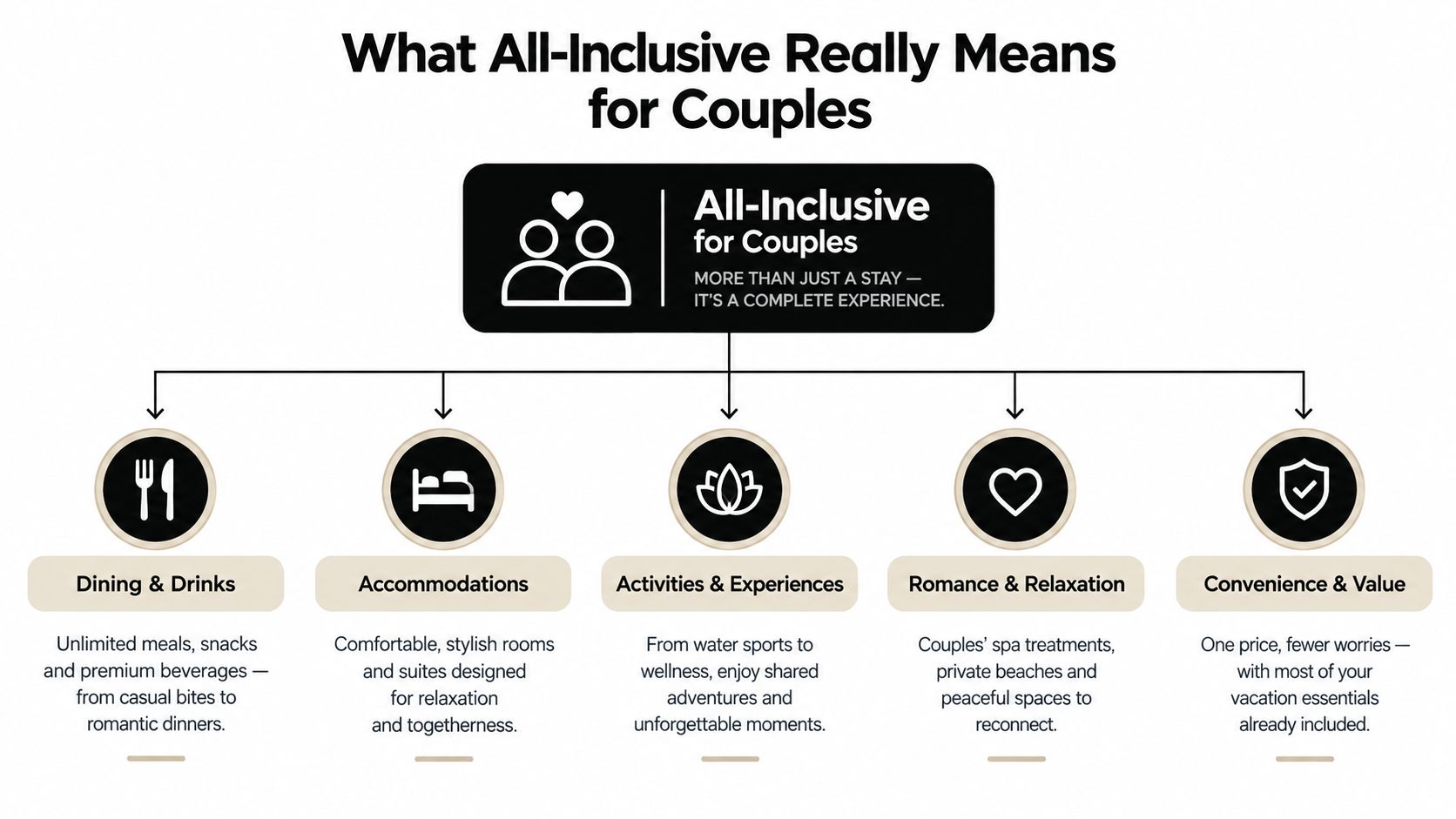
Think of the difference between booking a hotel and therapist separately versus entering a coordinated retreat container. With the first option, you're responsible for assembling the experience. With the second, the provider designs the rhythm between deep work, nourishment, privacy, movement, and rest.
The practical components to verify
Lodging: Ask whether the couple has a private villa or room, whether the therapist stays on-site, and how much separation exists between guest and clinical spaces.
Food: Confirm which meals, snacks, beverages, and dietary accommodations are covered. Fresh local cuisine can support the experience, but it should be clearly described rather than implied.
Therapy: Look for the number and type of sessions, preparation requirements, therapist credentials, and whether individual check-ins are possible.
Wellness and nature: Yoga, breathwork, massage, forest walks, ocean time, and guided excursions should complement therapy rather than replace it.
Follow-up: Ask whether the program includes integration calls, written practices, referrals, or a plan for continuing care at home.
Privacy and group size also have clinical significance. A private intensive allows the therapist to tailor the work closely to one relationship. A small group can create community and normalize shared struggles, but it may be less suitable when the couple needs discretion or highly individualized attention.
The pricing question should focus on value and fit, not on finding the lowest advertised rate. A cheaper package may exclude lodging, meals, travel, follow-up, or meaningful therapeutic time. A more curated program may cost more because it combines hospitality and professional services, but that only makes sense if the design serves your goals.
For a travel experience centered more broadly on connection and hospitality, this couples getaway overview can help you distinguish a relationship-focused stay from a clinically led intensive. The two formats may overlap in atmosphere, but they shouldn't be confused in purpose.
Why Intensive Retreat Formats Can Accelerate Progress
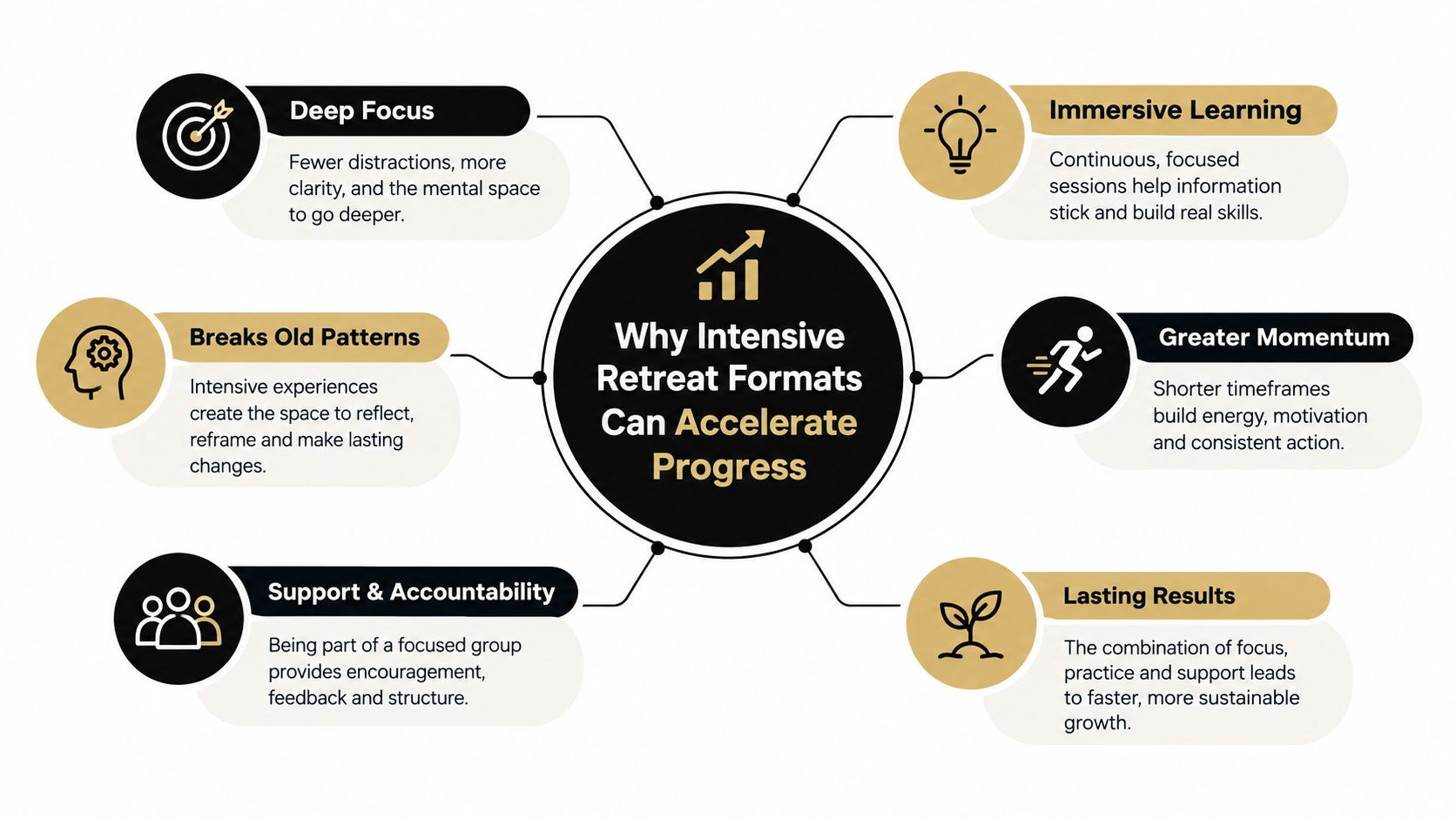
The central idea behind an intensive is dose compression. Instead of spacing relational work across isolated weekly appointments, the couple receives sustained, structured contact over several days. That continuity can reduce treatment latency, limit the number of times a difficult conversation must be restarted, and give the therapist more opportunity to coach new behavior in real time.
Research on established couples therapy models suggests that roughly 70% of distressed couples improve meaningfully, according to this review of couples therapy research. Concentrated formats can produce comparable clinical gains faster than weekly care, but the mechanism isn't just “more hours.” The quality of the method, pacing, therapist skill, emotional safety, and follow-up all matter.
Why continuity changes the work
In weekly therapy, a couple may spend part of each session remembering what happened, explaining the latest argument, and settling back into the room. A retreat compresses those transitions. The therapist can identify the couple's recurring cycle, interrupt it, and return to the same theme after a period of rest or reflection.
That rhythm also creates room for practice rather than insight alone. Partners might learn a structured listening exercise in the morning, try it privately during a walk, and bring the result back to a later session. Nature and shared meals become integration spaces, not entertainment inserted between appointments.
The format still needs limits. Long sessions can overwhelm couples who lack emotional regulation or whose conflict becomes unsafe. A reputable provider should assess whether both partners can participate voluntarily, whether there is coercion or violence, and whether individual stabilization should happen before joint intensive work. Couples dealing with acute personal risk may need separate clinical care first.
The retreat also shouldn't promise that a beautiful location will resolve a serious problem. A vacation can temporarily lower stress while leaving the underlying pattern unchanged. Therapeutic gains become more durable when the program names its approach, defines realistic goals, and provides a bridge back to everyday life.
Before booking, ask what “progress” means in the provider's model. It might involve improved emotional responsiveness, clearer conflict agreements, better communication, reduced distress, or a shared plan for continued therapy. The answer should be specific enough that you can recognize it after returning home.
Therapy Modalities and Wellness Practices You Will Encounter
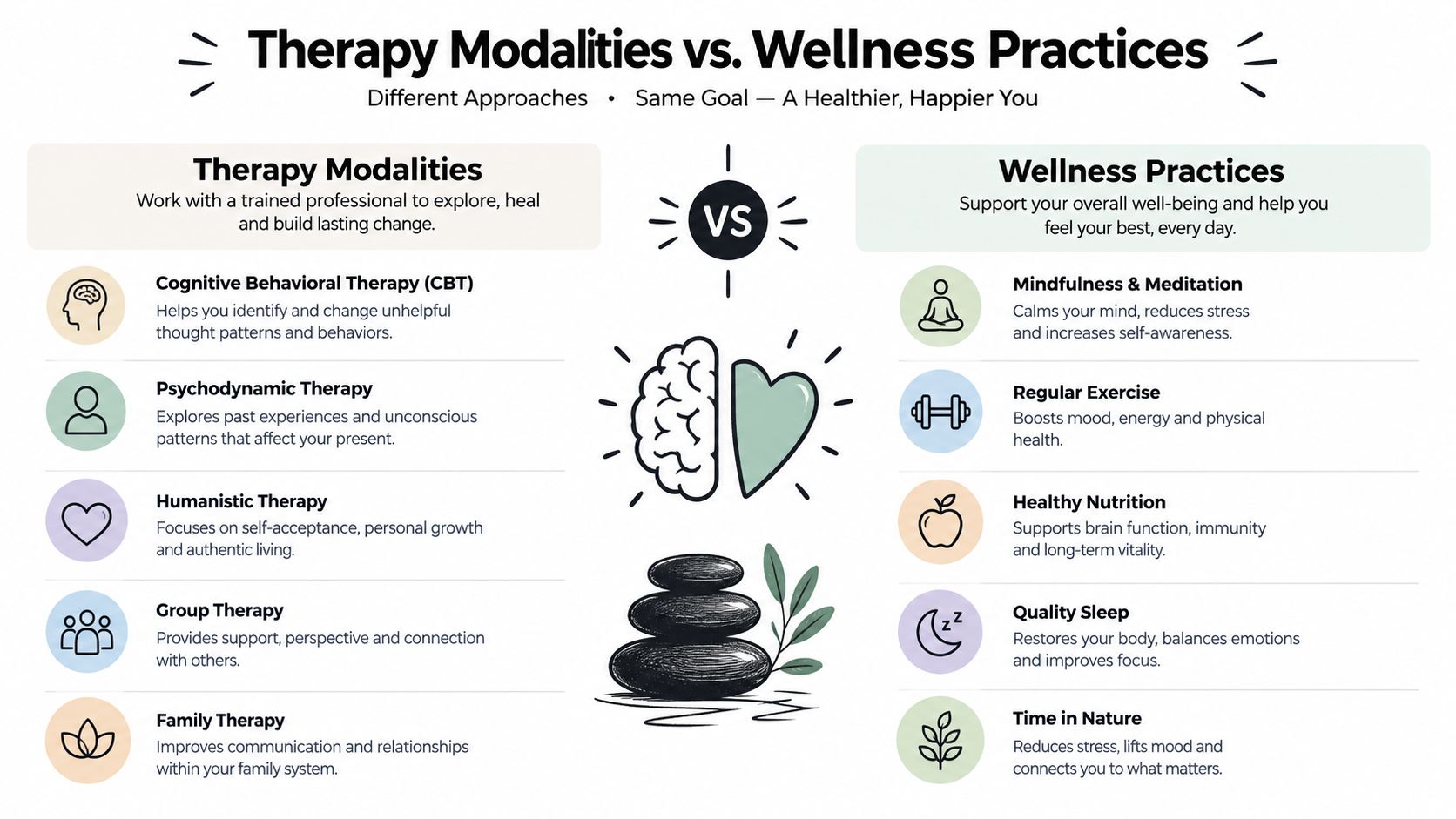
Retreats often combine a primary couples therapy model with regulation practices and restorative activities. You don't need to become a therapist to compare them, but the provider should be able to explain its method in ordinary language.
Matching the method to the relationship
Emotionally Focused Therapy, or EFT, focuses on attachment and the emotional cycle beneath repeated arguments. It may suit couples who care about each other but become trapped in pursue-and-withdraw patterns. The therapist helps partners express vulnerable needs and respond with greater emotional availability.
Gottman-informed work tends to emphasize friendship, conflict management, repair attempts, shared meaning, and observable interaction habits. It can be useful for couples who want practical tools, clearer conversations, and a structured way to address recurring disagreements.
Trauma-informed integrative therapy considers how trauma symptoms affect attention, trust, emotional regulation, and perceived partner responsiveness. A pilot study on integrative intensive retreats for veteran couples and families found better relationship adjustment for veterans and their romantic partners after the retreat, alongside decreases in trauma symptoms.
That evidence supports a dual-track protocol. Couples may need relational repair and individual symptom stabilization at the same time. A partner who is hypervigilant, numb, depressed, or easily triggered may struggle to use communication skills until the nervous system feels safer.
Mindfulness, breathwork, somatic awareness, gentle movement, and time in nature can support regulation. They're valuable when they help partners notice activation before it becomes an argument, but they aren't replacements for qualified therapy. A provider should explain who leads each practice and how it connects to the relationship goals.
Ask the retreat to name its modality clearly, then ask how the method appears in the schedule. If the answer consists only of broad terms such as “healing,” “energy,” or “connection,” you may not have enough information to evaluate the experience. Couples seeking body-based support can also review this explanation of somatic therapy retreats, while checking that any clinical work is provided by appropriately qualified professionals.
What to Expect Day by Day on Retreat
A five-to-six-night stay gives a couple enough time to alternate focused sessions with recovery, private conversation, and unstructured enjoyment. The following itinerary is an example of pacing, not a universal prescription.
Arrival day should feel deliberately quiet. After travel and settling into a private room or villa, the couple might share a relaxed meal, meet the retreat team, and clarify intentions. The therapist may review boundaries, confidentiality, communication agreements, and what to do if either partner becomes overwhelmed.
The first full day can begin with a substantial therapy block while attention is fresh. The therapist may map the couple's negative cycle, identify the central emotional injury, or establish a shared goal. Later, a forest walk, gentle movement class, or quiet time near the ocean gives both partners space to absorb the conversation without demanding an immediate conclusion.
The middle day often carries the deepest work. A morning session can address conflict or trust, followed by lunch and a period of individual reflection. An afternoon activity, such as whale watching, a guided nature experience, or a low-pressure adventure, lets partners practice curiosity and cooperation in a setting that isn't defined by their conflict.
The final full day should shift toward integration. Couples may rehearse a repair conversation, write agreements for difficult moments, identify warning signs, and decide how they'll continue therapy or check-ins at home. An evening date or shared meal can remain unstructured, allowing connection to exist without being analyzed.
Departure day is for closure rather than another marathon of emotional work. The therapist should help the couple name what changed, what remains unresolved, and which commitments are realistic once work, family, and ordinary stress return.
Costa Rica's seasons shape the experience. December through April is the dry season, with higher prices and larger crowds. May through November is the green season, when rates are 30% to 50% lower, tourist numbers are smaller, and afternoon rain generally doesn't interfere with morning wellness activities, according to this Costa Rica wellness planning guide.
How to Choose the Right Retreat and Understand Pricing
Start with the relationship need, not the view from the property. A couple seeking preventive maintenance may benefit from a small educational program with private exercises, while partners facing severe conflict, betrayal, or trauma-related symptoms may need a private intensive with a therapist who can adapt the work closely.
Questions to ask before paying
Who provides therapy? Verify licenses, relevant couples training, experience with intensives, and any specialized expertise your situation requires.
What method guides the work? Ask whether the retreat uses EFT, Gottman-informed therapy, trauma-informed integration, or another clearly defined approach.
How private is the experience? Confirm whether you'll work alone, with other couples, or through a blend of private sessions and group workshops.
What does the fee include? Request a written breakdown of therapy, lodging, meals, activities, transportation, materials, taxes, and follow-up.
What happens afterward? Look for integration sessions, home practices, referrals, or a clear continuation plan.
How does screening work? The provider should assess safety, readiness, and whether a joint retreat is clinically appropriate.
Many Costa Rican retreat centers that include food and activities start around USD 1,500 for five to six nights, according to this retreat planning resource. That figure is a starting point for retreat-center stays, not a universal price for private therapy, premium villas, international travel, or bespoke programming.
Peak-season couples should generally plan four to six months ahead, while holiday weeks may require six to eight months of advance booking, as the same planning resource advises. Compare the actual therapeutic time and follow-up support, not only the nightly rate.
Choosing Your Retreat Model
Decision Factor | Intimate Boutique Retreat | Large Resort Program |
|---|---|---|
Privacy | More personal space and closer customization | More shared spaces and scheduled group activity |
Therapeutic fit | Well suited to focused relationship goals and discreet work | Useful for couples who enjoy community learning |
Hospitality | Curated meals, villas, and tailored activities | Broad amenities and a larger operational team |
Pace | Flexible, quieter, and easier to adapt | More standardized itinerary |
Value | Pays for personalization and intentional design | Pays for variety, scale, and resort infrastructure |
The most expensive option isn't automatically the most suitable. Choose the model that matches your distress level, privacy needs, therapeutic goals, and preferred way of reconnecting.
Why Costa Rica and VIVARA Fit Restorative Connection
Costa Rica already has a distributed wellness ecosystem, rather than a single retreat corridor. Wellness properties and experiences extend through Nosara, La Fortuna, Guanacaste, Limón, and the Central Valley, with combinations of nature, yoga, meditation, detox, thermal rivers, and spa care described in this Costa Rica destination wellness overview. That geographic variety lets couples choose a setting that fits their preferred rhythm, from quiet rainforest restoration to ocean-facing adventure.
The country also supports an important middle ground between clinical treatment and a conventional romantic holiday. A couple may want professional guidance without feeling that every hour is a therapy appointment. They may want to work on communication in the morning, eat locally sourced food at lunch, and spend the afternoon hiking, watching wildlife, or sitting together in the open air.
That market exists beyond one property. Jacada Travel identifies Nayara Gardens as especially suited to a romantic honeymoon or couples trip, supporting the broader appeal of private, intimate wellness experiences for two rather than only large-group programs.
A private setting with room to choose
In Dominical, VIVARA offers an intimate, founder-led hospitality setting for up to 14 guests, with architecturally distinct villas, personalized V-star service, and an on-demand menu of experiences. Couples can shape a private stay around restoration or adventure, with options that include whale watching, canyoning, zip lining, horseback riding, paragliding, sunset cruises, and private air charters.
The property's food program is led by Michelin-trained culinary leaders, with farm-fresh, ocean-caught, and jungle-foraged ingredients shaped around the guests rather than a fixed menu. Each villa also sponsors a rescued animal, while guest presence supports lifeguard training, living wages, and turtle conservation. Those details matter to couples who want their retreat to reflect broader values such as regenerative travel, community connection, and purposeful hospitality.
VIVARA may fit couples who want to bring their own qualified therapist or organize a customized relationship-focused stay without formal programming being the entire experience. It's important to confirm the clinical arrangements, therapist credentials, session structure, and follow-up separately, because a hospitality retreat and a licensed therapy intensive serve different roles.
The right Costa Rica retreat should leave you with more than beautiful photographs. It should give you enough privacy to speak, enough structure to make progress, and enough spaciousness to remember how you want daily life together to feel.
VIVARA offers private, nature-immersive stays in Dominical with intimate villas, personalized service, farm-fresh cuisine, and adventure or restoration experiences for couples seeking meaningful reconnection. Visit VIVARA to compare the setting with your therapeutic goals and begin planning a retreat designed around the way you and your partner want to reconnect.