The Vivara Content Team
Casa Tara Retreat Costa Rica: A Complete Guide
Casa Tara Retreat Costa Rica: A Complete Guide

You arrive in Costa Rica with a full calendar, a tired nervous system, and a vague hope that a beautiful setting will solve what ordinary travel has reinforced. Then the airport transfer, restaurant decisions, activity bookings, and group messages begin. A retreat only becomes restorative when someone has designed the experience well enough to remove that friction.
That distinction matters when comparing Casa Tara Retreat with a purpose-built private retreat in Dominical. Casa Tara is a luxury hotel, wellness, and yoga resort on the Baja California Sur coast, not Costa Rica, while VIVARA is an intimate, founder-led estate in Costa Rica, formerly known as Punta Gabriela. Both sit within the broader nature-first hospitality conversation, but they answer different travel needs. Casa Tara offers a small-scale beachfront hotel with wellness amenities, while VIVARA is structured around a private, full-service gathering for up to 14 guests.
Understanding the Intimate Escape Experience
Casa Tara Retreat sits on Mexico's Baja California Sur coast, while VIVARA is an intimate estate in Dominical, Costa Rica. Their locations and operating models differ. Casa Tara presents a luxury hotel, wellness, and yoga resort experience. VIVARA, formerly known as Punta Gabriela, is organized as a private, buyout-style estate where a group can share one setting and receive full-service support.
Consider a small leadership team arriving after months of deadlines. If they must arrange meals, coordinate transport, choose activities, and keep checking messages, the property has added logistics to an already demanding trip. A well-run estate removes those decisions through planned hospitality, shared spaces, and service that keeps the group together without forcing constant programming.

Rest needs an environment
The same design serves different groups in different ways. A couple may want an unhurried breakfast, a quiet afternoon near the water, and conversation away from resort noise. A family may need grandparents, parents, and children to share meals while retaining separate places to sleep. A team may move from a workshop to dinner without losing the trust developed during the session.
Casa Tara's public positioning supports a wellness-led version of this experience. Its official About Us page describes a luxury hotel, wellness, and yoga resort with straw-bale wall insulation and partial solar energy use. These features show how the property treats construction and energy use as part of the guest experience, rather than as details separate from hospitality.
Practical rule: Choose the retreat model according to the interaction you want to create. A scenic hotel suits independent days. A private estate suits a shared rhythm.
The value of fewer competing inputs
A retreat earns its value through coordination as much as scenery. Meals, gathering areas, private rooms, and outdoor space should support the group's intended pace. Too much programming can make rest feel like another schedule. Too little service can leave guests managing the stay themselves.
This model also carries a trade-off. A buyout-style estate works best when guests want shared time and are willing to coordinate around one host-led environment. Travelers seeking anonymity, daily independence, or a broad choice of restaurants may prefer a conventional hotel.
The practical test is direct: will the property make your group manage the visit, or will it handle the details that keep people together? That answer often matters more than an additional decorative feature.
Design, Architecture, and the Nature-First Philosophy
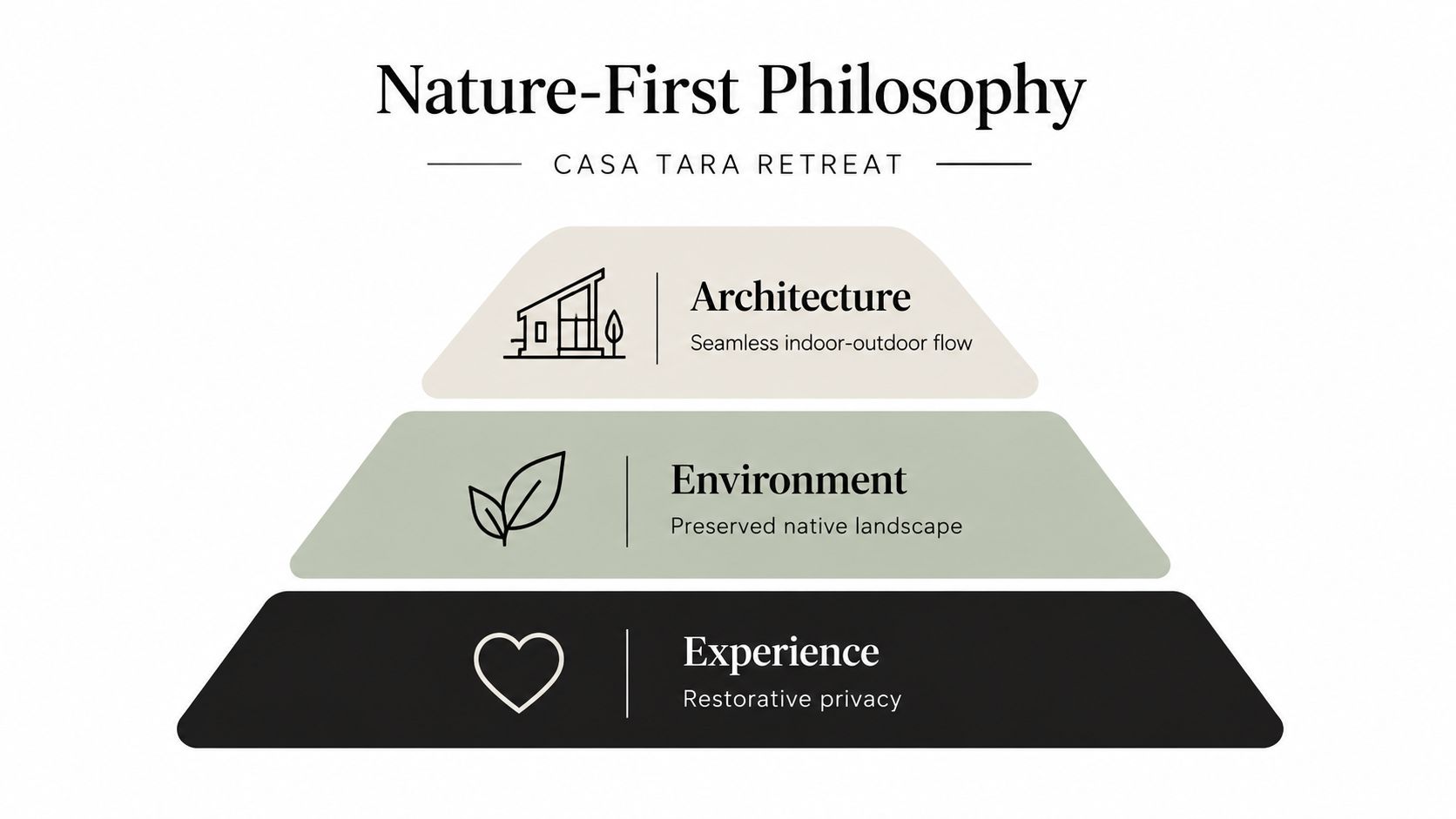
A retreat's design earns its keep when it changes how guests use the day. A villa oriented toward its surroundings can support shared meals and spontaneous conversation, while a private terrace offers solitude without disconnecting someone from the group. Shaded paths, quiet sleeping spaces, and framed views reduce the need for constant scheduling. The setting carries part of the restorative work.
VIVARA is the Costa Rica property formerly known as Punta Gabriela. Founders Jesse and Karen shaped the estate around distinct villas, a preserved natural setting, and capacity for up to 14 guests. The arrangement gives visitors private space while keeping the estate legible as one shared environment. That matters operationally: hosts can coordinate a group without forcing everyone into the same room or timetable.
From visual appeal to behavioral design
Nature-first architecture should shape conduct, not merely provide a dramatic backdrop. A communal dining room can establish meals as the social anchor. Separate villas protect guests from the fatigue of continuous interaction. Outdoor transitions slow movement between activities and give the surrounding environment a role in the itinerary.
Casa Tara follows a related philosophy in Baja California Sur, but it is a separate property from VIVARA. Independent coverage describes its eco-friendly materials, solar-powered lighting, and Feng Shui-informed spatial planning in this review of sustainable hotels in Baja California Sur. The practical lesson applies across both models: materials, lighting, circulation, and orientation should reinforce the experience the retreat promises.
Privacy without isolation
A larger resort provides more facilities, but guests often spend more time choosing venues, following operating schedules, and moving through shared public areas. An intimate estate gives the host tighter control over sound, pacing, transitions, and the social temperature of the stay. That control is part of the value of a buyout-style property.
VIVARA therefore suits groups seeking a contained setting for conversation, recovery, celebration, or focused work. Travelers who want multiple restaurants, a busy social scene, or conventional hotel anonymity may be better served by a resort. The trade-off is clear: an intimate estate offers coherence and discretion, while a large property offers variety and independence.
The useful design test is simple. Does the environment help guests do less, notice more, and relate with greater ease? If it does, architecture has moved beyond decoration and become part of the retreat's operating system.
Culinary Excellence and Curated Wellness Activities
Food becomes part of wellness when it supports the group's actual rhythm. Rigid menus and fixed dining times may look organized, but they can create the same pressure guests hoped to escape. A better model begins with the people at the table, then builds meals around appetite, energy, allergies, local ingredients, and the mood of the day.
VIVARA describes dining led by Michelin-trained culinary leaders with experience in New York's top kitchens. Its approach uses farm-fresh, ocean-caught, and jungle-foraged ingredients without imposing a fixed menu. For guests, that means the meal can function as nourishment, celebration, or a slower social ritual rather than a generic wellness obligation. The principles behind this model are explained in this guide to farm-to-table dining.
Match the program to the purpose
A useful retreat itinerary begins by naming the desired outcome. The group might want deep rest, physical challenge, creative focus, relationship repair, or a mixture that changes from day to day. Once that outcome is clear, activities become tools rather than proof that the group is staying busy.
A practical menu might include:
Deep restoration: Sleep late, schedule private meditation, take unstructured time, and keep meals leisurely.
Shared adventure: Combine canyoning, zip lining, horseback riding, whale watching, or paragliding with a relaxed evening meal.
Ocean connection: Plan a sunset cruise or another water-based experience that gives the group a shared memory without demanding constant exertion.
Focused gathering: Use the estate for a mastermind, brand community session, or team offsite, then let the surrounding scenery create a clean break from work.
The right itinerary leaves open space. A day packed with transfers and activities can be memorable, but it won't necessarily be restorative. Guests need enough flexibility to change plans when weather, energy, or conversation points in another direction.
Why service design matters
The “V-star” service model is built around personalization rather than a standard activity schedule. That distinction matters because groups rarely arrive with identical needs. One person may want a strenuous morning, another may need quiet, and a third may be using the trip to mark a personal transition.
A strong host absorbs those differences before they become logistical problems. They coordinate timing, food preferences, transport, guides, and changes without making the group feel like it's managing a project. That is where premium hospitality earns its value. The benefit isn't access to more activities. It's the removal of the administrative load around them.
For facilitators, the principle is transferable: plan the anchors, leave breathing room, and make every optional element easy to accept or decline. For guests, ask whether an estate can customize the experience before you book. A retreat that only offers a beautiful setting may still leave you doing the work.
The Economics of Regenerative Impact
A luxury retreat earns its premium in more than rooms, views, and attentive service. Guests increasingly want to understand where their spending goes, who benefits from it, and whether the operation respects the place hosting them. For Casa Tara, that question is tied to VIVARA's shift from Punta Gabriela to a more intimate, buyout-style estate with full-service culinary support and a defined ecological purpose. The model creates value through both the guest experience and the way the property operates.
VIVARA connects each villa with the sponsorship of a rescued animal, while stays support lifeguard training, living wages, and turtle conservation. These commitments make impact part of the operating model rather than a separate donation request. The trade-off is that a lower-volume, service-intensive estate carries higher operating costs than a conventional hotel, while giving groups more control over privacy, food, and daily rhythm.
Look for a model, not a slogan
Regenerative tourism asks a property to consider how employment, procurement, conservation, guest behavior, and local relationships affect one another. This explanation of regenerative tourism clarifies why the approach extends beyond sustainable materials or energy efficiency.
Travelers comparing retreats can test the model with practical questions:
Local participation: Are local people employed, trained, and paid fairly?
Environmental connection: Does the stay support a specific conservation effort?
Operational transparency: Can the property explain what guest spending makes possible?
Guest behavior: Does the experience encourage respect for wildlife, water, land, and community life?
Costa Rica's protected areas give this operating philosophy added relevance. The country's nature is not decorative scenery. It carries social and ecological value, so hospitality decisions affect more than the guest's immediate comfort.
The trade-off behind ethical luxury
A purpose-led stay may cost more than basic accommodation because it funds skilled labor, careful sourcing, conservation, and a lower-volume service model. That premium still requires scrutiny. Regenerative language does not excuse unclear pricing, limited inclusions, or weak hospitality.
The responsible buyer evaluates both sides of the transaction. The estate should deliver a satisfying stay on its own, while its operating choices give that comfort a wider meaning. In practice, the value depends on whether VIVARA can make its commitments visible through consistent service, credible local relationships, and a guest experience that does not treat ecological impact as a marketing add-on.
Who Should Choose an Intimate Full-Estate Retreat
A full-estate retreat suits groups with a shared purpose, whether that means repairing connection, marking a milestone, making decisions, or creating space for recovery. The property can remove hotel schedules, public dining rooms, and unrelated guests from the experience. It also makes the group responsible for the atmosphere, so the format works best when guests are willing to participate in the design of their time together.
Couples and families
Couples gain privacy without giving up attentive service. They can plan intentional relational work, celebrate a milestone, or spend several days free from domestic logistics. The setting supports closeness, but it cannot create it. Phones may need to be put away, difficult conversations approached openly, and unstructured time protected.
Multi-generational families need a different arrangement. Different sleep patterns, energy levels, and mobility needs call for private areas as well as comfortable communal rooms. A collection of villas may serve the group better than one large house. Grandparents can rest, younger guests can stay active, and everyone can return to a shared meal without forcing the entire party into one rhythm.

Friends and celebrations
Friend groups often want a milestone trip that feels personal rather than packaged. A private estate lets the host shape meals, music, activities, and the pace of the celebration. The trade-off is social responsibility. If some guests want nightlife while others prefer early mornings and quiet, the itinerary must protect both preferences instead of allowing the loudest group to set every plan.
Brands, teams, and communities
Entrepreneurial teams can use a contained estate for a mastermind, strategy retreat, or restorative offsite. Distance from workplace routines creates room for focused discussion, while shared meals and guided activities support trust outside formal sessions.
Brands can also bring customers, creators, founders, or ambassadors into direct contact with their stated values. The gathering needs genuine utility, such as learning, recovery, connection, or adventure. Without that substance, guests experience the event as an advertisement.
VIVARA's shift from Punta Gabriela to a more intimate, buyout-style estate changes the value proposition. The group receives coordinated hospitality, full-service culinary support, and an operating model tied to ecological impact rather than a standard boutique hotel stay. That format suits hosts who want the property, food, schedule, and group culture managed as one experience.
Casa Tara is a different fit for travelers seeking a beachfront wellness and yoga hotel in Baja California Sur. An independent Casa Tara property listing describes 2 outdoor pools, 2 hot tubs, a 24-hour health club, a restaurant, and free WiFi. Those amenities suit an individual hotel stay. A full-estate retreat suits a coordinated group experience.
Navigating Logistics and Seasonality
Dominical sits on Costa Rica's central Pacific coast, so planning should begin with the arrival sequence rather than the room itself. International travelers typically enter through a major Costa Rican airport, then arrange a domestic connection or a ground transfer suited to the group, luggage, and road conditions. Private transport is usually the simpler choice for a retreat group because it keeps arrivals together and avoids asking guests to coordinate separate legs.
Book the estate and transport as one planning exercise. Confirm arrival windows, dietary needs, activity preferences, accessibility considerations, and the balance between scheduled programming and free time before finalizing the itinerary. A private retreat works best when the host knows what the group is trying to achieve, not just how many beds it needs.
Match the month to the purpose
Costa Rica's Pacific coast has a dry season from December to March, with April as a transition month and the rainy season running from May to October, according to Costa Rica's official climate guidance. July and August bring a mid-season decrease in rainfall known as veranillo, or “little summer,” while September and October are the rainiest months.
Choose the dry season when clear skies, outdoor adventure, and dependable beach time are central to the trip. Choose the green season when lush scenery, a quieter atmosphere, and value matter more. Costa Rica's travel planning guidance also identifies the green season as a period that can be more economical, particularly during the wettest months.
If the group has fixed dates, reserve early and build weather flexibility into the schedule. If the group has flexibility, decide first whether the priority is reliable outdoor activity or a more restorative, value-conscious stay.
The Case for Value Over Price
A full-estate retreat costs more upfront than separate rooms at a conventional hotel. The useful comparison is the complete trip: coordination, transport, meals, activities, privacy, and the time someone must spend managing each decision.
VIVARA's buyout-style model places those functions in one hosted setting. Guests do not need to divide bills, search for restaurants, arrange transfers, or negotiate an activity that suits everyone. For a couple, that protects time together. For a group, it keeps one person from becoming the unpaid travel manager.

Calculate the outcome, not only the room
A premium stay earns its cost when the group values:
Exclusive use: Privacy and control over the shared environment.
Full service: Coordinated meals, activities, transfers, and on-site support.
Shared purpose: A celebration, reset, team goal, or meaningful relationship experience.
Lower decision fatigue: Fewer fragmented bookings and fewer compromises.
For a group filling an estate, the practical comparison is the cost of booking enough hotel rooms, reserving suitable restaurants, arranging private transport, and paying for activities separately. The estate may still have the higher headline price, but it can deliver clearer responsibility and more usable time.
The format fits less well for travelers who spend most of the day away, prefer independent planning, or want the anonymity and variety of a large resort. In a country where protected land shapes the destination identity, the natural setting carries experiential value beyond aesthetics. Before paying a premium, request the proposal, inclusions, payment terms, cancellation conditions, and transport plan in writing.
Planning Your Journey
A successful retreat starts with three decisions: who is coming, how the group wants to feel, and what season supports that outcome. Couples may value privacy and unstructured days. Families often need flexible meals and activities for different energy levels. A brand or team may require a defined working rhythm, followed by outdoor time that helps colleagues reconnect beyond their roles.
Request a proposed itinerary, not a generic package. It should identify inclusions, optional elements, meal adaptations, transport arrangements, and protected time for sleep or spontaneous plans. Those details show whether the host can translate a desired outcome into staffing, timing, and service decisions.
For Costa Rica, VIVARA's private-estate format suits groups that want the setting and logistics organized around them. Its architecturally distinct villas, Michelin-trained culinary leadership, flexible experience menu, and regenerative commitments support gatherings that need both restoration and momentum. The trade-off is less independence than an ordinary hotel stay, in exchange for greater control over the group's shared rhythm.
The comparison with Casa Tara is most useful as a preference test. Travelers who want a smaller beachfront wellness hotel may prefer a property where each guest shapes the day independently. Travelers who want meals, activities, and social time coordinated around one group will likely value the private-estate model more. The choice reveals how much structure the group wants to delegate.
Before reserving, agree on the group's purpose, capacity, preferred pace, and tolerance for seasonal conditions. Those decisions determine whether the retreat supports sound sleep, reconnection, celebration, creative work, or a return to work with clearer priorities.
VIVARA offers an intimate Costa Rica retreat for couples, families, friends, teams, and brands seeking customized meals, flexible activities, and a private setting built around connection. Visit VIVARA to explore the estate and begin planning a hosted experience suited to your group's pace and purpose.

