The Vivara Content Team
Uvita Costa Rica: The Complete Travel Guide for 2026
Uvita Costa Rica: The Complete Travel Guide for 2026

You've probably reached the point where another Costa Rica itinerary feels less useful than a clear answer. You know you want jungle, ocean, excellent food, and time away from the usual resort circuit, but you don't want to spend your trip driving between disconnected highlights. Uvita, Costa Rica can be the right answer, but only if the season, accommodation, and pace match the kind of experience you want.
Uvita works best as a nature-led base for couples, families, friends, and small retreats. It rewards travelers who value marine wildlife, thoughtful hospitality, local food, and unhurried days over nightlife and polished resort infrastructure. The important question isn't whether Uvita has enough to do. It does. The question is whether you want to experience those things with time, space, and a plan that respects the climate.
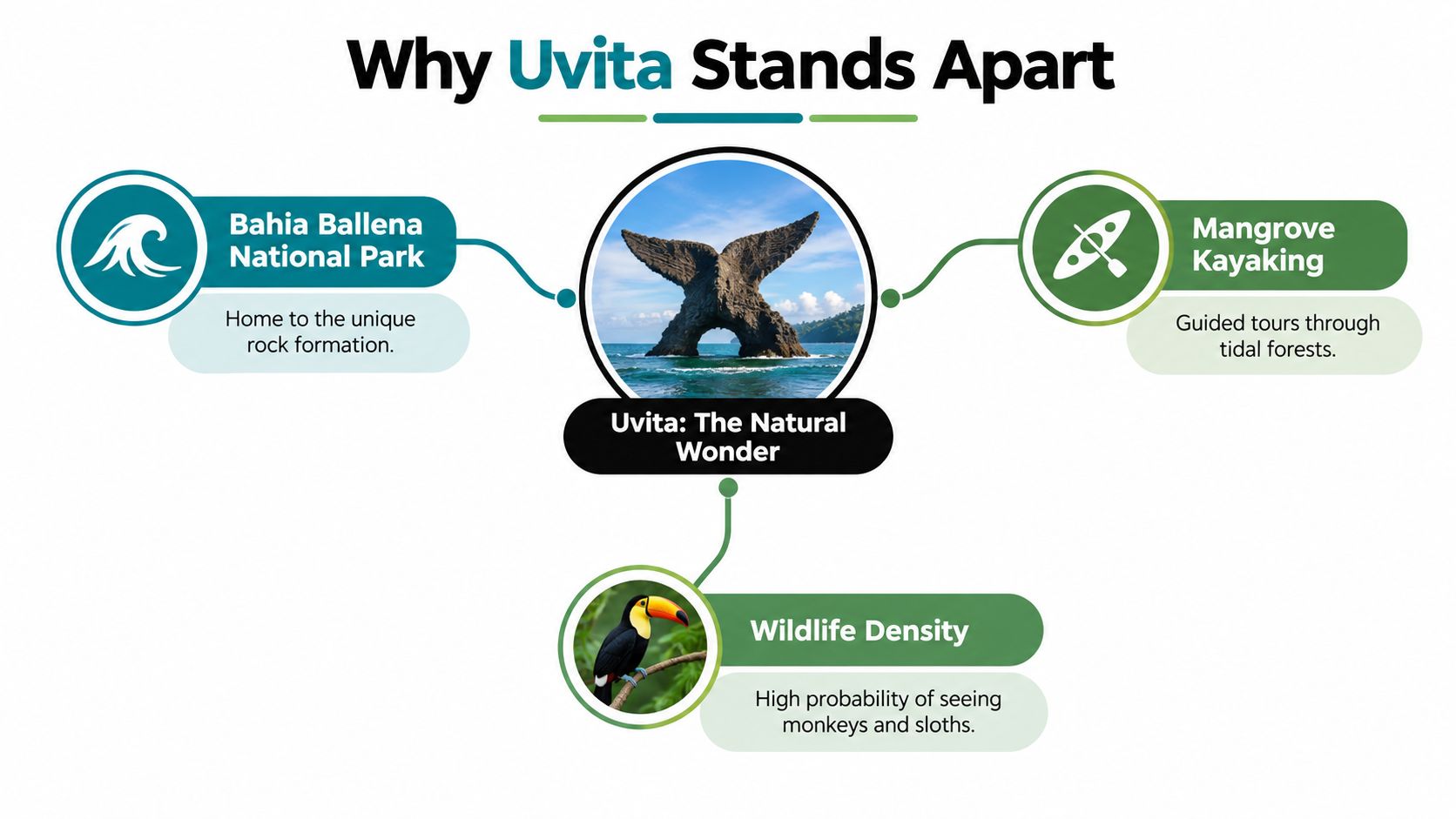
Why Uvita Stands Apart on Costa Rica's Southern Pacific
The first impression isn't a strip of beach lined with high-rise hotels. You leave the coastal highway, pass through a spread-out town, and notice how quickly the forest takes over. Palms, vines, and steep green hills push toward the Pacific. The road connects communities, but it doesn't erase their separate identities.
That feeling defines the Costa Ballena, the coastal stretch running from Dominical toward Ojochal. It feels more organic and less resort-driven than destinations such as Tamarindo or Manuel Antonio. Uvita sits between the Southern Pacific coastline and the foothills of the Talamanca range, with the Costanera linking it to neighboring beaches and towns. The result is a destination where a morning can move from a farmers' market to a boat, then from a jungle trail to a quiet dinner without requiring a large entertainment district.
A town shaped by land and community
Uvita's modern community took shape during the 1950s and 1960s from a landholding of about 900 hectares associated with the Cruz family. When that property was later parceled out, the settlement that became Uvita Bahía Ballena had more than 800 inhabitants and a student population of more than 200, according to local history of Uvita.
The town's identity was also shaped by resistance. The ALCOA bauxite proposal in the 1960s prompted major local opposition, including a student strike on April 24, 1970, a milestone repeatedly cited in local accounts. That history matters because Uvita doesn't feel like a destination built only for visitors. It remains a working community with its own rhythm, relationships, and sense of place.
Administrative data recorded 4,384 residents in the Bahía Ballena district in 2022, while a tourism analysis using the 2011 census listed 3,306 urban residents in Bahía Ballena. Regional information about Uvita and Bahía Ballena helps explain why Uvita now functions as the commercial center of Costa Ballena while still feeling comparatively intimate.
Marino Ballena National Park anchors the coastline. Created in 1989 and later designated Costa Rica's first marine national park in 1992, it protects about 5,160 marine hectares and roughly 170 hectares of shoreline and reefs. The Rough Guides overview of Uvita describes a protected seascape where dolphins and humpback whales share the same wider habitat.
Practical rule: Uvita isn't a checklist destination. Choose the traveler you want to be there, then build the stay around that identity.
When to Go and What That Means for Your Trip
Arrive in Uvita during a run of dry-season mornings and your plans can stay outdoors: breakfast in the open air, a beach walk before the heat, and a boat departure without rebuilding the day around rain. The dry season, from December through April, offers the most dependable conditions for outdoor dining, beach time, boat trips, and open-air wellness programs. Demand rises during these months, so popular activities and smaller accommodations feel busier.
The green season, from May through November, suits travelers who value thick forest, flowing waterfalls, and quieter surroundings over a fixed schedule. Afternoon showers and overnight rain can disrupt excursions, particularly from late August through mid-November. Use the green-season guide to Costa Rica when deciding whether that trade-off fits your group. A small group can handle the uncertainty well if everyone is happy to shift a beach or boat plan to the next workable weather window.
Whale watching requires a date strategy rather than a year-round assumption. The strongest visitor periods usually fall from December through April, followed by a second peak from late July through October, according to seasonal information about Uvita. The southern Pacific receives humpback whales from different migration patterns, so marine wildlife should shape your travel window before you book accommodation. May and June are a genuine low period, with sightings described as sporadic and unpredictable in the International Whaling Commission's Costa Rica profile.
Uvita month-by-month weather, whales, and crowds
Month | Rainfall | Whale season | Surf | Crowds |
|---|---|---|---|---|
January | Generally drier and more reliable | Strong period | Often favorable for planned water days | Higher demand |
February | Reliable outdoor conditions | Strong period | Suitable for beach and surf planning | Higher demand |
March | Dry-season conditions | Strong period | Good for active itineraries | Higher demand |
April | Dry season usually continues | Possible sightings | Warm, often suitable for water activities | Can become busy |
May | Transition into wetter conditions | Weak and unpredictable | More weather-dependent | Quieter |
June | Wetter, with changing conditions | Weak and unpredictable | More variable | Quieter |
July | Green-season rain, with useful breaks | Second peak begins | Surf and boat conditions vary | Moderate |
August | Wet but valuable for wildlife-focused travel | Second peak | Weather-dependent | Moderate |
September | Among the more difficult months for reliable plans | Second peak, but rain can interfere | Variable | Quieter |
October | Very wet period in many local patterns | Second peak, with disrupted logistics possible | Highly variable | Quieter |
November | Conditions begin shifting toward drier weather | Limited compared with peak periods | Improving at times | Quieter |
December | Dry season begins | Strong period | Often favorable for outdoor plans | Rising demand |
For a first Uvita visit, choose February or March. They offer the clearest balance between dependable outdoor plans, whale potential, and manageable conditions. Choose late July through October if whales matter more than predictable weather. Choose December through April for a retreat built around scheduled outdoor time. Families generally benefit from the steadier rhythm of mid-December or February. Surfers should consider the shoulder months, when shifting swell and quieter beaches may match their priorities. Small groups should agree on that priority before booking, because the best month for wildlife is not always the easiest month for a tightly scheduled itinerary.
Top Uvita Experiences and How to Plan Them
A small group can enjoy Uvita without turning every day into a timed operation. Give each outing enough space, assign the right people to it, and keep one flexible block for weather, energy, or an unexpected change of plan.
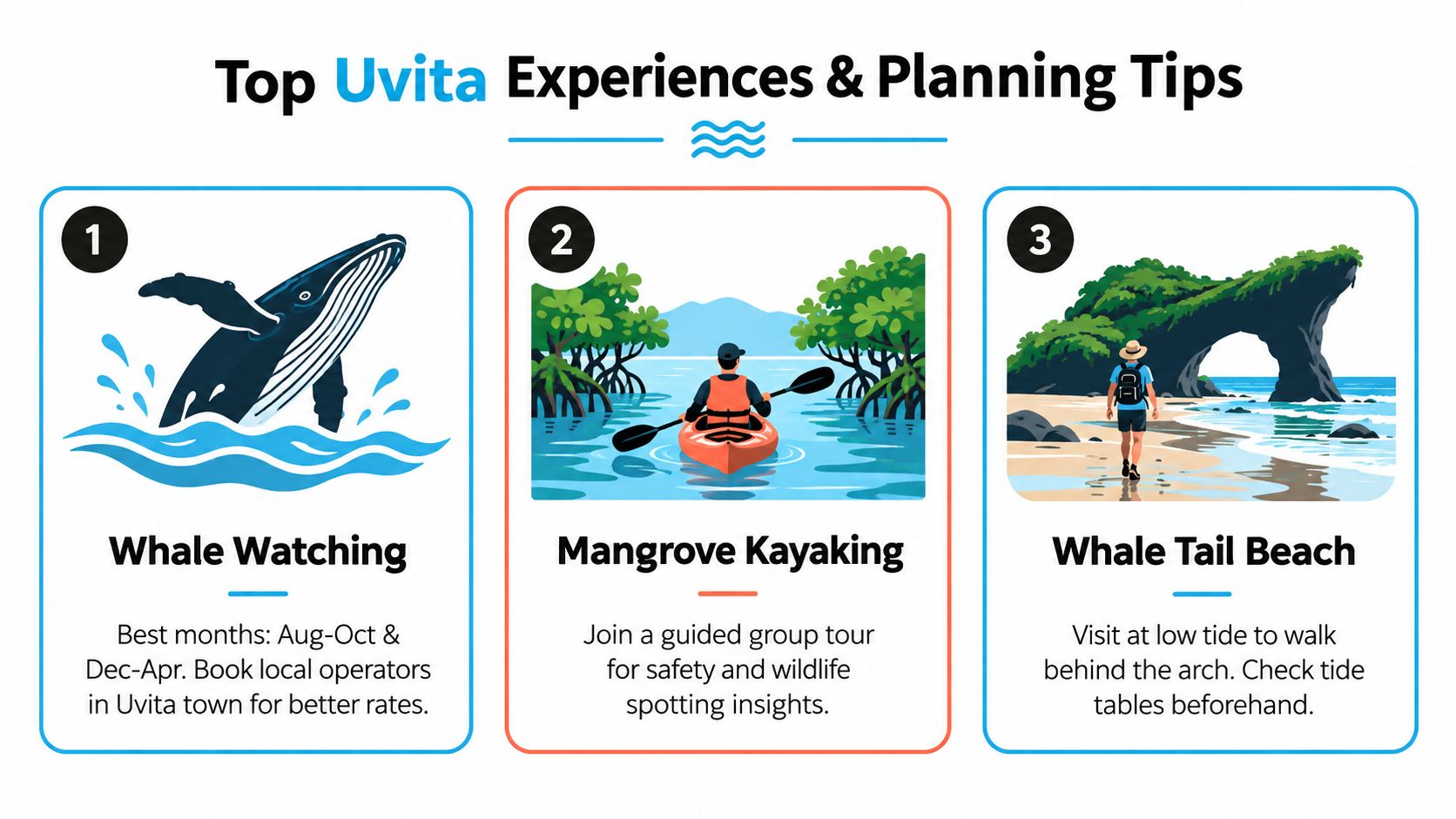
Make whale watching from Bahía Ballena the priority when marine wildlife is the reason for the trip. The outing takes a substantial part of the morning, with real time on the water rather than a quick ride along the coast. Choose an operator that explains its approach to wildlife, keeps safety equipment visible, and has a clear response if conditions change. Private departures suit couples, families, and small groups that want control over timing. Shared boats cost less in attention and planning, and suit travelers who enjoy a social outing.
The Whale's Tail, or tombolo, works on a different schedule. Low tide determines access, while exposed sand and rock can become hot quickly. Check the tide table before leaving, protect your feet, and allow time to experience the beach beyond a quick photograph. Marino Ballena National Park has designated access points at Uvita, Colonia, Ballena, and Piñuela. Check current entry arrangements and opening details before setting out.
Match the activity to the day
Waterfalls: Give Nauyaca a half-day or longer if swimming, hiking, or a horseback option is part of the plan. Uvita and Hermosa waterfalls fit more easily into a flexible day. For route details and an organized option, review the Nauyaca Waterfall experience.
Surfing: Experienced surfers and travelers seeking a lively beach scene should choose Dominical. Playa Hermosa suits a quieter lesson or a gentler introduction, subject to conditions and the instructor's advice.
Wildlife: Guided forest walks, sloth spotting, canopy routes, and night tours reward patience. Animals do not appear on schedule. A local guide earns their place by interpreting calls, tracks, and movement in the canopy.
Caño Island: Treat snorkeling or diving at Caño Island as a full-day commitment. The boat journey and time in the water leave little room for another major activity, particularly for anyone prone to seasickness.
Mangroves: A guided kayak trip creates a slower morning than a boat excursion. Small groups can pause to notice birds, reptiles, and tidal movement instead of rushing between viewpoints.
Set the priority before booking. A romantic stay works well with one marine day, one waterfall day, and one unscheduled beach or spa morning. Retreat groups should alternate demanding outings with restorative sessions, especially when members have different fitness levels. That approach keeps the itinerary active without making everyone spend the final days recovering.
This short video gives a useful visual sense of the kind of active, coastal day Uvita supports.
Where to Stay in Uvita and How the Options Compare
Where you sleep changes the character of the trip. Uvita proper puts you close to Marino Ballena, local services, and the farmers' market, but properties near the Costanera can experience road noise. Hillside accommodation trades immediate beach access for wider views, sunset exposure, jungle privacy, and a stronger sense of retreat.
Beachfront and boutique properties generally suit couples who want privacy, curated experiences, and a setting that supports slow mornings. A property such as VIVARA, for example, is designed around intimate hospitality, private villas, customized activities, and shared gathering spaces rather than a large-resort format. Mid-range hotels can be practical for travelers who want a pool, breakfast, and a familiar service structure without committing to a fully private property.
Compare the lodging experience, not only the room
Tier | Best for | Typical inclusions | Trade-offs |
|---|---|---|---|
Boutique stay | Couples, celebrations, and intimate retreats | Personalized hosting, curated activities, distinctive design, and dining options | Usually less standardized than a large hotel |
Mid-range hotel | Independent travelers and families | Breakfast, pool access, basic assistance, and optional tours | Activities and transfers may be arranged separately |
All-inclusive resort | Guests who want a contained holiday | Meals, drinks, scheduled activities, and resort facilities | Less connection with local businesses and communities |
Vacation rental | Families and friends who value space | Kitchen, living areas, privacy, and flexible meal routines | Guests often coordinate transport, food, and excursions themselves |
Hillside villa or lodge | Privacy seekers and wildlife-focused travelers | Views, quiet surroundings, and a stronger jungle setting | Beach access usually requires transport |
Families should ask about connecting rooms, pool depth, shaded areas, and the distance to food options. Retreat planners need more than a room count. They need communal space for sessions, individual accommodation for downtime, dependable meal service, and a transport plan that doesn't force the entire group to move together.
Ask every property whether breakfast is included, whether tours include transfers, how late dinner can be served, and what happens when heavy rain changes the plan. Also ask about road access after dark. A beautiful mountain view isn't much of a benefit if every dinner becomes a difficult logistical exercise.
Sample Uvita Itineraries for Couples, Families, and Groups
A good itinerary leaves space around the anchor experiences. Uvita's roads, weather, tides, and boat schedules make overplanning more frustrating than helpful, especially when a retreat is supposed to restore attention rather than consume it.
Couples who want nature without rushing
Begin with a slow breakfast and a morning whale-watching departure during a reliable wildlife window. Keep the afternoon open for a private waterfall visit or a quiet beach, then reserve sunset for the coast rather than trying to add another excursion.
The following day should reverse the pace. Use the morning for a spa treatment, yoga, or an unstructured pool session, then choose a private dinner with ingredients shaped around the day's mood. Couples often make the mistake of booking activity after activity because the region offers so much. The better trip gives the most memorable experiences room to land.
Families who need movement and recovery
Families can combine Marino Ballena at low tide with a beginner surf lesson, a guided wildlife walk, and pool time. Children under seven may enjoy short beach explorations, supervised wildlife viewing, and water play more than long waterfall hikes or extended boat days. Keep one major activity per day, then use the afternoon for shade, food, and recovery.
A family-friendly plan should also include a simple backup. If rain cancels the boat, move to a shorter forest activity or a cooking session rather than forcing a difficult travel day. The strongest family stays aren't the ones with the longest activity list. They're the ones where adults get genuine downtime too.
Small groups and retreat hosts
For a group of 8 to 16 guests, plan a five-day rhythm with arrival and decompression, a group adventure day, a conservation or service component, a day with optional activities, and a closing dinner. Use a van for shared excursions, but don't make every activity compulsory. Some guests may want a waterfall hike while others need a quiet morning for journaling or work.
Boutique stays can structure private dining, yoga, and guided excursions into one coherent experience. At conventional hotels, those elements are more likely to be booked separately, which gives guests flexibility but creates more work for the organizer. For brands, founders, and community leaders, the setting can also support deeper connection. A shared meal, guided nature experience, and carefully protected unstructured time give participants space to build relationships beyond the formal program.
Getting Around, Staying Safe, and Packing Smart
Uvita is walkable in parts, especially around the town core, but a full Costa Ballena experience requires transport planning. Beaches, waterfalls, mountain properties, and neighboring towns aren't all connected by convenient local routes. Buses are inexpensive but limited, with service concentrated along Route 34 and connections through San Isidro for travel toward San José, as outlined in this practical Uvita mobility guide.
A rental car gives the most flexibility, particularly for independent travelers who want to change plans around rain and tides. A private transfer is more comfortable for arrival days or groups with luggage. Shared shuttles reduce planning but lock you into fixed routes and schedules. Without a car, choose a stay that can coordinate transfers and book tours that include pickup. Uber isn't consistently reliable in the area, and taxis are limited compared with larger Costa Rican destinations.
Small precautions make the coast easier
Beach theft is usually an opportunity problem. Leave valuables secured, avoid leaving equipment visible in a vehicle, and don't bring unnecessary electronics to sunset walks. Treat unmarked surf breaks and rip currents seriously, keep distance from wildlife, and take extra care on roads after rain.
Pack for humidity and changing conditions rather than for a resort brochure:
Quick-dry layers: Choose clothing that can handle sweat, rain, and boat spray.
Reef-safe sunscreen: Use it for marine activities and reapply after swimming.
Bug spray: Jungle evenings call for more protection than a typical beach afternoon.
Water shoes: The tombolo and rocky shoreline are easier with secure footing.
Headlamp: Useful for dark paths, early departures, and night wildlife walks.
Dry bag: Protect phones, cameras, and medication during boat days.
Pharmacies are available in the wider area, but more serious medical needs require planning around the nearest clinic in Cortés. Cell service can become patchy on mountain roads, while most established stays offer Wi-Fi. Carry some local currency, confirm card acceptance before remote excursions, and ask your host about appropriate tipping for guides, drivers, and service staff.
Sustainable Travel and Booking with Intention
Conservation in Uvita works best when visitors treat it as part of the trip rather than a marketing label. Marino Ballena National Park protects a legally managed marine environment, so pay the required entrance fee, follow access rules, and don't remove shells, coral, or other natural material.
Tour operators deserve scrutiny. Ask how they manage boat-to-cetacean distances, whether guides are properly trained, how they handle rough weather, and whether local staff receive meaningful employment. A polished website doesn't tell you whether an operator respects the water. Established companies connected to parks and reserves are generally easier to evaluate than anonymous beach vendors who can't explain their standards.
Make spending part of the impact
Choose accommodation that can describe its environmental practices in concrete terms. Native planting, verified conservation support, solar systems, waste reduction, and fair local employment are more meaningful than vague claims about being green. Buy from community businesses and cooperatives in Ojochal when possible, and use Spanish-language guides where they help you engage more directly with the local economy.
If turtle conservation matters to you, read about turtle conservation work in Costa Rica before booking a volunteer or wildlife experience. Avoid programs that promise close contact with animals or encourage handling.
Peak-season whale tours and sought-after restaurants should be reserved well in advance. Confirm cancellation terms before paying, and use traceable payment channels rather than sending deposits to unknown contacts. A responsible booking process protects both your money and the local operators who plan around your arrival.
Is Uvita the Right Trip for You
Uvita is right for travelers who want a base camp for marine wildlife, rainforest, waterfalls, and slow beach days. It suits couples, families with older children, intermediate surfers, and small retreat groups that value privacy and shared experiences over nightlife.
It isn't the right choice for a first Costa Rica trip built around volcanoes and cloud forest, or for anyone seeking nightclub energy, a large resort pool scene, or effortless public transit. Travelers with only a very short stay may spend too much of the trip in transit, especially if they want to combine Uvita with distant regions.
Two decisions determine the result. Pick the season deliberately, then choose accommodation based on the experience you want, not only the room rate. A convenient hotel during a poorly chosen weather window can feel forgettable. A quiet boutique stay during humpback season, with a deliberately slow schedule, can become the Uvita people remember.
For January, February, and August, book as far ahead as your plans allow. Those months attract travelers with distinct priorities, from dependable outdoor conditions to wildlife-focused trips, and the most suitable small properties can fill before the rest of the corridor feels busy.
VIVARA offers an intimate, founder-led retreat setting near Dominical for couples, families, friends, teams, and private groups, with architecturally distinct villas, personalized service, flexible dining, and guided experiences connected to the Uvita and Costa Ballena region. If you want to compare a nature-rich retreat against a conventional hotel stay, visit VIVARA and explore whether its pace, group format, and experience design fit your trip.

