The Vivara Content Team
Coffee Plantation Tours in Costa Rica: What to Expect
Coffee Plantation Tours in Costa Rica: What to Expect

You've planned the wellness escape, the waterfall hike, and the long lunch where nobody checks a phone. Then someone asks the practical question: is a coffee plantation tour worth giving up half a day in Costa Rica?
Yes, but only if you choose the right format. A rushed bus excursion followed by a scripted tasting can feel like a souvenir stop with better scenery. A well-paced visit to a working farm can become one of the most memorable parts of a retreat, combining nature, food, craft, local history, and quiet conversation in a way that suits both coffee enthusiasts and people who rarely drink coffee.
Costa Rica is particularly well suited to this kind of experience. Coffee has been a functioning industry there since the 1820s, and agritourism grew around farm visits and rural activities, creating the foundation for the plantation model travelers know today. Academic research on coffee tourism also describes the experience as a blend of education, leisure, and appreciation for coffee production, culture, and history.
What a Coffee Plantation Tour Actually Feels Like
The best arrivals happen before the day becomes warm. You leave the coast or your villa while the roads are still quiet, climb into cooler country, and reach a farm where mist hangs between the trees. The soil is dark and uneven underfoot. Ripe red cherries catch the first light. Somewhere nearby, a picking crew works with a concentration that makes the usual resort timetable feel irrelevant.

What you're signing up for is not just a walk among coffee trees. A proper tour follows the crop through at least part of its production story, then gives you the chance to taste the result. You may see the fields, the receiving area, a wet mill, drying patios, sorting equipment, a roasting room, or a cupping table. The balance depends on whether you're visiting a working estate, a smaller mill, or a farm designed primarily for hospitality.
The experience depends on the group
Current Costa Rica listings commonly place standard tours at 1.5 to 3 hours, with many examples close to two hours, and typical pricing around $20 to $45 per person depending on tastings, meals, guiding, and transport. A current Costa Rica coffee tour benchmark is useful when comparing inclusions, but duration alone doesn't tell you whether the visit will feel personal.
A large shuttle group may spend most of its time moving between stops, then gather on a patio for a tasting led at a fixed pace. That format can work for first-time visitors who want an efficient overview. It's less appealing if you're looking for conversation, photography, or time with the people who grow and process the coffee.
A smaller guided walk usually gives you more room to ask why cherries are picked selectively, how the mill handles water, or what changes between harvest and the quieter growing season. Expect light walking on uneven ground, possible steps around wet-mill equipment, and time spent standing during tasting. Guests with limited mobility should ask for the route before booking, not after arriving.
Practical rule: Treat the transfer, terrain, group size, and tasting format as part of the product. The coffee itself is only one component.
The strongest tours fit naturally into the day. They leave enough time for a slow breakfast beforehand, a restorative lunch afterward, and a quiet afternoon rather than forcing guests straight into a high-energy excursion. That's where coffee plantation tours become valuable inside a wellness itinerary. They give the group something to notice together without demanding constant exertion.
The Bean-to-Cup Journey From Field to Cup
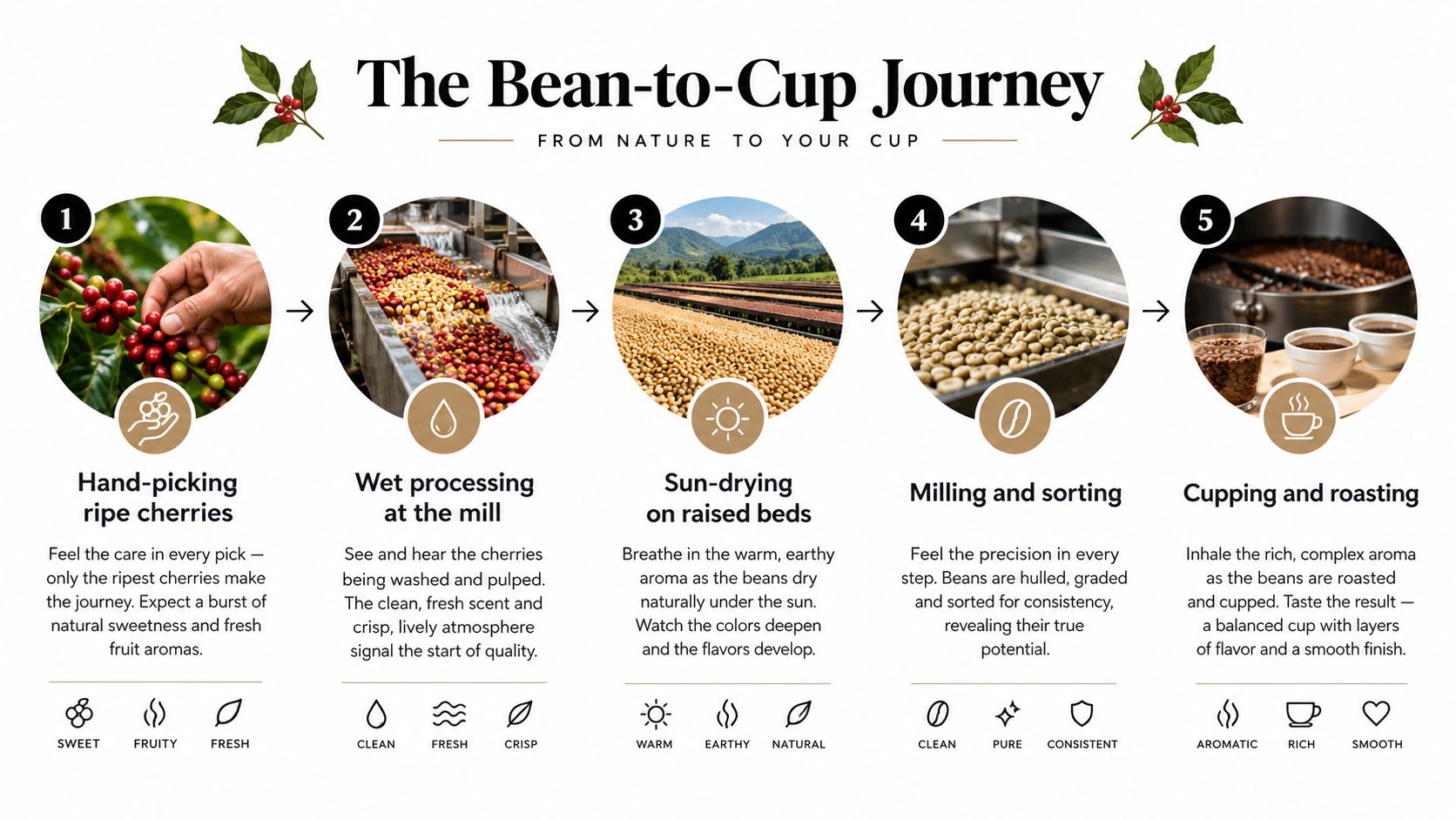
A meaningful farm visit makes the production chain visible. Visitors don't just hear that coffee goes from cherry to cup. They watch, smell, touch, and taste the transitions that determine what eventually appears in a brewer.
Start with the cherry
Coffee begins as a fruit, not a dry brown bean. On a working farm, guests may see pickers selecting cherries by color and firmness, separating ripe fruit from fruit that needs more time. The visual contrast is immediate. Green, yellow, and red cherries sit on the same plant, while the ripe fruit feels soft enough to show why careful harvesting matters.
At the receiving station, the farm weighs and sorts the harvest. Some operations use water to float out lower-density fruit before processing the remainder. The purpose is practical, but it also gives visitors a clear sensory moment. Fresh cherries smell sweet and vegetal, nothing like the roasted aroma people associate with coffee shops.
Follow the wet mill
The next stage changes the texture of the experience. A de-pulper removes the outer skin and exposes the seed inside. Depending on the farm's method, the remaining mucilage may be washed away, left partly attached in a honey process, or retained through a more natural style of drying.
The wet mill is where a guide can explain why processing is not a minor technical detail. It influences the coffee's character, and it also affects how a farm manages water, fruit residue, fermentation, and time. The crop-to-cup production analysis identifies this movement from harvesting through wet-mill processing, fermentation, drying, and quality control as the operational distinction between a casual farm stop and a technically meaningful agritourism experience.
Watch the coffee dry and sort
After wet processing, the coffee moves into a form that looks unfamiliar to many travelers. Parchment coffee dries on patios or raised beds, gradually changing in color and texture. Sun, airflow, turning, and protection from rain all matter. A good host won't rush this stop because it explains why the farm needs space, careful observation, and patience.
At the dry mill, equipment removes parchment and separates beans by size and quality. Visitors can often see the difference between a small artisanal setup and a larger production line. That contrast is especially useful for travelers who care about traceability, farmer relationships, or the meaning behind a premium bag of coffee.
The best guide keeps asking one question: what changed here, and why did that change matter?
Watch this short visual companion before your visit, then use the farm walk to ask about the equipment you see rather than treating the tour as a passive demonstration.
Finish at the tasting table
Roasting creates the aroma that people recognize, but cupping reveals far more than a single morning brew. A farm may compare several lots or preparation methods, then serve them as a pour-over, French press, espresso, or another format. The point isn't to identify every tasting note. It's to notice how processing, roast, grind, and brewing alter the same agricultural product.
If your group is also interested in food, connect the visit with a broader farm-to-table dining experience. Coffee makes more sense when it sits within the farm's wider food culture, not when the tasting is isolated from the surroundings that produced it.
How Costa Rica's Three Coffee Regions Differ
A coffee tour should fit the day around it. The Central Valley and nearby highlands suit an efficient introduction, the Northern Highlands connect coffee with forest adventure, and the Southern Pacific with Pérez Zeledón offers a more private, hands-on visit. The right region depends less on a tasting promise than on how well the farm complements your stay, whether that means a wellness morning, a culinary afternoon, or an active day outdoors.
Use the regional labels as planning guides, not fixed tasting guarantees. Weather, processing, altitude, roast style, and the individual farm can matter more than geography alone.
Region | Altitude | Flavor Profile | Tour Style |
|---|---|---|---|
Central Valley and Tarrazú highlands | Higher-elevation mountain farms | Bright, structured, and often citrus-led | Visitor-ready estates, mill tours, tastings |
Northern Highlands and Monteverde area | Cooler cloud-forest settings | Softer, aromatic, and potentially floral | Coffee combined with forest, wildlife, or suspension-bridge activities |
Southern Pacific and Pérez Zeledón corridor | Mid-elevation farms near Dominical and Pérez Zeledón | Small-lot styles with emphasis on origin and process | Intimate micro-mill visits and experimental tastings |
Choose the Central Valley for clarity
The Central Valley is the practical choice for a first visit or a tightly planned luxury itinerary. Farms around the valley and toward Tarrazú offer dependable hospitality infrastructure, clear explanations of harvesting and milling, and tastings that do not require a full-day expedition.
I recommend this region for groups with mixed interests. A serious coffee drinker can ask detailed questions, while another guest can enjoy the scenery, breakfast, or a short look at a working agricultural property. It also fits neatly before a spa appointment or a chef-led meal, so the tour becomes one sensory element in a broader day rather than an isolated attraction.
The Northern Highlands pair coffee with forest
Monteverde works best when coffee shares the schedule with nature. The cooler setting supports a slower visit, followed by wildlife viewing, a canopy experience, or suspension bridges. Coffee becomes the culinary thread within an active forest itinerary.
That combination suits couples and families who want some education without giving up adventure. Non-coffee drinkers have a reason to join because they are exploring a living farm and its surrounding ecosystem, not spending the entire morning discussing roast profiles. Build in time for a relaxed meal or wellness stop afterward instead of stacking another formal tour immediately on top.
The Southern Pacific rewards travelers who want intimacy
The Southern Pacific and Pérez Zeledón corridor fit guests who prefer smaller properties and direct conversations about traceability, processing choices, and experimental lots. The setting may feel less polished in a commercial sense, but that informality often brings you closer to the work and the people responsible for the farm.
For a retreat, match this style with travelers who value craft, local context, and flexible pacing. Ask whether the farm receives visitors regularly, who leads the tasting, and whether it can host your group privately. A well-arranged visit can feel like a personal culinary appointment, with enough breathing room to sit comfortably beside a wellness or adventure program.
Sustainability Practices You Can See on the Farm
A polished tasting cannot compensate for weak farm practices. On a credible coffee plantation tour, guests should see how the property manages water, shade, soil, waste, and labor. Those working systems make the visit more meaningful than a sustainability plaque, especially when the tour is scheduled as a sensory stop within a wider wellness, culinary, or adventure itinerary.
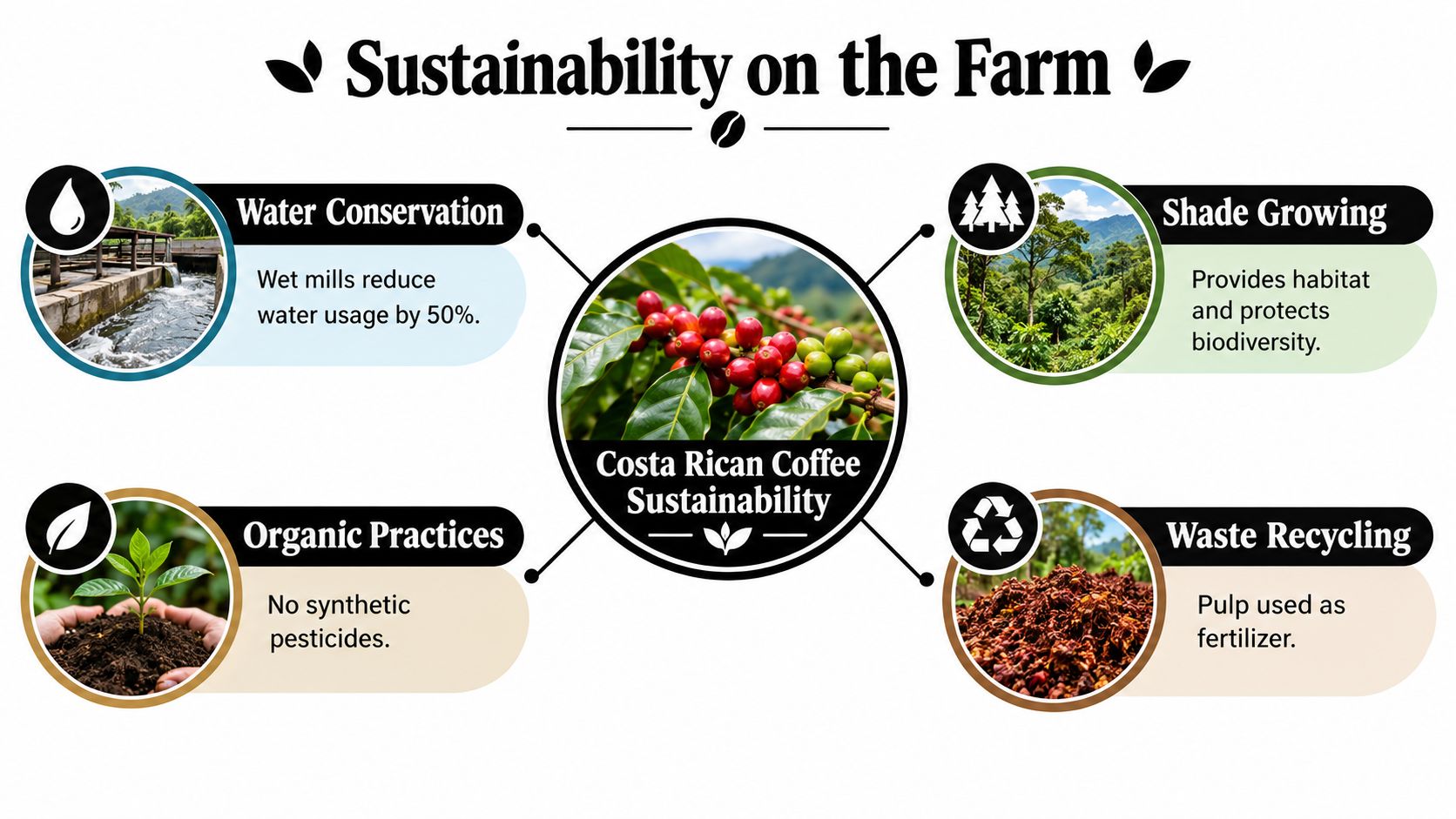
Costa Rica's official tourism guidance highlights drip irrigation to reduce water consumption and shade canopy that supports biodiversity while helping protect coffee plants from pests and disease. Costa Rica's coffee experience guidance also describes plantations where modern technology works alongside established agricultural practices. Ask the guide to show you both rather than relying on a rehearsed explanation.
Look for evidence, not slogans
During the walk, ask to see holding tanks, channels, drying areas, composting zones, and the canopy above the rows. If the farm claims to use reduced-water processing, the guide should explain which equipment makes it possible and where the resulting water or fruit residue goes. A useful tour gives you access to those details without turning the visit into a sales presentation.
Shade-grown coffee is visible overhead. A layered canopy changes the light across the rows and creates habitat for insects and birds. Ask which trees the farm protects, how pruning is managed, and how shade affects the crop. These questions reveal whether the canopy is part of an active system or attractive scenery.
Soil practices deserve the same attention. Coffee pulp and cherry skins can enter a farm's composting system instead of becoming worthless waste, reflecting the same closed-loop principles described in regenerative tourism practices. Cover plants, mulching, and erosion control show that the operator is caring for the ground beyond the current harvest.
Ask about processing choices
Honey and natural methods can reduce the role of washing compared with fully washed coffee, yet the responsible choice depends on drying, fermentation, runoff, and quality control. Do not treat a fashionable processing name as proof of good practice. Ask what happens on the property, then look for the drying beds, fermentation areas, or water systems that support the answer.
Tourism already accounts for 6.8% of available water use in Costa Rica, which is why a farm's water handling deserves closer attention than its signage. The agritourism research places an individual visit within the country's broader resource discussion. That context matters when you are choosing a restorative retreat experience built around nature.
What to ask: “Which sustainability practice can you show me rather than describe to me?”
A good answer takes you to the tanks, canopy, compost, drying beds, or posted certifications. That makes the tour feel curated and useful, not transactional. Pair it with a thoughtful meal, spa pause, or outdoor activity, and the farm visit becomes part of the stay's rhythm rather than an isolated attraction.
Sample Itineraries and How Long to Set Aside
A coffee visit earns its place in a luxury itinerary when it gives guests a change of pace. Schedule it between restorative and active moments, while everyone still has attention for the farm. After a strenuous hike, guests usually want lunch, a shower, and a quiet hour, not a detailed explanation of fermentation.
Costa Rica coffee visits commonly combine fields, processing areas, roasters, cafés, and explanations of growing, harvesting, de-pulping, drying, and roasting. This overview of Costa Rica coffee tours supports a practical rule: choose the farm experience first, then build the day around it. Do not assume every plantation offers the same route, tasting, or level of hospitality.
Duration | Best For | Typical Inclusions | Best Season |
|---|---|---|---|
Half day | Guests with a full retreat schedule | Transfer, guided farm visit, tasting, and possible take-home coffee | Harvest period for active field energy, quieter periods for a calmer visit |
Full day | Culinary travelers and adventure seekers | Farm experience, tasting, meal or cooking activity, and a second nature or cultural stop | Flexible, depending on the farm's operating calendar |
Multi-day residency | Curious groups, creative retreats, and deep agricultural immersion | Estate lodging, repeated farm access, roasting, blending, meals, and time with hosts | Choose around what the property provides |
The half-day version
Choose a half-day visit when the itinerary already includes spa time, a beach afternoon, or a scheduled dinner. Allow time for the transfer, farm walk, and tasting, then protect a generous buffer before the next commitment. Current tour listings commonly place the core visit between 1.5 and 3 hours, although transport and meal arrangements can extend the outing. The Costa Rica pricing and duration reference provides a useful comparison point.
Ask whether the tasting is seated, whether transfers are included, and whether the farm can accommodate guests who do not drink coffee. Fruit, chocolate, a light meal, or a guided view over the property can give non-coffee drinkers a meaningful role. The result should feel like a curated sensory pause, not a rushed educational stop.
The full-day version
Pair the plantation with a cooking class, waterfall walk, or low-rush cultural activity. Place the farm before lunch when possible, so guests can connect the crop with what they eat. Follow it with scenery, a spa treatment, or unstructured time rather than another demanding appointment.
Avoid placing coffee between rafting and a strenuous volcano hike. Physical exertion competes with the slower attention a farm deserves. Put the adventure on another day, or make coffee the gentle middle of the itinerary. For broader planning, use this Costa Rica adventure guide, then ask the host to protect unscheduled time around the visit.
The multi-day version
An estate stay turns coffee into part of the property's daily rhythm. Guests can wake with the farm, observe harvesting or processing, learn about roasting, and finish with a blend or bag selected for home. This format suits creative groups, families who enjoy learning together, and retreats built around attention rather than constant movement.
It also gives the experience room to connect with wellness and food. A quiet morning walk can lead into a tasting, followed by a farm meal and an afternoon without scheduled activity. That sequence feels considered because the coffee visit supports the stay instead of interrupting it.
Harvest and flowering change what guests see. November through March is associated with harvest activity, while August through October is associated with flowering, according to the planning brief for Costa Rica coffee experiences. Confirm current conditions before booking. Location and weather determine whether guests find active fieldwork, flowering plants, or a quieter farm visit.
How VIVARA Builds Private Coffee Experiences
The most memorable coffee visits aren't necessarily the most elaborate. They're the ones where the host understands why you came, how much walking you want, what you like to eat, and whether you'd rather spend an hour discussing processing or just watch the scenery wake up.
A private experience begins with an intake rather than a fixed menu. A concierge can ask about your palate, morning routine, mobility, interest in agriculture, appetite for adventure, and the age range of the group. That information matters. A couple celebrating an anniversary needs a different pace from a team using the day for connection, and a family with young children needs different terrain from a group of experienced hikers.
Match the farm to the guest
The practical matching questions are straightforward:
Palate: Do you prefer bright and fruit-led coffees, chocolate-toned cups, or a comparative tasting?
Energy: Should the visit feel restorative, educational, social, or active?
Access: Can everyone manage uneven ground, steps, humidity, and standing?
Privacy: Do you want a working farm with visible daily activity or a more polished hospitality setting?
Food: Would a farm lunch, cooking session, or coffee-paired meal make the day more meaningful?
A curated operator can then select among partner properties in the Central Valley, Monteverde, and Tarrazú highlands, checking practical standards such as hosting quality, English-speaking support, and whether the farm can limit outside visitors during the booking. Those details solve the complaints that group tours create: crowded patios, rushed tastings, and transfers dictated by someone else's timetable.
Private access changes the conversation
A private booking may allow a tasting with the head roaster instead of a general guide, a working lunch with the farm family, an espresso service on a terrace after regular visiting hours, or a chance to hand-sort beans for a custom blend. None of those elements should be added merely to inflate the itinerary. They should answer a clear preference expressed during planning.
VIVARA, an intimate retreat in Dominical for up to 14 guests, can arrange on-demand experiences that connect coffee with its broader hospitality rhythm. Its private format is relevant for couples, families, friends, teams, and brands building community around shared food, nature, and local culture.
Privacy isn't a decoration. It gives the farm and the guests enough time to have a real exchange.
That's why I prefer private coffee plantation tours for premium-but-practical travelers. The value comes from better alignment, not from adding unnecessary ceremony. When the visit fits the group's pace, guests remember the people, the setting, and the flavor rather than the logistics.
Booking, Pricing, and What to Pack
Choose the experience before judging the price. A basic group visit gives you an efficient introduction to the farm, while a private booking may include transport, a bilingual host, a more focused tasting, a meal, or access beyond the standard visitor route. Current listings commonly place standard tours at $20 to $45 per person, with the total shaped by tastings, guiding, lunch, and transportation. Review typical Costa Rica coffee tour pricing and inclusions against what the operator provides.
For a premium arrangement, contact the estate directly, ask your hotel concierge, or use a hospitality specialist. From December to April, the busier travel period, reserve early if you want a particular farm, guide, or transfer window. The phrase “coffee plantation visit” tells you almost nothing. Ask what you will see, taste, and do, and how much time the visit leaves for the rest of your day.
Confirm the practical details
Get written answers before paying:
Mobility: How much walking is involved? Are paths uneven or steep?
Weather: Is there shelter during rain, and does the tour continue in wet conditions?
Group size: How many guests share the guide and tasting?
Language: Is the guide bilingual, and who handles the technical explanation?
Food: Are snacks, lunch, or non-coffee drinks included?
Transport: Is pickup provided, or will you need a private vehicle?
Accessibility: Can guests avoid stairs or long periods of standing?
Timing: What happens if the transfer runs late or the group wants to linger?
Costa Rica's mountain farms bring volcanic soil, humidity, strong sun, and sudden rain. Guests with limited mobility should request photographs or a route description in advance. A reputable host answers these questions plainly and adjusts the plan where possible.
The best booking also protects the rhythm of the wider stay. Place the tour after a restorative morning, before a chef-led meal, or alongside an outdoor activity that suits the same energy level. Coffee should add a sensory layer to the itinerary, not compete with every other plan.
Pack for the ground, not the brochure
Bring closed-toe walking shoes, quick-dry clothing, insect repellent, sunscreen, a refillable bottle, a light rain shell, and a small notebook for cupping notes. Wear clothing that allows easy movement. Leave delicate footwear behind, since wet paths and farm surfaces can damage it.
A transparent private quote should show exactly what you are buying. If transfers, a bilingual guide, tasting, and the farm's contribution appear in one clear price, you can judge the complete experience instead of comparing scattered line items across vendors.
The right tour gives your Costa Rica stay a change of pace. Match the terrain and depth of the visit to your group, then leave room for conversation, food, scenery, and recovery. VIVARA can arrange private, on-demand Costa Rica experiences that place coffee inside a retreat built around nature, connection, restoration, and adventure. Discuss a coffee day shaped to your palate, mobility, schedule, and group.
