The Vivara Content Team
Spa and Wellness Services in Costa Rica: A Guest Guide
Spa and Wellness Services in Costa Rica: A Guest Guide

A Costa Rica wellness stay sits within a global wellness economy worth $6.8 trillion in 2024, with spa services increasingly designed around measurable restoration, personal fit, and responsible connection to place. The strongest retreats combine bodywork, nature, food, movement, and community rather than treating a massage as a decorative luxury add-on.
You may be researching a private escape after months of crowded calendars, constant travel, or too much time on screens. A conventional holiday can leave you needing another holiday, especially when every day is filled with transfers, reservations, and activities chosen for appearances rather than energy. In Costa Rica, a better-designed stay can move at a different pace, with restorative treatments, open-air movement, carefully timed excursions, and meals that make space for conversation.
That distinction matters. Spa and wellness services can support relaxation and short-term recovery, but they aren't a substitute for medical care, and nature immersion isn't automatically regenerative just because it looks beautiful. The right retreat makes its inclusions clear, explains realistic outcomes, accommodates different bodies and preferences, and shows how guest spending supports the natural surroundings and community.
Redefining the Luxury Wellness Experience
A rushed coastal vacation often follows a familiar pattern. Guests arrive late, unpack quickly, squeeze in an excursion, book a treatment because their shoulders hurt, and return home with hundreds of photographs but little sense of rest. A Costa Rica wellness retreat changes the sequence. The day begins with unhurried food, continues with a walk, swim, breathwork session, or treatment chosen for the group, and leaves enough unassigned time for the nervous system to settle.
The global spa industry has recovered well beyond its pre-pandemic baseline. In 2023, approximately 191,348 spas operated worldwide and generated about $136.8 billion in revenue, according to the Global Wellness Institute's 2024 wellness economy monitor. Hotel and resort spas represented the largest category by both revenue and number of establishments, which helps explain why hospitality operators increasingly build wellness into the structure of a stay rather than placing it in a separate treatment room.
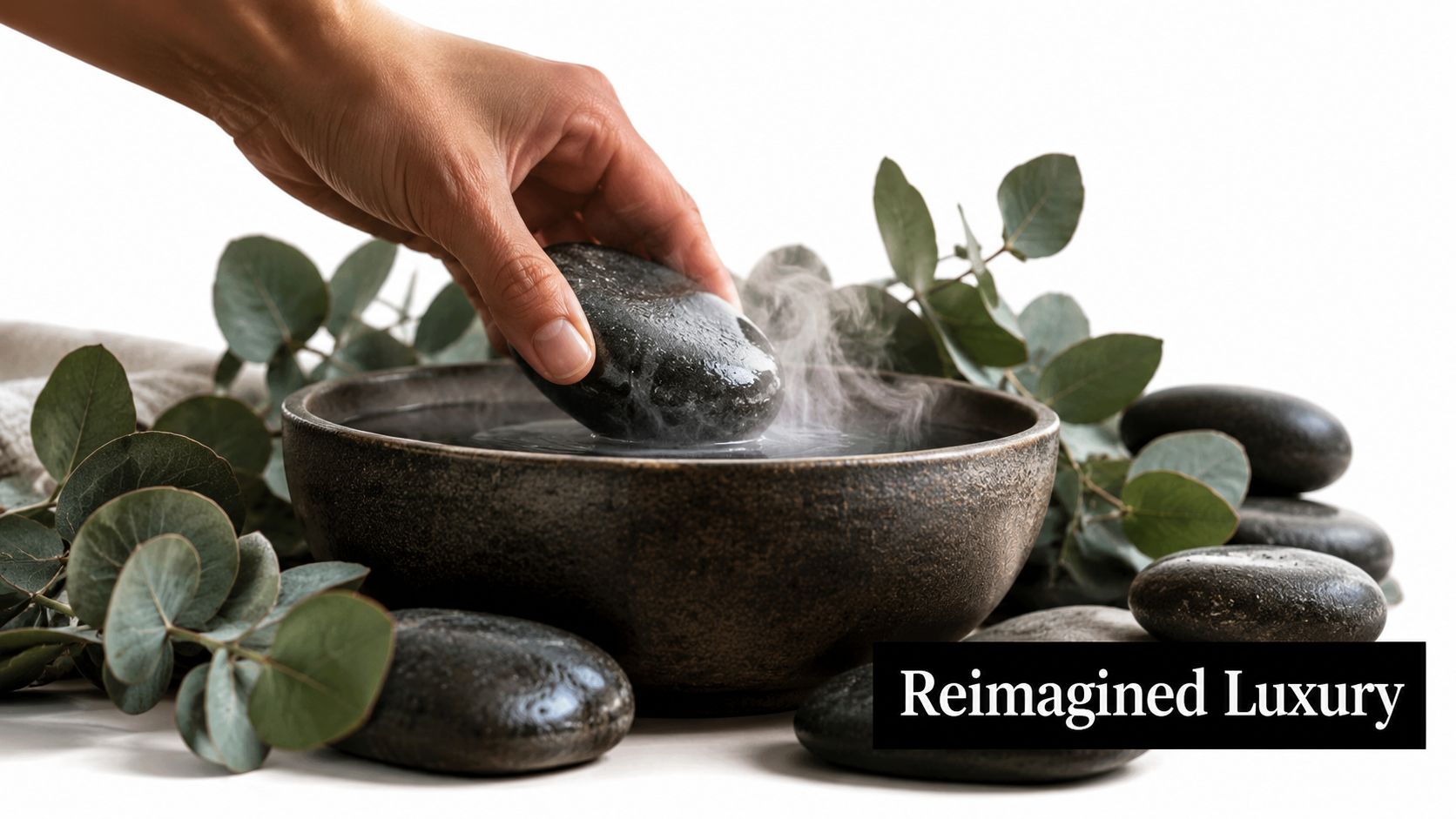
From amenity to environment
At an intimate retreat, the setting affects how services work in practice. A massage followed by an immediate vehicle transfer has a different effect from a massage followed by a quiet meal, shaded rest, and access to a private outdoor space. A meditation session in a ventilated pavilion may feel more connected to the destination than the same session in a sealed studio, provided heat, insects, privacy, and weather have been considered properly.
Costa Rica offers a particularly strong foundation for this model. The country contains roughly 5% of the world's known species, and about one-quarter of its national territory is protected through legally established conservation areas, according to SINAC's tourism information. Nature isn't just scenery here. It can shape the itinerary through guided rainforest walks, wildlife viewing, coastal activities, and time spent observing rather than consuming the surroundings.
Practical rule: A restorative itinerary needs empty space. If every hour is booked, the retreat becomes an activity holiday with better branding.
Premium hospitality doesn't require constant formality. For couples, it might mean privacy and a late breakfast. For families, it might mean a flexible meal rhythm and alternatives to strenuous excursions. For a leadership group or brand community, it might mean facilitated reflection, shared meals, and enough separation for people to think independently.
The strongest experience design also respects local culture. Food should reflect the region without turning it into a performance, guides should explain how activities affect protected areas, and hosts should be able to describe what the retreat funds. Luxury becomes more credible when it includes informed access, thoughtful logistics, and clear responsibility, not only beautiful architecture.
Understanding Spa and Wellness Services
The phrase spa and wellness services covers several different experiences, and guests should evaluate them by purpose rather than by impressive-sounding names. A bodywork session, a thermal circuit, a private yoga class, and a guided nature walk may all appear on one menu, but they create different demands and different forms of value.
A useful retreat menu separates four categories:
Bodywork: Massage, hot stone work, stretching, and other touch-based treatments are generally selected for relaxation, perceived tension relief, or recovery after travel and activity. They should begin with a conversation about pressure, injuries, preferences, and boundaries.
Hydrotherapy: Temperature-controlled water experiences may support relaxation and mobility. They require screening for heat-related contraindications, clear exposure times, and attentive supervision rather than vague promises about detoxification.
Movement: Yoga, mobility work, breath-led stretching, and guided walks can help guests reconnect with their bodies without turning the retreat into a fitness challenge. The instructor should adapt the practice to experience, age, balance, and energy.
Mindfulness and facilitated work: Meditation, breathwork, journaling, and group reflection can support attention and emotional decompression. They aren't appropriate substitutes for licensed mental-health treatment when someone is dealing with acute distress or a diagnosed condition.
The scale of the market reinforces why clarity matters. In 2024, approximately 201,861 spas operated globally and generated an estimated $157.4 billion, while global spa revenue stood 35% above its 2019 level, according to the Global Wellness Institute's 2025 monitor. Hotel and resort spas grew at an average annual rate of 9.4% from 2019 through 2024, while medical spas grew at 6.7% annually over that period, from the same source. These figures show strong demand, not proof that every treatment works for every guest.
What the evidence supports
Massage has a reasonable case for immediate relaxation. A systematic review of 25 studies, including 18 randomized controlled trials, found consistent immediate reductions in salivary cortisol and heart rate after one treatment, as reported in the review available through the National Library of Medicine. The same review didn't establish sustained reductions from repeated treatments, and evidence for some other stress-related markers remained insufficient.
That means a responsible retreat describes massage as an acute relaxation and recovery intervention. A provider can record a guest's stress rating and heart rate before and after a session, but shouldn't promise long-term endocrine change or treatment for a stress-related disease.
Thermal experiences need the same restraint. A review found that a 10-minute hydrotherapy session at 37°C or 42°C increased serum dopamine approximately 15 minutes afterward, with levels returning to baseline within 30 minutes. The evidence was small and methodologically weak. The practical value may still be relaxation, warmth, and temporary mobility support, but the service shouldn't be marketed as a durable neurochemical intervention.
For a deeper explanation of how the pieces fit together, read this guide to what a wellness retreat involves. Before booking, ask what each treatment includes, who delivers it, what training they hold, what screening takes place, and what outcome you can realistically expect.
Building Your Personalized Wellness Itinerary
A good itinerary starts with energy, not with a list of treatments. Guests often choose the most impressive activities first and then try to force sleep, meals, and recovery around them. That approach works poorly for couples with different fitness levels, families with young and older members, or friends who want both celebration and genuine rest.
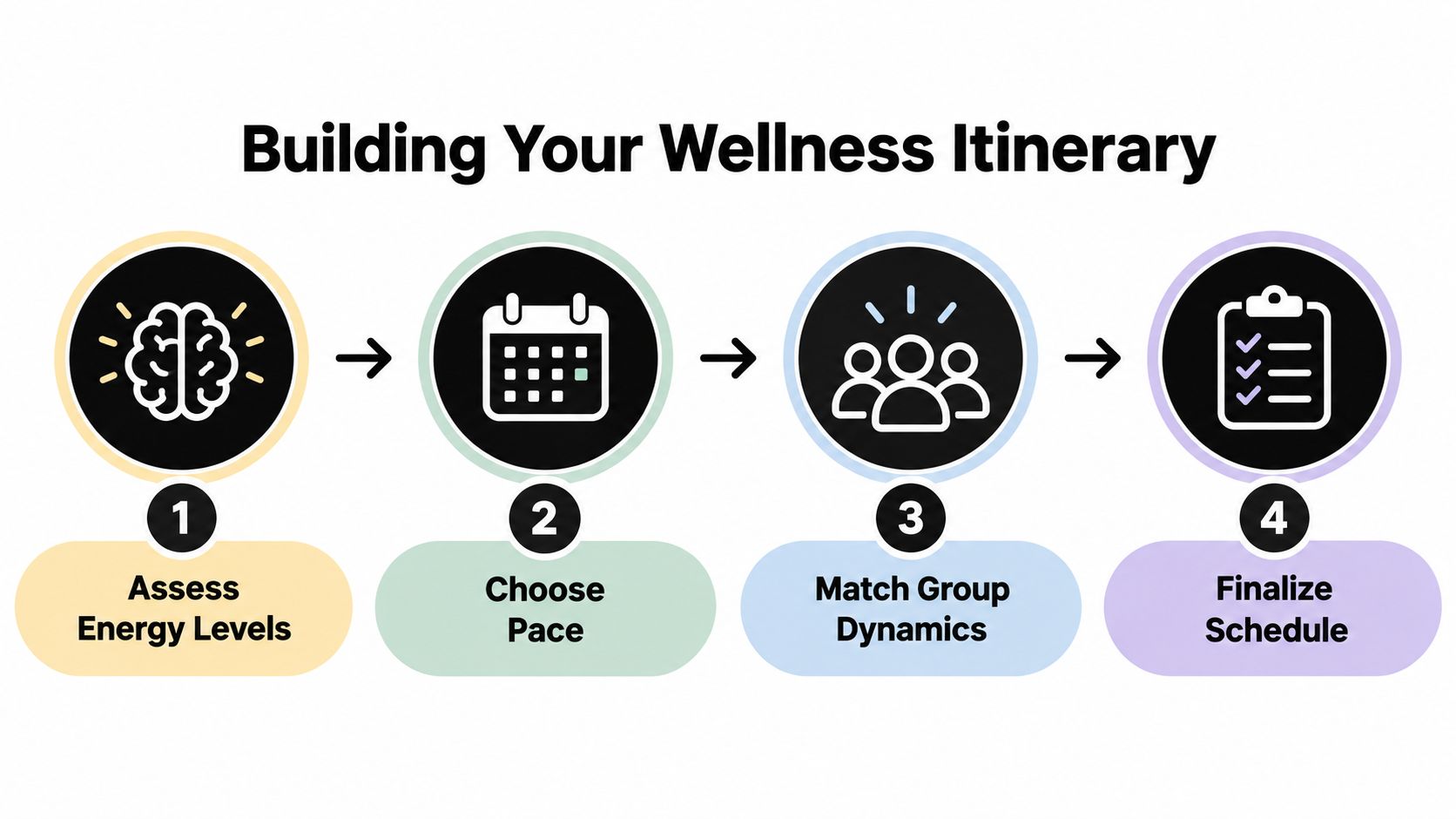
Start with four decisions
Assess energy levels. Before arrival, identify who wants vigorous activity, who needs quiet mornings, and who has physical, dietary, or sensory considerations. A private questionnaire lets guests disclose preferences without repeating sensitive information in front of the group.
Choose the pace. Decide whether the stay should feel like a reset, an adventure-led holiday, a relationship-focused escape, or a working retreat with restorative elements. The answer determines how many fixed commitments belong in the day.
Match group dynamics. Couples may want parallel schedules with shared meals and private treatment time. Families often need a common anchor, such as breakfast or a sunset activity, while allowing different members to choose between movement and rest. Friends celebrating a milestone may prefer one memorable excursion and more unstructured time than a packed program suggests.
Finalize the schedule. Keep activity times flexible where weather or energy can change the plan. Confirm transport, treatment duration, meals, equipment, guide requirements, and cancellation terms before arrival. A schedule that looks elegant on paper can become exhausting when every transition requires a long drive.
Use the following patterns as starting points rather than prescriptions:
For couples: Pair one shared experience, such as a private yoga or mindfulness session, with separate treatment choices. One person may prefer deep-pressure bodywork while the other chooses gentle stretching or quiet time.
For families: Put the most demanding activity earlier in the stay, then build in a lower-intensity day. Offer children and older adults an alternative route or shorter version rather than making everyone follow the same physical plan.
For solo travelers: Leave room for spontaneous conversation and solitude. A morning practice, nourishing meal, treatment, and nature time can be more useful than trying to join every group activity.
For teams and brand communities: Define the purpose of the gathering before adding wellness programming. A facilitator can support reflection and connection, while optional treatments protect personal boundaries and prevent the retreat from feeling like forced vulnerability.
The menu should also include food as part of recovery. Guests need to know whether meals are included, whether menus can accommodate allergies or religious preferences, and whether snacks, beverages, and special dietary products cost extra. At a small retreat, chefs can often adjust meals more thoughtfully, but that flexibility still depends on advance notice and clear communication.
Give the group a simple way to reflect after each major activity. Ask whether energy rose or fell, whether anyone needs more shade or hydration, and whether tomorrow should become quieter. This turns personalization into an ongoing practice rather than a form completed once at booking.
Watch the itinerary principles in action before deciding what fits your group:
Balancing Adventure with Restoration
Costa Rica makes it easy to overbook a holiday. A morning rainforest excursion, an afternoon transfer, and an evening treatment may sound appealing until heat, humidity, uneven terrain, and travel time accumulate. Adventure and restoration can coexist, but they need to be placed deliberately.
Compare two approaches. An adventure-led stay suits guests who measure value through movement, novelty, and access to places they can't reach at home. Zip lining, canyoning, horseback riding, paragliding, whale watching, and coastal trips create memorable shared experiences. The trade-off is that the body may need more sleep, hydration, food, and unplanned time than the marketing schedule suggests.
A restoration-led stay puts sleep, bodywork, gentle movement, long meals, and nature observation first. It suits burnout recovery, a personal reset, or guests who want to reconnect without constantly changing location. The trade-off is emotional rather than physical. Some travelers may feel they haven't experienced enough of Costa Rica if they never leave the property or nearby surroundings.
Make the sequence work
Schedule demanding activity before a recovery-focused massage, not after it. Following strenuous movement with a gentle treatment, a proper meal, and a quiet evening makes more sense than using bodywork to justify another late excursion. Avoid presenting deep tissue work as a guaranteed repair strategy, especially when a guest has pain, an injury, or a medical condition requiring professional assessment.
Choose activities according to the least comfortable capable participant. A private group gains more from an excursion everyone can enjoy than from an ambitious plan that leaves one person behind. Ask the operator about terrain, vehicle time, equipment, guide qualifications, weather sensitivity, and alternatives.
Trip timing affects the available experience. Costa Rica's tourism authority generally identifies the dry season as mid-December through late April and the green season as May through mid-December, as explained in Costa Rica's official seasonal travel guidance. Whale and dolphin watching at Ballena National Marine Park and turtle watching at Tortuguero are associated with the green season, while humpback migration patterns vary by origin and time of year.
A shorter stay can work for a focused reset, beach time, or a small number of curated activities. A longer stay gives weather-sensitive excursions more flexibility and allows active and quiet days to alternate. Either way, leave permission to cancel an outing. The most restorative decision may be a slow breakfast followed by shade, a swim, and an early night.
For options that can be adapted to different abilities and appetites for exertion, explore these Costa Rica adventure ideas. The best plan isn't the one with the most activities. It's the one that still feels generous on the final morning.
The Regenerative Impact of Your Stay
Regenerative hospitality asks a more demanding question than whether a property has attractive surroundings. It asks whether the stay supports the ecosystems, workers, guides, and communities that make the experience possible. A guest should be able to understand what happens beyond the villa, the treatment room, and the restaurant.
Costa Rica's conservation framework offers a useful standard. The country's protected-area system includes 11 conservation areas, with national parks, wildlife refuges, biological stations, wetlands, biological corridors, and national monuments, according to SINAC's overview of tourism and conservation. The OECD reports that forests cover approximately 60% of Costa Rica's territory, while terrestrial protected areas cover about 26% of its land and marine protected areas cover about 28% of its exclusive economic zone, as detailed in the OECD country note on Costa Rica.
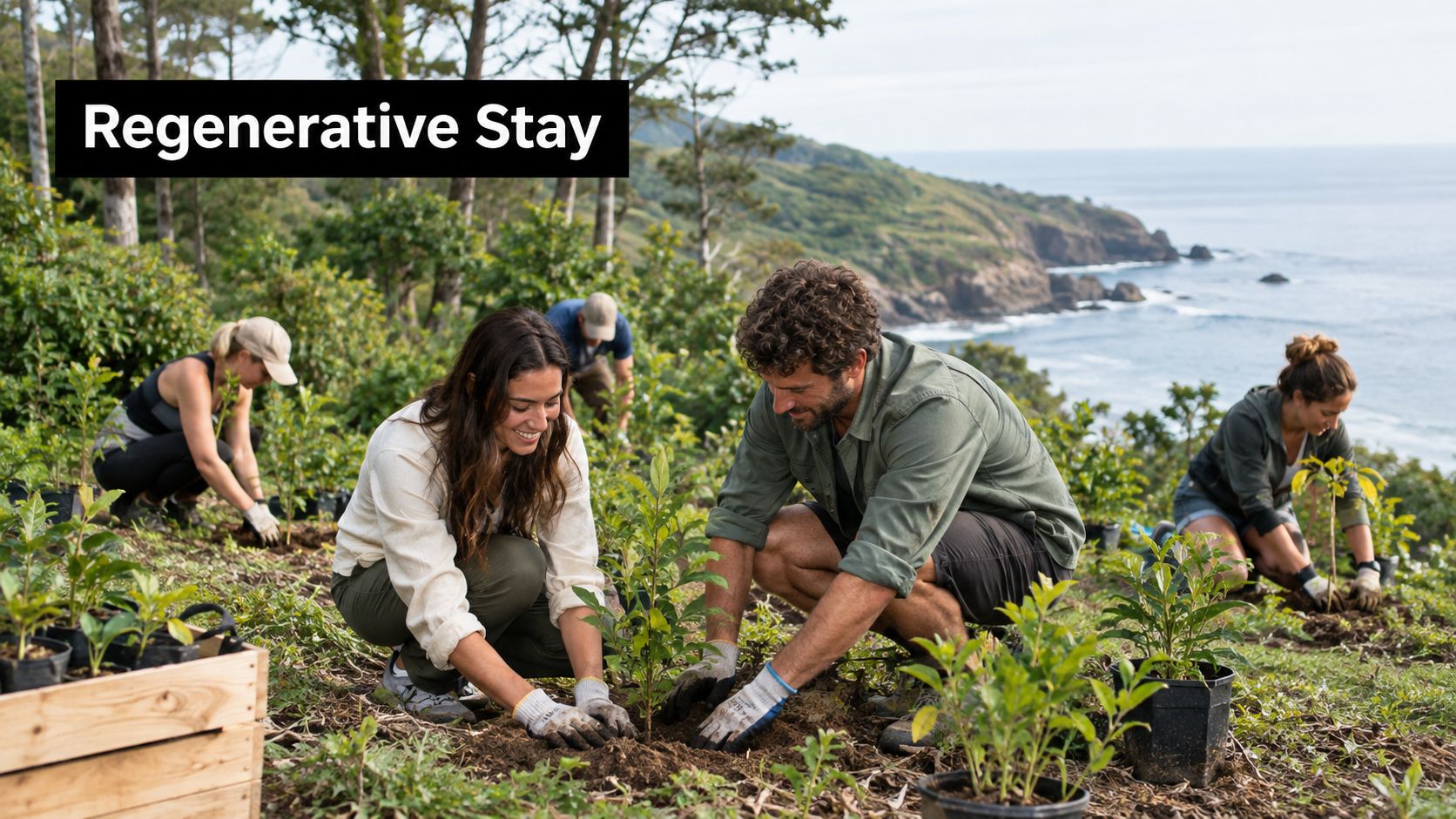
Look for visible commitments
At this retreat, each villa sponsors a rescued animal, and guest presence supports lifeguard training, living wages, and turtle conservation. Those commitments connect the guest experience to specific local needs rather than relying on broad language about being eco-friendly. They also create a more honest relationship between pleasure and impact. Your treatment, meal, excursion, and accommodation can contribute to a place while you enjoy it, but only when the operator explains how.
Ask practical questions before booking:
Conservation: Which projects receive funding, and what do guests support through their stay?
Wildlife: How do guides manage distance, feeding, noise, and habitat protection?
Employment: Does the property hire locally, pay living wages, and invest in training?
Transport: How much driving does the itinerary require, and can activities be combined geographically?
Community: Are local businesses, producers, artists, and guides part of the guest experience?
Regenerative travel isn't the same as guilt-free consumption. A flight, vehicle journey, water use, and construction footprint still exist. The credible approach is to make the trade-offs visible and reduce avoidable harm through smaller groups, regulated excursions, responsible wildlife practices, and local economic participation.
Read this introduction to regenerative tourism before comparing properties. The meaningful differentiator isn't a leaf-shaped logo or a promise to heal the planet. It's a clear account of how the property behaves when guests aren't watching.
Overcoming Barriers to Entry and Building Trust
Many travelers assume wellness retreats are difficult to evaluate because prices are vague, treatments are unfamiliar, and every provider promises personalization. That skepticism is reasonable. Cost, availability, time, motivation, and trust are common barriers to wellness adoption, according to NIQ's 2025 Global State of Health and Wellness report.
The answer isn't to make the retreat sound more exclusive. It's to make the decision easier.
What transparent planning looks like
A clear proposal should state the accommodation, meals, treatments, activities, transfers, taxes, gratuities, equipment, and follow-up support included in the price. If the rate covers a week-long stay but excursions, private instructors, air travel, or specialized clinical services cost extra, guests should see that before committing. A premium-but-attainable experience is defined by value and coherence, not by pretending every request is included.
Accessibility deserves the same clarity. Ask whether a treatment can accommodate pregnancy, disability, different body sizes, religious preferences, language needs, or a guest who doesn't want touch-based services. Ask about steps, terrain, bathroom access, shade, water temperature, dietary restrictions, and the distance between villas and shared spaces. No retreat can promise universal access to every activity, but a trustworthy host will explain limitations and offer alternatives.
Medical boundaries matter too. Massage may create immediate changes in stress ratings, heart rate, and salivary cortisol, but the evidence discussed earlier doesn't support promises of lasting endocrine treatment. Thermal services may feel soothing and support temporary mobility, but guests with heat-related contraindications need screening. Depression, trauma, chronic pain, cognitive decline, and other clinical concerns call for an appropriately licensed professional, not a wellness slogan.
A trustworthy menu tells you what a service is for, what it isn't for, and who should skip it.
The same principle applies to personalization. Asking guests to disclose preferences privately before arrival is more considerate than repeatedly asking sensitive questions in front of family or colleagues. It also helps hosts prepare alternatives for people who don't want intense pressure, group breathwork, long hikes, or unfamiliar foods.
For couples, families, milestone groups, teams, and brands building a community around shared values, intimate hospitality can make coordination easier because the schedule, food, activities, and group boundaries can be discussed in one place. The right retreat doesn't promise to transform everyone in the same way. It creates the conditions for rest, connection, creativity, adventure, or a deliberate personal reset.
VIVARA offers intimate Costa Rica stays with architecturally distinct villas, chef-led flexible dining, on-demand activities, yoga, breathwork, meditation, and restorative programming for private groups. Visit VIVARA to compare a customized wellness stay with your group's pace, accessibility needs, adventure goals, and expectations for regenerative impact.
