The Vivara Content Team
Sustainable Luxury Travel: The Regenerative Way
Sustainable Luxury Travel: The Regenerative Way

More than four in ten global consumers are willing to pay more for responsible, eco-friendly, and sustainable trips, while one in ten has stayed in luxury eco-friendly accommodation in the previous three years. Sustainable luxury travel shifts the focus from consuming nature to leaving a place better than you found it, combining high-end comfort with verified community and environmental impact.
You may be comparing a private villa, a polished resort, and an intimate retreat in Costa Rica. Each can offer beautiful surroundings, excellent food, and attentive service. The harder question is whether the premium pays for meaningful conservation, fair local employment, and a stay designed around the destination rather than just placed inside it.
That distinction matters for couples seeking a private reset, families planning a meaningful shared experience, and brands building deeper relationships with their communities and consumers. The most credible retreat isn't the one with the greenest vocabulary. It's the one that can explain what it funds, who benefits, how impact is measured, and what guests can reasonably expect.
The New Definition of Luxury Travel
You arrive at a retreat after a long journey. The room opens toward forest or ocean, dinner uses ingredients from nearby farms and fishing communities, and the day's plans leave enough space for quiet. The luxury isn't only the architecture or the service. It's knowing that the people preparing the meal are paid fairly, the natural surroundings are being protected, and your presence supports work that continues after checkout.
That experience represents a different definition of sustainable luxury travel. Traditional luxury often measured value through privacy, scale, scarcity, and consumption. Regenerative luxury adds another test: does the stay strengthen the social and ecological systems that make the destination worth visiting?
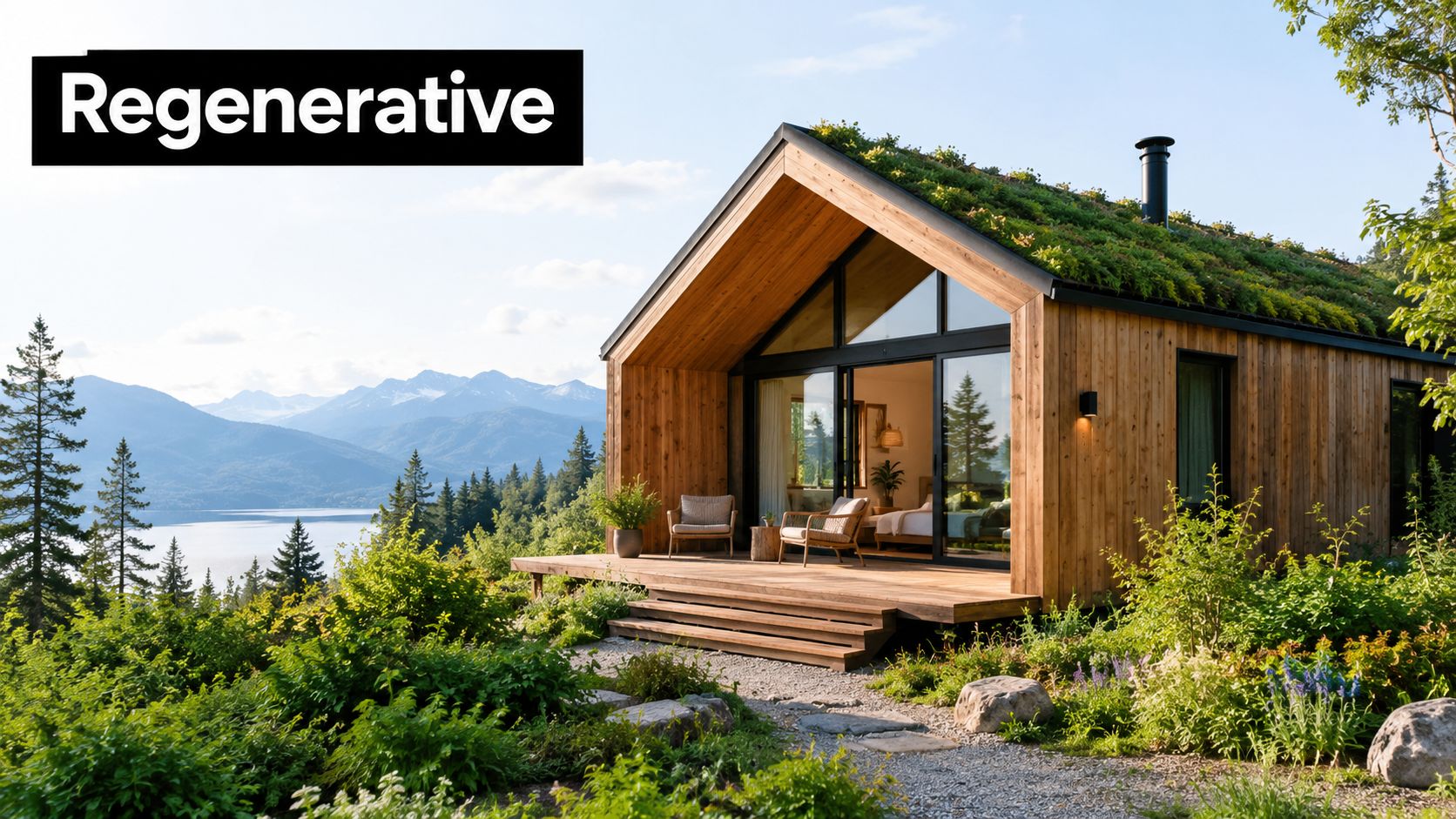
From exclusivity to connection
A private setting still matters. Couples may want a secluded base for rest, friends may need a place to celebrate, and families may value a villa where different generations can share time without following a rigid resort schedule. But exclusivity alone doesn't create a responsible experience.
A more useful model connects intimacy, design, nature, food, and local participation. A small property can reduce unnecessary scale, give hosts more control over the guest experience, and make it easier to explain where services and supplies come from. That doesn't automatically make it sustainable, but it creates the conditions for accountable hospitality.
The same shift is visible in buyer behavior. The 2023 luxury travel whitepaper found that more than four in ten global consumers were willing to pay more for responsible, eco-friendly, and sustainable trips. It also found that one in ten global consumers had stayed in luxury eco-friendly accommodation in the previous three years, with the figure among affluent travelers more than 50% higher than the global average.
Practical rule: Treat the destination's wellbeing as part of the luxury product, not as a charitable extra.
For a traveler comparing a luxury villa rental in Costa Rica, the key question is therefore broader than “How beautiful is the property?” Ask whether the stay creates genuine connection, supports local livelihoods, and gives you a more considered way to experience the surroundings. Comfort remains essential. It no longer carries the entire definition of value.
Principles of Regenerative Tourism
A credible regenerative stay should make its impact understandable without forcing guests to decode marketing language. Four principles provide a practical starting point: small-scale design, transparent supply chains, community benefit, and direct environmental stewardship.
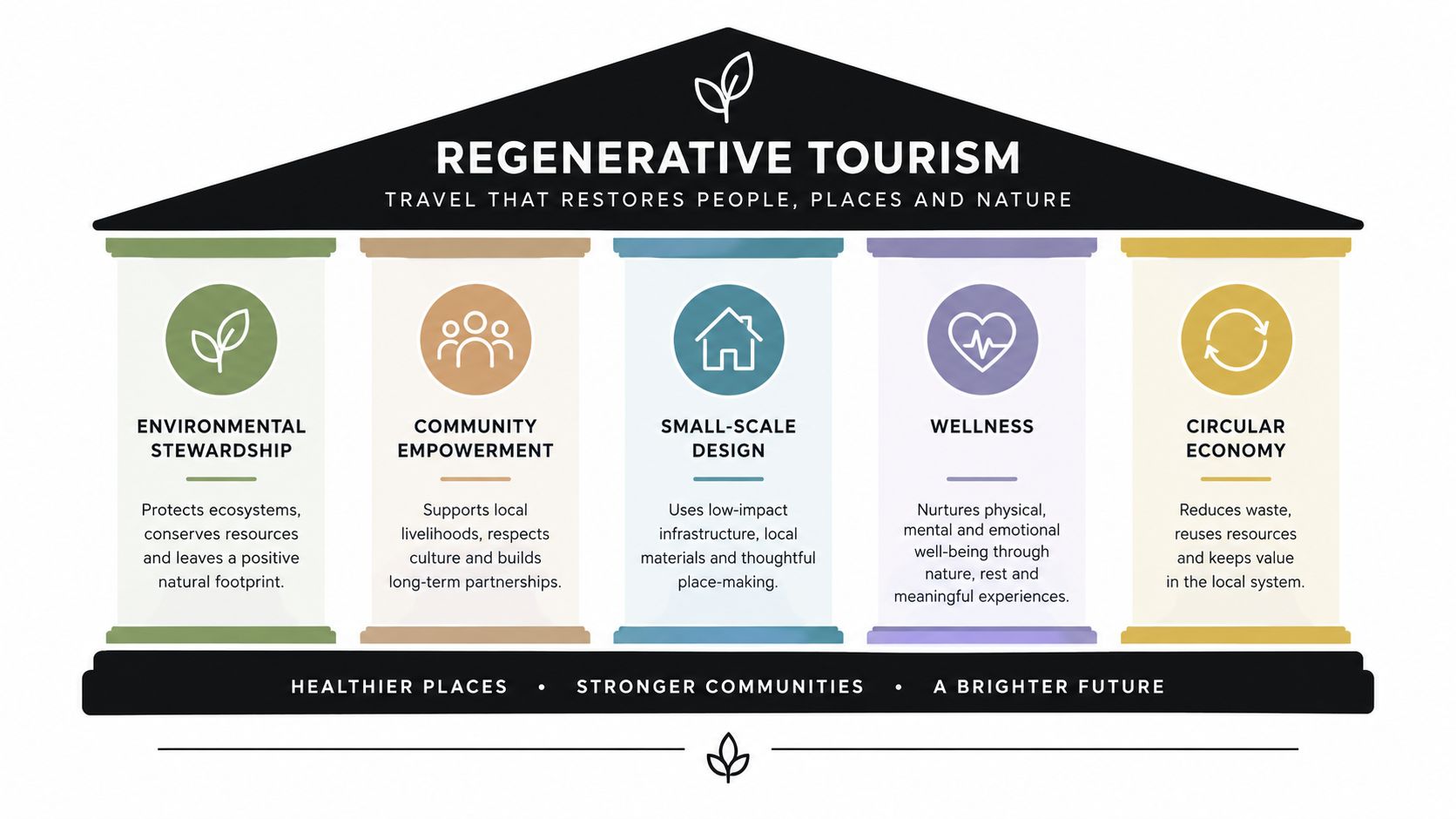
Design that respects place
Small-scale architecture can create a more personal experience and reduce the pressure associated with sprawling developments, but size isn't proof of responsibility. Look for buildings that respond to climate, use durable materials, manage water carefully, and disclose how energy is consumed.
Accommodation is a major operational lever. Tourism accounts for roughly 8% of global carbon emissions, and accommodation produces about 21% of tourism-related CO2 emissions, with lower energy use, more efficient HVAC systems, and renewable electricity among the most effective reduction opportunities. The peer-reviewed accommodation analysis also reports country-level carbon intensity ranging from 13.5 kg CO2e/m² in Norway to 214.5 kg CO2e/m² in Hong Kong, using data from more than 27,000 hotels in the Cornell Hotel Sustainability Benchmarking system.
For a luxury villa with pools, generous rooms, and intensive cooling, visible features such as bamboo amenities matter less than measured energy use, responsible refrigerant management, and clean electricity procurement.
Supply chains guests can see
A chef-led meal becomes more meaningful when a property can identify its farmers, fishers, growers, and producers. Local sourcing can strengthen destination economies and improve freshness, but it shouldn't be reduced to a vague “farm to table” claim. Ask whether the property can explain its sourcing relationships and how it handles seasonal availability.
Community benefit as a core operating cost
Living wages, training, local ownership, and year-round employment are stronger indicators than a donation box in the lobby. A retreat should be able to describe how its spending reaches residents and whether workers have a voice in the service model.
A Deloitte-linked report citing a Virtuoso survey found that 74% of luxury travelers are willing to pay more to travel responsibly, especially when they can see how the money will be used. The luxury travel sustainability report supports a simple conclusion: transparency turns an abstract premium into a value proposition guests can evaluate.
Conservation beyond offsets
Carbon offsets can have a role, but they shouldn't replace operational change or local conservation. Regenerative travel asks what the property protects directly, how funding is allocated, and whether guests can understand the result. Wildlife sponsorship, habitat restoration, watershed protection, and conservation partnerships offer a more tangible connection than an unitemized claim that emissions were “neutralized.”
These principles also support wellness. Quiet design, nutritious food, time outdoors, and meaningful contact with local people can help guests pursue recovery from burnout, creative renewal, relationship building, or a personal reset without separating wellbeing from the place providing it.
Why Costa Rica Leads in Sustainable Luxury
A traveler comparing rainforest lodges in Costa Rica can assess more than design, privacy, and views. The country offers a useful framework for testing whether a nature-based stay contributes to the place that makes it attractive. Protected areas, visitor experiences, and formal sustainability evaluation are connected through a national tourism model, rather than leaving every property to define “eco” for itself.
The official tourism board states that 26% of Costa Rica is officially zoned as protected territory, while 25% is preserved through the National System of Conservation Areas. Its Certificate of Sustainable Tourism, or CST, covers lodging and tour operators, helping travelers assess environmental, cultural, and social practices through a recognized national program. The official Costa Rica sustainability guidance provides a practical starting point for comparing properties.
Nature is part of the economy
Costa Rica's appeal rests on an economic relationship with nature, not scenery alone. Tourism accounts for 8.2% of GDP and 21.3% of the workforce, while 1.6 million of the 2.7 million foreign visitors in 2023 visited protected areas, according to Mongabay's reporting on conservation and tourism. Nature-focused travel is therefore a major part of the visitor economy, not a specialist interest at the edges of it.
That scale makes the property's operating choices matter. A credible retreat should be able to explain how its spending supports local employment, whether workers receive living wages, how guides and producers are paid, and what funding reaches wildlife conservation. A beautiful setting is not evidence of those outcomes.
Costa Rica also shows how environmental and human results can reinforce each other. A responsible tourism guide to Costa Rica reports that sea turtle tourism generates seven times more income for local families than harvesting turtle eggs, while roughly 98% of the country's energy comes from renewable sources. These conditions do not certify every property, but they give well-designed retreats a national context in which conservation and community benefit can be measured more clearly.
The local experience matters
In Dominical, a considered stay can bring together rainforest, coastline, wildlife, local food, and active excursions without turning culture into a staged performance. Strong itineraries use local guides, follow protected-area rules, allow weather and seasonality to shape plans, and leave room for guests to experience a place rather than collect destinations.
For travelers examining the country's ecological recovery, Costa Rica's forest regrowth offers useful context. Costa Rica is compelling because it gives travelers practical grounds for better questions, not because every experience is automatically sustainable.
How to Evaluate a Retreat's True Impact
A sustainability premium is only persuasive when the property can show what it pays for. Recent coverage captures the tension. Nearly 40% of affluent travelers are willing to pay 30% to 50% more for sustainable features, while a separate 2026 outlook found that 39% of luxury travelers remained willing to pay a premium, down from 51% in 2020. The luxury travel trends analysis points to a credibility issue. Travelers may support sustainability, but they increasingly expect proof.
Use the following questions before booking:
What is measured? Look for energy use, water management, waste diversion, local purchasing, wages, and conservation contributions.
Who benefits? Ask how many roles are locally filled, whether the property pays living wages, and whether guides, producers, and community partners are paid directly.
Where does the money go? A percentage of revenue is less useful than a clear explanation of the program, recipient, timing, and intended result.
What happens operationally? Ask about air conditioning, hot water, laundry, food waste, single-use materials, wastewater, and transport.
What can guests do responsibly? A good retreat designs wildlife encounters, excursions, and cultural activities around local rules rather than guest convenience alone.
Claim | Superficial Practice | Structural Practice |
|---|---|---|
“We support the community” | A general donation statement with no recipient or reporting | Living wages, local hiring, paid training, and named community partnerships |
“We protect nature” | Decorative native plants or occasional beach cleanups | Ongoing conservation funding, habitat work, wildlife safeguards, and documented partners |
“We reduce emissions” | A carbon-neutral badge without operational detail | Measured energy use, efficient cooling, renewable power, and responsible transport planning |
“We serve local food” | A menu using regional language without sourcing detail | Identified farmers, fishers, and producers with seasonal purchasing practices |
“We are low waste” | Refillable toiletries alone | Waste audits, composting, reuse systems, procurement changes, and wastewater management |
The guide to regenerative tourism can help clarify the distinction between reducing harm and contributing to restoration. Don't reject a property because it lacks a perfect system. Do reject vague claims that cannot survive a polite, specific question.
The premium is justified by evidence, not by the word “eco.”
VIVARA - A Case Study in Intimate Hospitality

In Dominical, VIVARA shows how an intimate, founder-led retreat can connect high-end hospitality with visible community and conservation commitments. The property accommodates up to 14 guests across architecturally distinct villas, making it suitable for couples, families, friends, private celebrations, wellness groups, and brand or team gatherings.
The stay is personal by design. Guests can protect time for rest, or shape their days around whale watching, canyoning, zip lining, horseback riding, paragliding, sunset cruises, and other customized experiences. That flexibility suits different needs without forcing every traveler into the same wellness schedule. One guest may want quiet and sleep. Another may prefer adventure, social time, or a focused setting for team work.
VIVARA's stated commitments include rescued-animal sponsorship linked to each villa, lifeguard training, living wages, and turtle conservation. Michelin-trained culinary leaders oversee a dining program built around farm-fresh, ocean-caught, and jungle-foraged ingredients, with no fixed menus. The meaningful question is how these promises operate in practice: whether staff receive living wages, whether local suppliers benefit consistently, and whether wildlife programs receive documented support beyond the guest experience.
Costa Rica's certification system provides a useful benchmark for testing those claims. A retreat should be able to identify its certification or participation in recognized sustainability programs, explain what is measured, and show how results are reviewed. Guests can then ask for practical evidence, such as wage standards, local hiring and training, conservation partners, and funding directed toward wildlife protection. As noted earlier, Costa Rica's visitor economy is closely tied to protected areas, so a retreat's relationship with that system matters more than scenery alone.
This video offers another way to assess the property's atmosphere and design before deciding whether an intimate stay suits your group.
For buyers, the practical questions are straightforward. Is the group size right? Can activities be customized without compromising local rules or conditions? Can the host explain its certification, living-wage approach, and wildlife funding clearly? Does transparent, week-long pricing fit the occasion, whether that means a couple's escape, family gathering, wedding-related stay, or restorative team retreat?
Sample Itineraries for Every Traveler
Sustainable luxury in Costa Rica doesn't require one fixed personality. The right itinerary depends on whether you want restoration, movement, education, celebration, or a combination of all four.
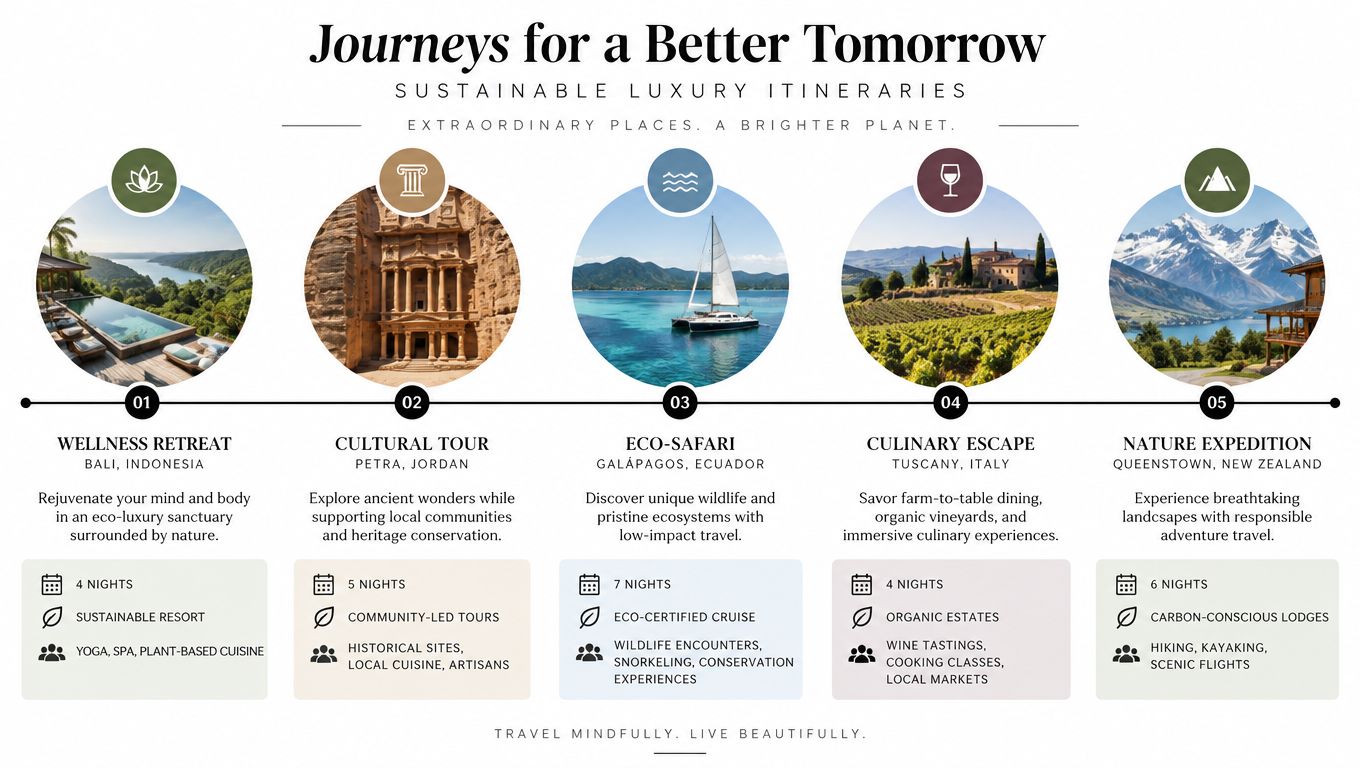
For wellness and personal reset
Choose a slower rhythm with guided movement, nourishing chef-led meals, time in nature, massage or restorative treatments, and unstructured afternoons. This style suits travelers recovering from burnout, developing a creative practice, or seeking self-care without a crowded resort schedule.
The best version doesn't fill every hour with wellness activities. It gives you privacy, excellent sleep conditions, fresh food, and a setting that makes it easier to step away from constant decisions.
For adventure seekers
Build the stay around canyoning, zip lining, horseback riding, whale watching, paragliding, or coastal exploration. Use local guides, follow wildlife protocols, and keep enough flexibility for weather and conditions. Adventure becomes more responsible when the experience emphasizes knowledge of the terrain rather than speed through it.
This itinerary works for friends, active couples, and teams that bond through shared challenge. Add chef-led dinners and quiet mornings so the trip doesn't become an exhausting checklist.
For families and multi-generational groups
A private setting allows different ages to share a destination without forcing identical schedules. One group can take a guided nature outing while another rests at the villa, then everyone reconnects over a meal built around local ingredients.
Prioritize short transfers, flexible dining, safe water activities, and cultural experiences led by people who can explain the place in an age-appropriate way. For milestone celebrations, a full-estate format can also give families privacy while preserving a sense of occasion.
The strongest itinerary is the one that matches your group's energy and values. Premium doesn't mean maximal activity. It means having the expertise and flexibility to make each day feel intentional.
Tips for Booking Your Regenerative Stay
Start by choosing the outcome you want. A couple may need privacy and restoration, a family may prioritize connection, and a brand may need a setting for community building, content creation, or a restorative work retreat. The right property should be able to support that purpose without forcing every guest into the same program.
Ask prospective hosts for their sustainability policy before paying a deposit. Request details on local wages, conservation partners, food sourcing, waste systems, energy management, and the activities included in the rate. A direct answer is useful even when the system is still developing. Evasive language isn't.
Make the booking work harder
Consider shoulder-season timing: Traveling outside peak periods can reduce pressure on local resources and create a more relaxed, locally connected experience, but ask how seasonal employment is handled.
Compare inclusions carefully: A transparent rate covering lodging, dining, service, and curated activities may offer better value than a lower headline price with every meaningful experience added separately.
Use a buyout for groups: Full-estate stays can simplify logistics for families, celebrations, weddings, and teams while giving hosts a clearer picture of the group's needs.
Ask for impact evidence: Look for named partners, measurable programs, and explanations of how guest spending supports workers and conservation.
Protect time for the destination: Don't build a schedule so dense that local guides, scenery, and meals become interchangeable stops.
A regenerative booking is a relationship, not just a reservation. The conversation before arrival often reveals more than a sustainability badge.
The Future of Conscious Luxury Travel
The future of luxury travel will belong to properties that combine comfort with accountability. Guests still want privacy, beautiful design, exceptional food, and memorable adventure, but they increasingly want to understand the cost and consequence of those experiences.
Costa Rica shows how protected nature, local livelihoods, certification, and hospitality can meet in one destination. The most meaningful stay leaves you rested while strengthening the people, wildlife, and environments that made the journey worthwhile.
Choose VIVARA for an intimate Costa Rica retreat where architecturally distinct villas, personalized experiences, chef-led dining, rescued-animal sponsorship, living wages, lifeguard training, and turtle conservation connect luxury with measurable purpose. Visit VIVARA to explore options for a private escape, group gathering, wellness retreat, or full-estate stay.
