The Vivara Content Team
Cuartel Bellavista: The Bullet-Scarred Barracks Where Costa Rica Chose Peace
Cuartel Bellavista: The Bullet-Scarred Barracks Where Costa Rica Chose Peace

Most countries put their military history behind glass. Costa Rica put a museum inside its former military headquarters.
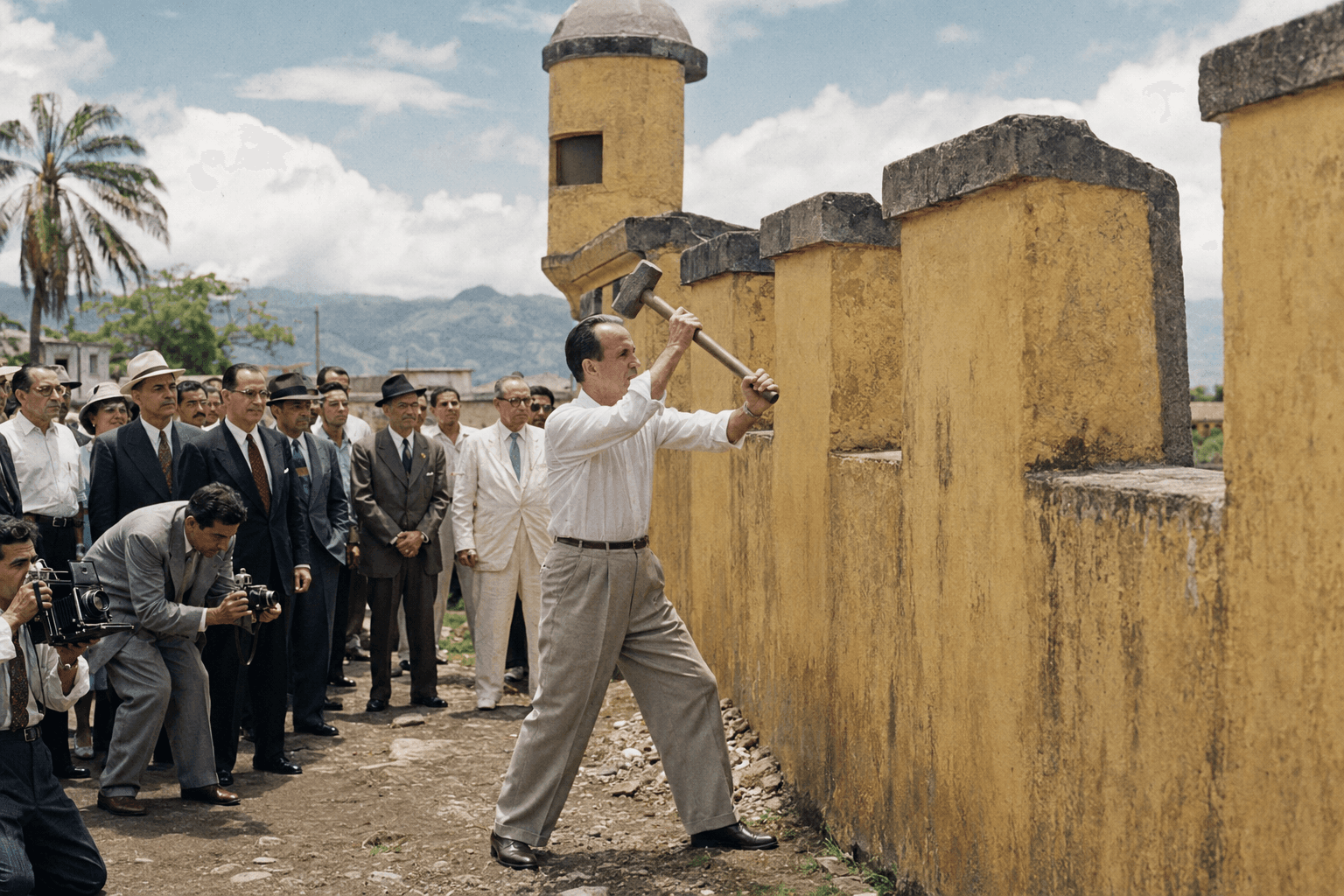
Cuartel Bellavista sits above central San José, its ochre walls still marked by gunfire. It was once the country's most important barracks. On December 1, 1948, José Figueres Ferrer stood here and struck one of its battlements with a sledgehammer, publicly signaling the end of Costa Rica's army.
Today, the same building houses the National Museum of Costa Rica. Weapons gave way to pre-Columbian artifacts, national history, gardens and a butterfly house. The conversion was not cosmetic. It was the message.
For guests traveling to Vivara in Dominical, Cuartel Bellavista is one of the smartest additions to an itinerary. San José is roughly 200 kilometers from the property by road, depending on the route. A domestic flight between Quepos and San José takes about 30 minutes, followed by ground transfers at both ends. That makes the capital a strong place to begin your trip before heading south—or to finish it before flying home.
Why Cuartel Bellavista Matters
Cuartel Bellavista is not interesting simply because it is old. It matters because one building holds both sides of modern Costa Rica's national story: armed conflict and the deliberate rejection of a permanent army.
The site began as the private home of coffee producer Mauro Fernández Acuña in the late 19th century. The Costa Rican government acquired the property in 1914. Construction and expansion turned it into a fortress-like military complex during the dictatorship of Federico Tinoco and the years that followed.
Its hilltop position was strategic. From Bellavista, troops could watch over San José. The crenellated towers, thick walls and firing positions were built for control, not charm. What now looks picturesque against the tropical sky was once a working expression of state power.
The barracks also became a target. It was involved in the failed Bellavistazo uprising of 1932, the 1948 civil war era and the Cardonazo revolt of 1949. The bullet holes visible today are often described broadly as scars of the 1948 war. The more accurate version is more interesting: Bellavista absorbed gunfire during multiple episodes of political violence, and not every mark can be assigned to a single battle.
Do not rush past those walls on the way inside. They are part of the collection.
The 44 Days That Changed Costa Rica
Costa Rica's 1948 civil war did not begin as a military adventure. It began with a political crisis.
Opposition candidate Otilio Ulate appeared to win the presidential election held on February 8, 1948. Congress later annulled the result amid accusations of fraud and irregularities. The decision triggered an armed uprising led by José Figueres Ferrer and his National Liberation Army against the government of President Teodoro Picado.
The fighting ran from March 12 to April 24—roughly 44 days. It remains the bloodiest conflict in Costa Rica's 20th-century history. The war ended with Figueres' forces victorious and a governing junta taking power for 18 months before transferring authority to Ulate.
That sequence matters. The army was not abolished during a long period of calm. The decision came directly after Costa Ricans had seen what organized political violence could do.
The Sledgehammer at Bellavista
On December 1, 1948, Figueres delivered the symbolic blow at Cuartel Bellavista. The image is famous: a man with a sledgehammer striking the wall of the country's leading military fortress.
The gesture made for a powerful photograph, but it was backed by policy. The new government formally dissolved the national army, arguing that a capable police force was sufficient for domestic security. In 1949, the prohibition became constitutional. Article 12 of Costa Rica's Constitution outlawed the army as a permanent institution.
Costa Rica did not eliminate security forces. The country maintains police, border and specialized public-security units. What it rejected was a standing national military.
This distinction is important because the story often gets flattened into a travel slogan: Costa Rica chose education over soldiers. The reality was more complicated, but the result was still extraordinary. A state emerging from civil war dismantled the institution most likely to determine political power by force and embedded civilian rule in its new constitutional order.
Documents related to the abolition were added to UNESCO's Memory of the World Register in 2017. The world recognized what the building itself already made clear: this was not merely a Costa Rican administrative decision. It was a rare political act with global meaning.
From Barracks to National Museum
Cuartel Bellavista became the home of the National Museum in 1949. That may be the best part of the entire story.
The government did not preserve the barracks as a shrine to military glory. It handed the building to culture and education. A fortress designed to hold soldiers began holding the country's collective memory instead.
Inside, the experience expands far beyond the abolition of the army. Visitors move through exhibits covering Costa Rica's pre-Columbian societies, colonial period, independence and modern state. Archaeological objects and the country's iconic stone spheres place 1948 inside a much longer human timeline.
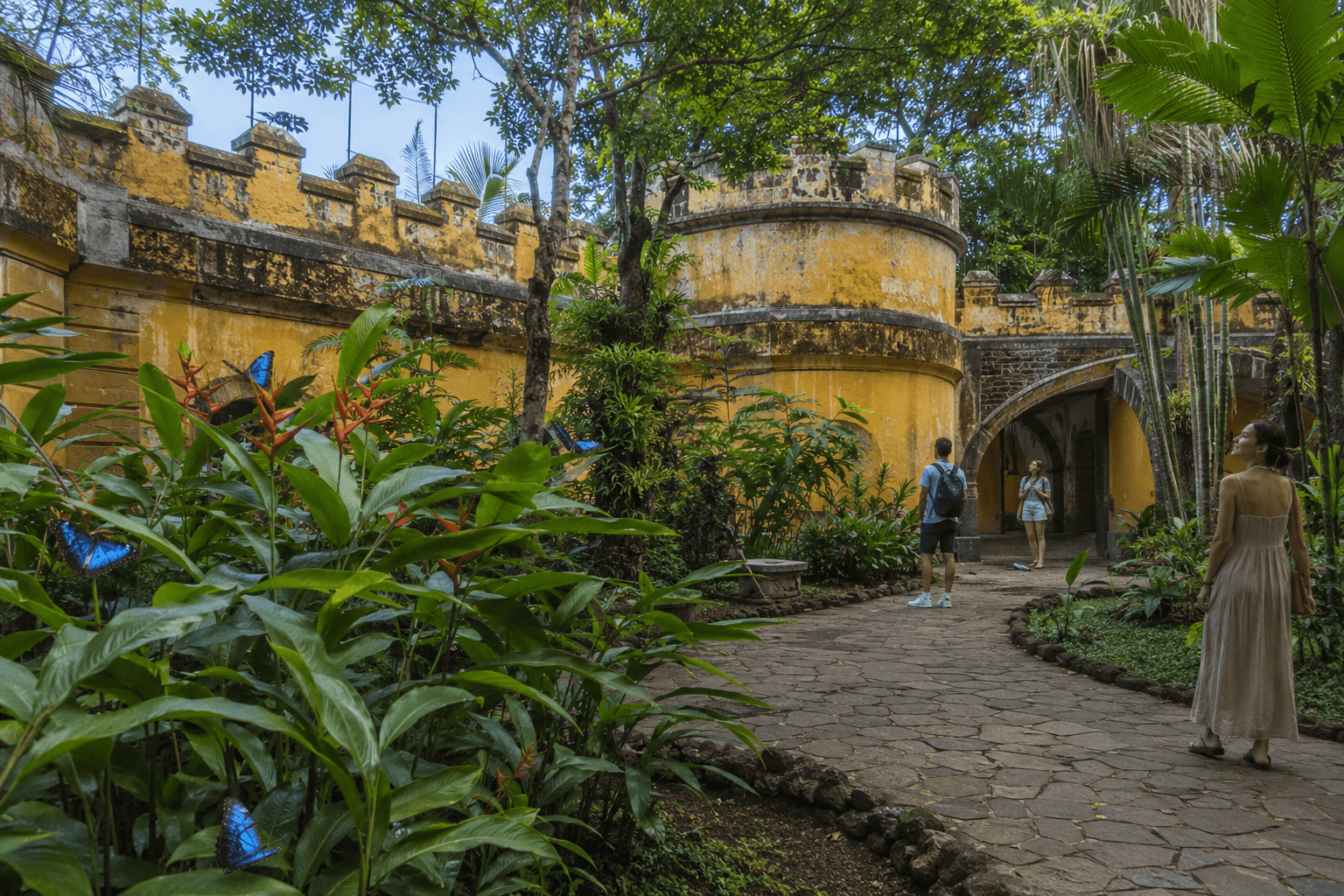
The entrance through the butterfly garden creates a particularly Costa Rican contrast. Within minutes, you move from living tropical color to bullet-scarred masonry. Nature, violence, reinvention and civic identity occupy the same address.
The permanent De Cuartel a Museo exhibition is the section not to miss. It uses historic photographs and objects to show how Bellavista functioned during the 1920s, 1930s and 1940s—and how it was physically converted after the army's abolition.
Look Closely at the Bullet Holes
The bullet marks are easy to photograph and easier to oversimplify.
Some accounts identify them with the 1948 civil war. Historical research also connects damage at Bellavista to the 1932 Bellavistazo and the 1949 Cardonazo, a failed revolt against the postwar governing junta. Renovations covered some of the old impacts; others remain visible.
That uncertainty is not a flaw. It is evidence of how contested this building once was.
Stand outside for a minute before entering. Look at the pocked yellow walls, then look at the museum sign. Few places explain Costa Rica's national identity with less effort: the damage was kept, but the building's purpose was changed.
Why San José Belongs at the Beginning or End of Your Vivara Trip
Travelers often treat San José as an airport with traffic attached. That is a mistake—especially if you want to understand why Costa Rica feels different from other destinations in the region.
Vivara offers the immersive side of the country: Pacific jungle, wildlife, open-air living, shared meals and the space to slow down. Our complete Vivara guest orientation explains what that rhythm feels like once you arrive.
San José supplies context. Cuartel Bellavista explains part of the political choice that allowed Costa Rica to build a global identity around democracy, conservation, health and education rather than military power.
The two experiences work well together:
Start in San José if you want historical context before entering the southern Pacific landscape. Visit the museum, spend a night in the capital and travel to Dominical the next morning.
Finish in San José if you want a thoughtful final stop before an international flight. After several days in the jungle, Bellavista gives you a concise answer to the question: why does this country operate the way it does?
Fly when time matters. Quepos is the practical domestic-air gateway for the Dominical area. Scheduled flights to or from San José are about 30 minutes in the air, although total travel time must include the drive between Vivara and Quepos plus the transfer between the San José airport and downtown.
Drive when the journey matters. The road trip is roughly 200 kilometers and commonly takes several hours, depending on traffic, weather and the exact route. It lets you watch the country change from the Central Valley to the Pacific coast.
If you are building a longer itinerary, balance the museum with one of Vivara's Costa Rica experiences and activities, or use our 10 adventure ideas for a Costa Rica retreat to plan the days around it. Visiting between May and November? Read our direct guide to Costa Rica's green season before deciding whether to fly or drive.
Practical Visitor Information
Official name: Museo Nacional de Costa Rica, Sede Bellavista
Location: Calle 17, between Central and Second avenues, beside Plaza de la Democracia in central San José
Hours: Tuesday through Saturday, 8:30 a.m.–4:30 p.m.; Sunday, 9:00 a.m.–4:30 p.m.
Closed: Monday
2026 foreign visitor admission: US$11 general; US$6 for qualifying students
Time to allow: About 90 minutes for a focused visit; two to three hours if you want to read the history galleries carefully
Best pairing nearby: Plaza de la Democracia, the Jade Museum and a walk through central San José
Hours and prices can change. Confirm them on the National Museum's official visitor page before you go.
A Simple One-Day San José Plan
You do not need to turn this into a complicated city itinerary.
Morning: Arrive at Cuartel Bellavista near opening time. Walk the exterior first and look for the preserved bullet marks. Enter through the butterfly garden, then prioritize the De Cuartel a Museo and Costa Rican history exhibits.
Lunch: Eat in Barrio Escalante or near the city center rather than defaulting to an airport hotel.
Afternoon: Add the Jade Museum or walk through central San José. Keep the schedule light if you are flying or driving south the next day.
Next move: Continue to Vivara by private ground transfer, rental car or a short domestic flight to Quepos followed by a drive to Dominical.
This is enough. Bellavista works because the story is concentrated. You do not need to manufacture meaning around it.
Frequently Asked Questions
What is Cuartel Bellavista?
Cuartel Bellavista is a former military barracks in central San José that has housed the National Museum of Costa Rica since 1949. It is the site where José Figueres Ferrer symbolically announced the abolition of Costa Rica's army on December 1, 1948.
Why are there bullet holes in Cuartel Bellavista?
The barracks was involved in several armed political conflicts. Visible and documented damage has been associated with the 1932 Bellavistazo, the period surrounding the 1948 civil war and the 1949 Cardonazo. It is more accurate to describe the walls as scars from multiple episodes than to assign every mark to one event.
When did Costa Rica abolish its army?
The symbolic public announcement took place at Cuartel Bellavista on December 1, 1948. The abolition was embedded in Article 12 of Costa Rica's 1949 Constitution, which prohibits an army as a permanent institution.
Is Cuartel Bellavista worth visiting?
Yes. It is one of the most historically significant buildings in Costa Rica and now contains the country's National Museum. Even a focused 90-minute visit gives useful context for Costa Rica's politics, archaeology and national identity.
How far is Cuartel Bellavista from Vivara?
The museum in San José is roughly 200 kilometers from Vivara in the Dominical area by road, depending on the route. Driving usually takes several hours. The flight between Quepos and San José is about 30 minutes, but travelers should also budget time for transfers between Vivara and Quepos and between the airport and downtown San José.
The Building Is the Argument
Costa Rica's decision to abolish its army is often repeated as trivia. Cuartel Bellavista turns it back into a physical fact.
The walls were built for soldiers. They took bullets. Then the country handed them to a museum.
That does not erase the civil war or turn Costa Rican history into a simple peace story. It does something more credible: it preserves the damage while showing what came next.
Start your trip here and the jungle will mean more. End here and you may understand the country differently.
Explore Vivara or contact the team to design your stay.