The Vivara Content Team
The Central American Independence Torch: One Flame, Five Countries
The Central American Independence Torch: One Flame, Five Countries

It is not the Olympic flame. It is not one runner, one country or one afternoon.
Every September, a torch moves south from Guatemala through El Salvador, Honduras and Nicaragua before crossing into Costa Rica. Students carry it in short relays. Towns gather along the road. Bands play. Flags come out. In Costa Rica alone, more than 22,000 students may take part.
The flame is called the Antorcha de la Independencia. It connects five countries through one shared date—September 15, 1821—and turns a history lesson into something loud, physical and very much alive.
If you want to see Costa Rica beyond beaches and wildlife, this is one of September’s strongest cultural traditions. It is community pride without a stage set.
What is the Central American Independence Torch?
The Central American Independence Torch is an annual student relay commemorating the news of independence as it traveled from Guatemala to Costa Rica in 1821.
The modern route runs in this order:
Guatemala
El Salvador
Honduras
Nicaragua
Costa Rica
At each border, one country hands the flame to the next. Within Costa Rica, thousands of students carry it south from Peñas Blancas to Cartago, passing through communities that stage their own ceremonies along the way.
One point matters: the relay happens during the days leading up to Independence Day. In Costa Rica, the torch traditionally enters the country on September 13 and reaches Cartago on September 14. September 15 is Independence Day itself.
That timing is often flattened in social posts. The real sequence is better.
One declaration, five modern countries
On September 15, 1821, representatives in Guatemala City signed the Act of Independence of Central America, breaking with Spanish rule. The decision covered much of the former Captaincy General of Guatemala—the territories that became Guatemala, El Salvador, Honduras, Nicaragua and Costa Rica.
The countries share the anniversary, but the news did not reach every city at once. There were no broadcasts or push notifications. Official couriers carried documents south by horse and on foot, crossing borders that looked nothing like today’s.
Costa Rica learned of the declaration weeks later. That delay is exactly what the torch relay remembers: not only the political act, but the physical movement of the news.
The flame began in 1964—not 1821
The Antorcha is a historical reenactment, not a flame kept burning since independence.
Costa Rican educator and physical-education teacher Alfredo Cruz Bolaños proposed the relay as a way to unite Central American students around their shared history. The first official journey took place in 1964, following the old communication route from Guatemala to Costa Rica.
That makes the tradition more than 60 years old. It also explains why students remain at its center. The event was designed as a moving civic lesson—one generation literally handing the story to the next.
Costa Rica later recognized the torch as a national symbol. By then, the relay had become one of the country’s most visible September traditions.
The Costa Rican leg, by the numbers
The final national stage begins at Peñas Blancas, on the border with Nicaragua, and ends in Cartago, Costa Rica’s former capital.
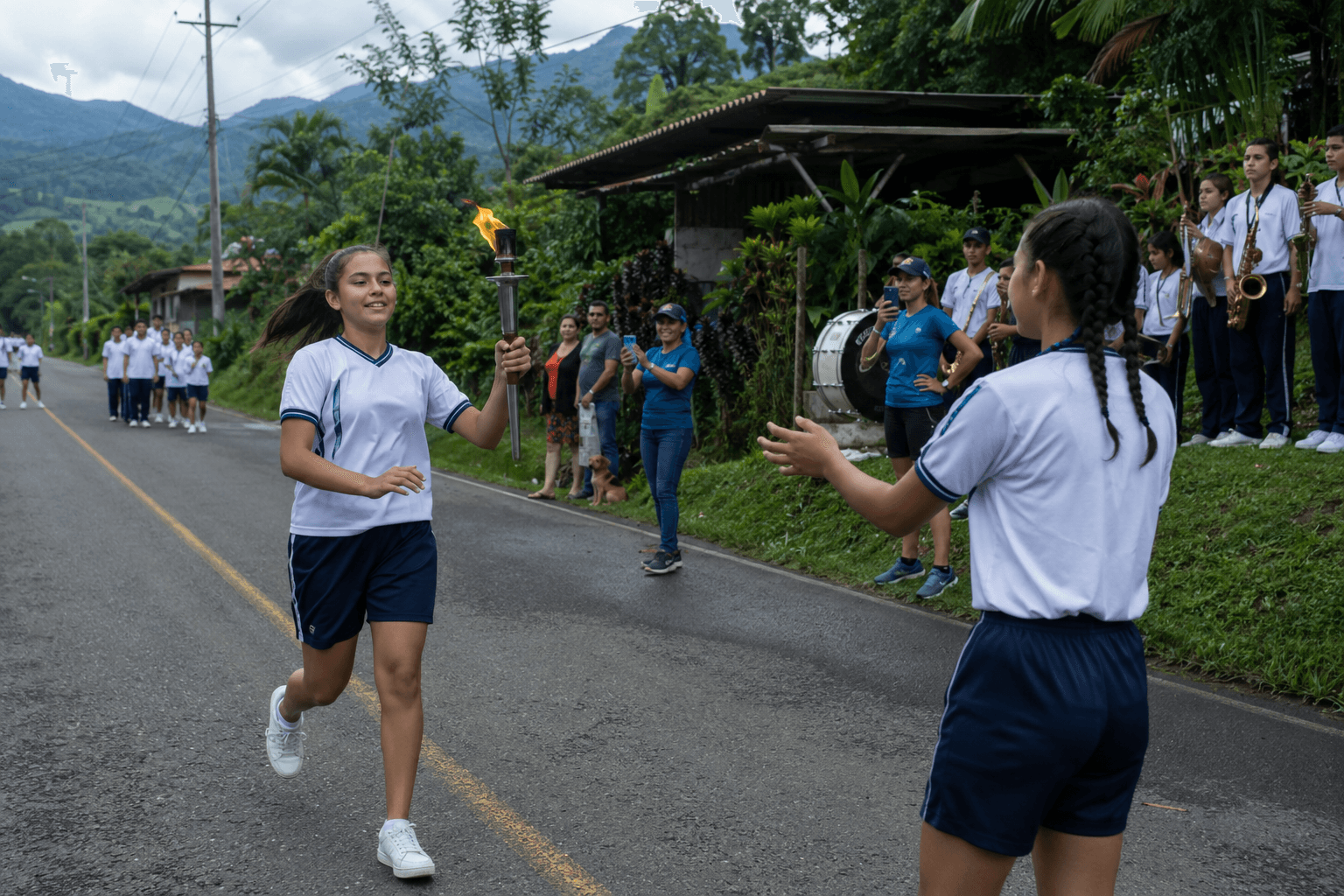
Recent official editions have covered roughly 378 kilometers inside Costa Rica. More than 22,000 students have participated, with each runner typically carrying the torch for about 200 meters before passing it forward.
Those short sections are the point. No single athlete owns the route. The distance is completed through thousands of small efforts.
From the northern border, the relay follows the Inter-American Highway through Guanacaste, Puntarenas, Alajuela, Heredia and San José before climbing into Cartago. Police, teachers, local officials, families and school bands accompany different stages.
The torch is also used to light secondary flames that travel into other communities. So even towns away from the main highway can join the national ceremony.
Why the route ends in Cartago
Cartago was Costa Rica’s capital during the independence era and remained the seat of government until 1823. Ending the relay there gives the route a historical finish rather than an arbitrary one.
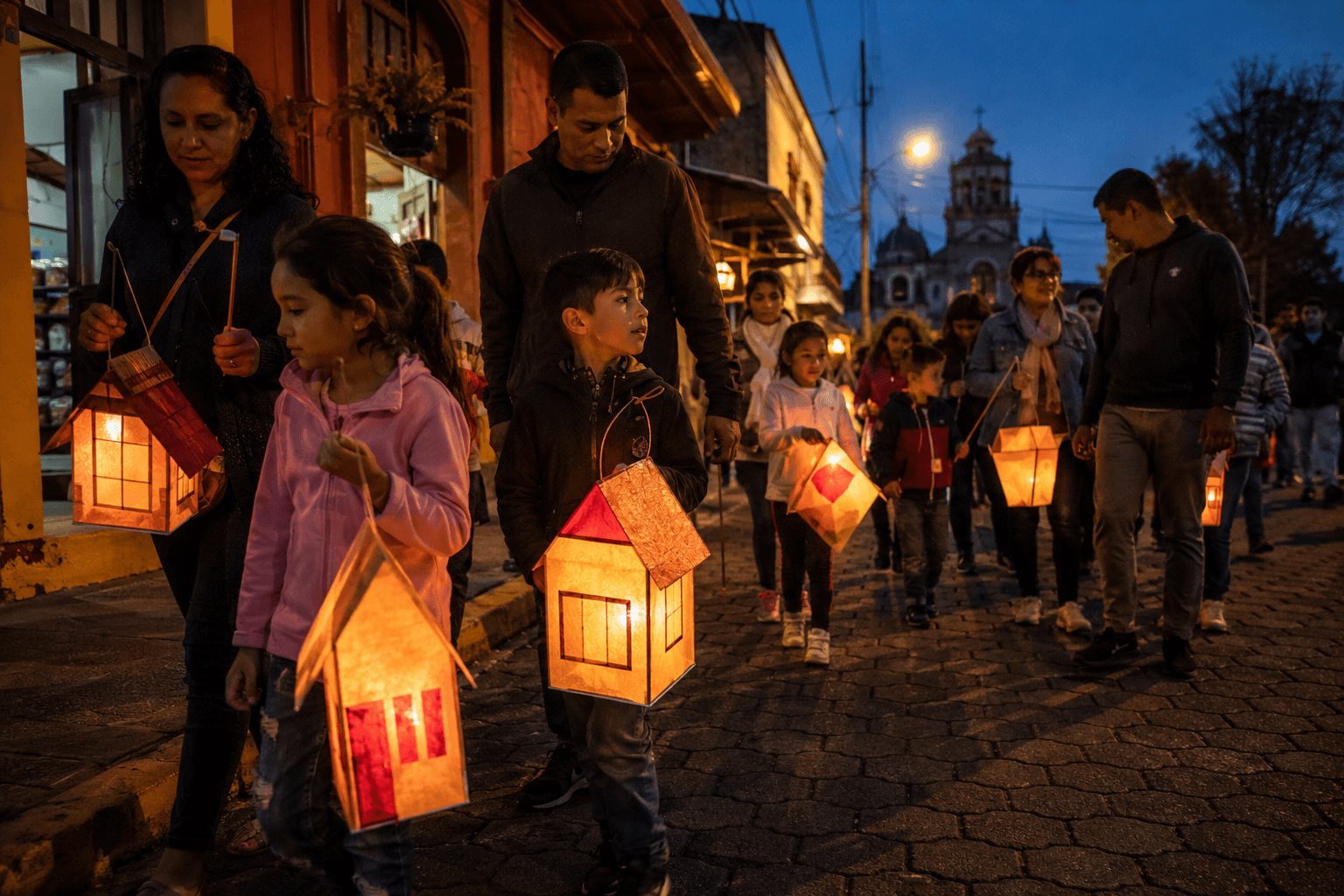
On the evening of September 14, the flame reaches the city after passing through San José. The arrival is accompanied by civic ceremonies, students and crowds. Across the country, Costa Ricans sing the national anthem at 6 p.m. and children take to the streets with handmade lanterns called faroles.
The lanterns are not just decoration. They evoke the lights carried by people who gathered in Guatemala City on the eve of the independence declaration. In Costa Rica, schoolchildren build versions shaped like houses, churches, oxcarts and national symbols.
Then September 15 brings school bands, traditional dress and community parades. The torch, lanterns and parades form one connected sequence—not three unrelated events.
The route is ceremonial. The emotion is real.
Watch the handoffs and the scale becomes personal.
One student grips the torch for a few hundred meters. Another waits ahead in school colors. Parents lean into the road for a better view. A band starts up. The next runner takes the flame and disappears around a bend.
The relay works because it avoids the usual monument-and-speech version of history. Independence moves. It sweats. It needs cooperation. A border becomes a meeting point instead of a dividing line.
You can see the tradition in motion in this Instagram post from Costa Rica Untold. Follow @costaricauntold and @vivaracr for more Costa Rican stories beyond the postcard.
Where to see the Independence Torch in Costa Rica
The exact public schedule changes each year, so check announcements from Costa Rica’s Ministry of Public Education before committing to a location. In general, these are the strongest options:
Peñas Blancas: the international handoff
This is where Nicaragua passes the flame to Costa Rica. It is the clearest expression of the five-country story, but it is remote for most visitors and involves a formal border setting.
Towns along the Inter-American Highway: the local relay
Communities along the route offer a closer view of student runners, roadside crowds and small ceremonies. The atmosphere can be more personal than the major-city events.
San José: the capital-city passage
The flame usually passes through San José on September 14. This is convenient if the city is already part of your itinerary, although traffic and crowds require planning.
Cartago: the historic finale
For the strongest single experience, choose Cartago on September 14. You get the torch’s arrival, the historic endpoint and the evening faroles tradition in one trip. Arrive early and expect road closures.
How to add it to a stay at Vivara
The torch route does not pass Dominical, but the finale works well at the beginning or end of a wider Costa Rica trip.
Cartago is roughly 120–140 kilometers from Vivara, depending on the route, and normally takes about 3.5 to 4 hours by car before holiday traffic. If the September 14 arrival is a priority, build in extra time and consider staying overnight in the Central Valley.
A practical itinerary looks like this:
Start in Cartago: See the torch and faroles on September 14, catch a local parade on September 15, then travel south to decompress on the Pacific coast.
End in Cartago or San José: Spend your first days around Dominical, then head inland for the national celebrations before flying home.
Stay local: If you prefer not to move during the holiday, ask about lantern walks, school parades and civic events in nearby communities. Costa Rica’s independence celebrations extend far beyond the official route.
Before building the rest of the trip, browse Costa Rica experiences and activities, see what to expect at Vivara, or explore more adventure ideas. September falls in Costa Rica’s greener, quieter season, so our guide to the green season in Costa Rica is useful reading too.
A shared story that still crosses borders
Central America’s history after 1821 was complicated. Political unions formed and collapsed. Borders hardened. Each country built its own national identity.
The torch does not erase any of that. It makes a simpler point: independence began as a regional story, and the memory still travels across the region.
One flame. Five countries. Thousands of students. A handoff repeated every year so the history does not sit still.
If you could see one Independence Day tradition in person, would you choose the international handoff, the torch’s arrival in Cartago or a neighborhood faroles parade?
Planning a September escape? Explore Vivara or contact us to build the Pacific-coast half of the journey.
Frequently asked questions
When is Costa Rica’s Independence Day?
Costa Rica celebrates Independence Day on September 15. The torch relay enters Costa Rica before that date and traditionally reaches Cartago on September 14.
Which countries take part in the Central American Independence Torch relay?
The route passes through Guatemala, El Salvador, Honduras, Nicaragua and Costa Rica—in that order.
Did the Independence Torch begin in 1821?
No. The current relay began in 1964. It commemorates the route used by couriers who carried news of the 1821 independence declaration south from Guatemala.
Who created the Independence Torch relay?
Costa Rican educator Alfredo Cruz Bolaños proposed the relay. Students have remained central to the tradition since its first journey in 1964.
Where does the torch enter Costa Rica?
It enters at Peñas Blancas, the northern border crossing with Nicaragua, before traveling roughly 378 kilometers to Cartago.
Can travelers attend the torch ceremonies?
Yes. Public events take place along the route, with major moments at Peñas Blancas, San José and Cartago. Schedules and road closures vary each year, so verify official announcements before traveling.

