The Vivara Content Team
7 Best Adventure Stories for Kids to Inspire Travel
7 Best Adventure Stories for Kids to Inspire Travel

The best adventure stories for kids don't end when you close the book. They plant curiosity that can grow into a real desire to explore. Before the family trip comes the shared story on the couch. Before a rainforest hike or a wildlife excursion, there's often a tale about a journey to somewhere unfamiliar.
That makes books and audio especially useful travel companions. They give children a shared language for asking questions, noticing details, and imagining what might be around the next bend. The right choice can also turn a long flight, car ride, or quiet evening into part of the experience.
This list brings together seven resources that spark imagination and pair naturally with hands-on family adventures. Each one offers a different route into discovery, from branching plots and historical journeys to wildlife magazines, audio dramas, and child-created stories. Read them before a nature-rich stay at a place like VIVARA in Costa Rica, then use the story as a starting point for exploring together.
1. Choose Your Own Adventure
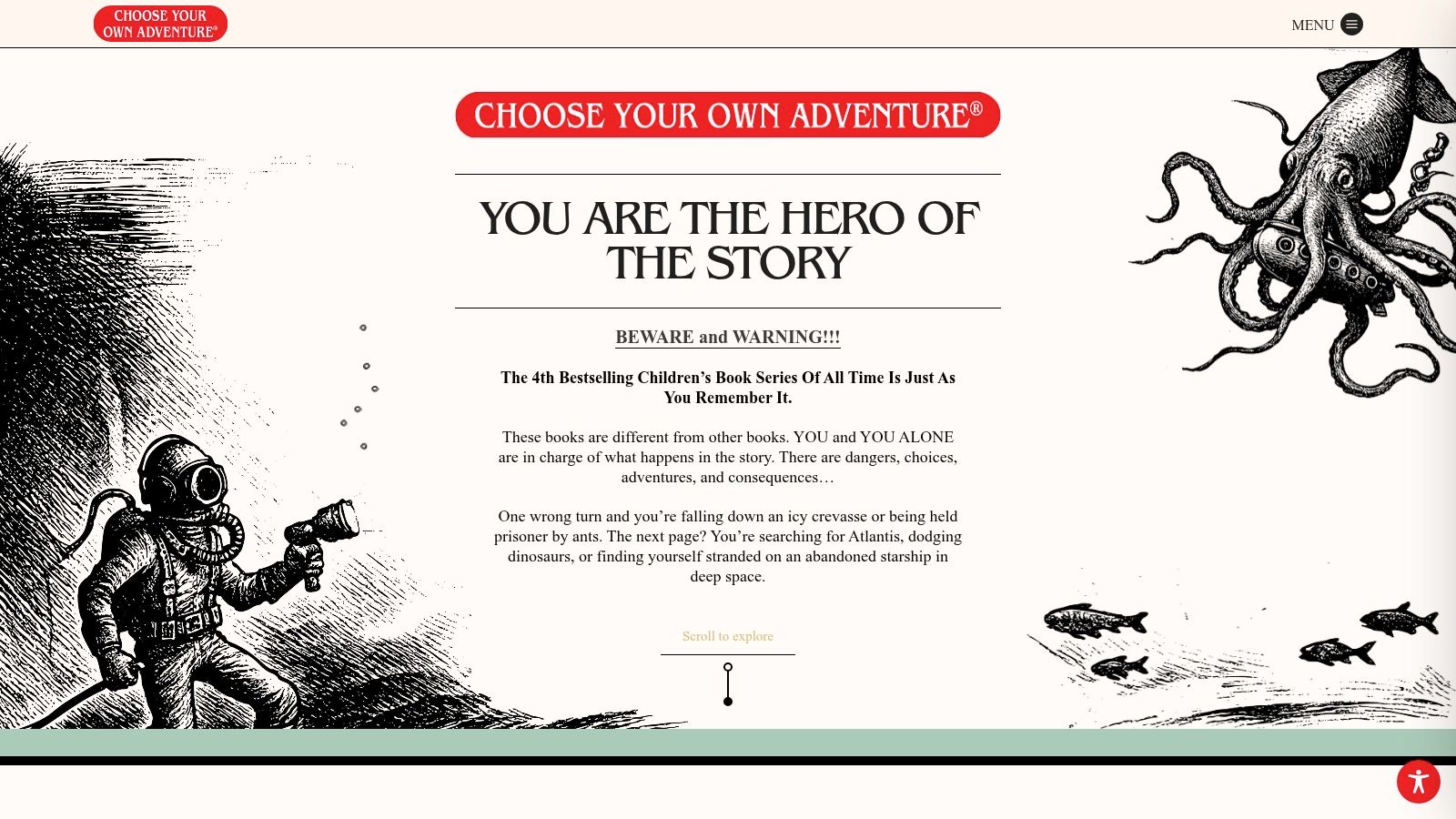
Choose Your Own Adventure remains one of the strongest options for children who want control over the story. Instead of following a single fixed plot, readers make decisions that send them along different paths and toward different endings. That structure makes the books particularly effective for reluctant readers, because the child isn't solely being asked to continue. They're being invited to choose what happens next.
The publisher organizes its catalog into clearly labeled lines, including Board Books, CYOA Jr., Classics, New Classics, and the Retro Collection. Families can also find boxed sets, read-aloud book club kits, and educator and library resources, which makes the series adaptable for different ages and travel situations.
Why it works on a family trip
The branching format creates natural conversation. One child can explain why they'd choose a particular route, while parents can ask what the family might do if a real trail, river, or weather change presented a similar decision. It works well as a shared read-aloud in a villa, during a retreat, or on an evening when everyone wants an activity that doesn't involve a screen.
The series also has strong re-read value. A child can return to the same book and make a different decision, which makes it more useful than a one-time story for a longer journey.
Practical rule: Choose a CYOA Jr. title for younger listeners, then let the child lead the decisions. The value comes from participation, not from rushing to the ending.
The main trade-off is that the offering is print-first, and individual title pricing isn't always visible until you open a product page. Some reissued titles also feel less contemporary in tone than newer children's fiction. Still, for a family that wants interactive adventure rather than passive entertainment, this is an excellent starting point.
A stay at VIVARA can extend that decision-making spirit into the adventures offered. Families can browse adventure ideas in Costa Rica and choose experiences according to energy, confidence, and curiosity.
2. Magic Tree House
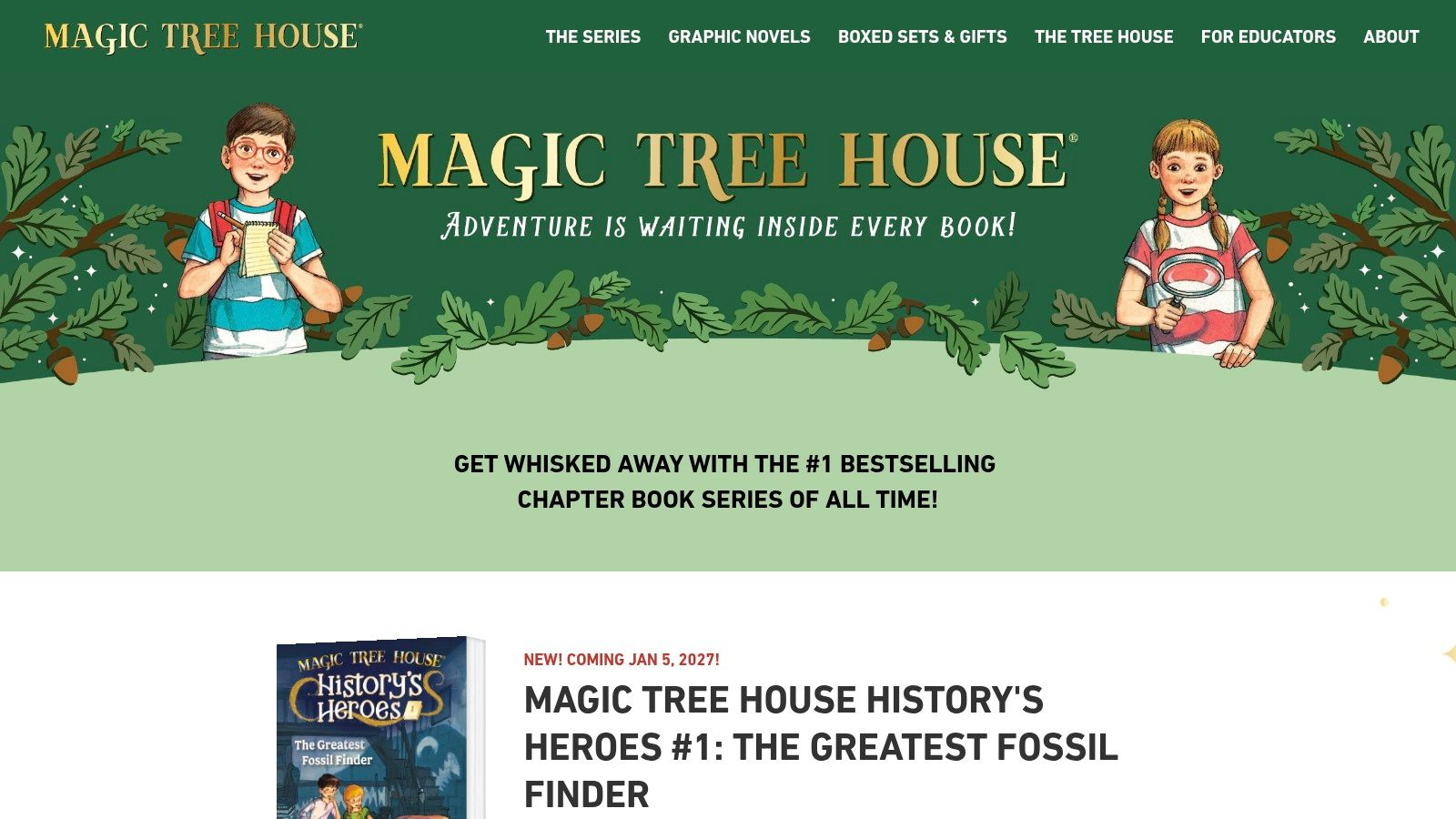
Magic Tree House gives children a dependable way to travel through history, geography, and nature without making the reading experience feel like a lesson. Jack and Annie move through time and around the world, encountering different places and problems in short, approachable chapter-book adventures.
The official site makes it easy to begin with the original series, then move into Merlin Missions, Fact Trackers, and graphic novel adaptations. That layered structure helps parents build a reading path without guessing which title should come next. Boxed sets and reading guides also make the series practical for packing or giving as a pre-trip gift.
Best for building reading momentum
The original books suit younger independent readers who benefit from concise chapters and familiar characters. Merlin Missions offer more challenge, while Fact Trackers add nonfiction context. A child might read a story about a place, then follow it with factual material about its animals, history, or environment.
That connection is particularly useful before a Costa Rica itinerary. A child who reads about jungle habitats, ancient cultures, or animal behavior may pay closer attention during a guided walk. The book doesn't replace an expert guide or a real encounter, but it gives children concepts and questions to bring with them.
Strongest advantage: The series offers an easy path from fiction to related nonfiction.
Best travel use: Pack one story for anticipation and a Fact Tracker for observation.
Main limitation: Children who are ready for more advanced middle-grade fiction may eventually find the reading level too easy.
Planning note: Print purchases are central, while digital and audio availability can vary by retailer.
For a family visiting Costa Rica, a waterfall outing can become a real-world extension of the series. The Rio Celeste hike guide gives parents a practical way to prepare children for a nature-focused day without overloading them with logistics.
3. National Geographic Kids Magazine
Some children want a continuous story. Others want to open a page and discover something immediately interesting. National Geographic Kids magazine is better suited to the second group, offering wildlife, science, exploration, travel content, and activities in a visually rich print format.
The magazine is aimed at younger readers and is particularly useful during the anticipation stage of a family trip. A child can browse marine-life features before a coastal excursion, learn about rainforest animals before a guided walk, or use an activity as a quiet evening project after a day outdoors.
A better fit for curious browsers
Its biggest strength is place-based learning without the pressure of completing a full narrative. Children can follow an interest wherever it leads. One page may prompt a question about a sloth, the next about a volcano, and another about ocean conservation.
That makes the magazine a practical option for mixed attention spans. It also creates screen-free family time, which matters during travel when every device can quickly become a source of negotiation.
The format has limits. It arrives on a schedule rather than offering an entire library on demand, and it doesn't provide the sustained plot or character arc of a chapter book. Families looking for a bedtime adventure with a clear beginning and ending may prefer Magic Tree House or an audiobook. Families preparing for outdoor activities may find the magazine more flexible.
The best preparation book doesn't need to explain the whole destination. It only needs to give a child one or two things they're excited to notice.
Wildlife conservation can also become part of the family conversation rather than an abstract topic. Before a coastal stay, use this resource alongside a discussion of turtle conservation in Costa Rica, then invite children to identify what responsible wildlife encounters look like.
4. Pinna
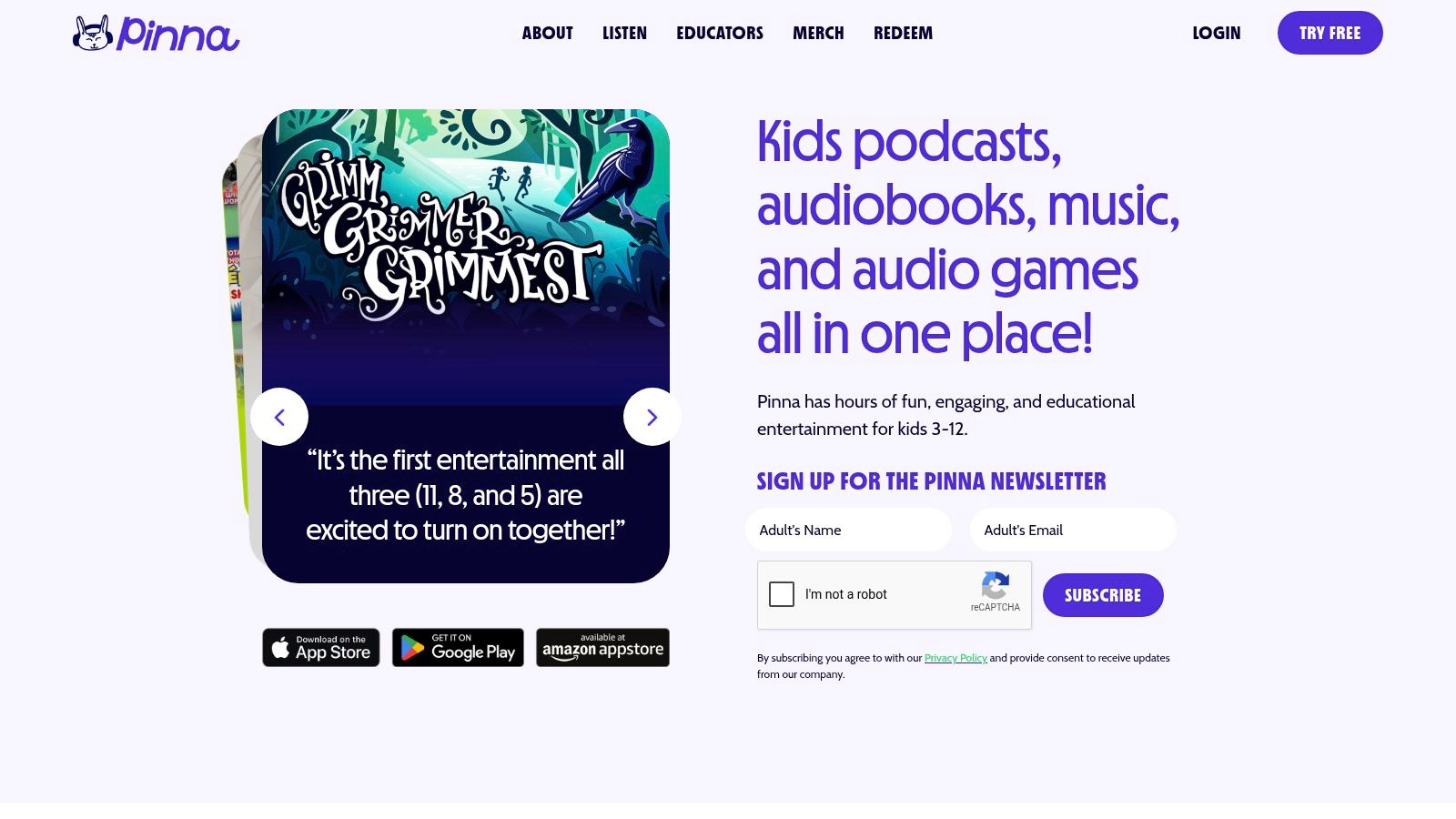
For flights, road transfers, and evenings when everyone needs a break from screens, Pinna offers a focused audio alternative. The kids-only service is COPPA-compliant and built around ad-free original series, interactive audio games, playlists, and downloadable listening.
Its audience spans younger children through older elementary listeners, so it can work well for families with different ages. Parents can choose content by age or genre, use parental controls, and download programs before leaving reliable internet behind. That last feature matters for remote destinations and travel days when streaming isn't something to depend on.
Where Pinna earns its place
Audio asks children to build the setting in their minds. A mystery or adventure can continue while they're looking out of a car window, resting after a hike, or getting ready for dinner. It also lets the family preserve some quiet without handing every child a separate screen.
The service is curated rather than unlimited. That's a strength when parents want age-conscious choices, but it can feel restrictive if a child is searching for a very specific commercial title. Access also depends on an active subscription, so families should download desired programs before departure and confirm how their plan works.
For flights: Download episodes before leaving home.
For mixed ages: Start with an adventure series, then let older children choose a mystery or interactive program.
For screen-free evenings: Use one episode as a shared family activity rather than background noise.
For cautious buyers: Sample the available content before committing to a longer plan.
Pinna is most useful when a family treats listening as part of the itinerary. After an active day, an audio story can give children a way to process the excitement while parents enjoy the same room, view, or quiet pause.
5. Epic
Epic is a practical choice for families who need variety more than a single signature series. Its digital platform brings together books, audiobooks, and learning videos, including adventure fiction and nonfiction about nature, travel, and the wider world.
The useful feature isn't only the breadth. Epic can support different reading levels under one family account. An emerging reader may use read-to-me audio, while an independent reader chooses a longer adventure, and another child browses an animal or geography title.
The advantage is flexibility
For travel, Epic can function as a digital bookshelf. Parents can curate a small selection before departure rather than asking children to search through the entire catalog. That curation matters because a large library can become overwhelming, especially when a child is tired or has only a short period of free time.
The platform also makes it easy to move between formats. A child might read a short adventure in the morning, listen to a related audiobook later, and watch a learning video about the setting. That combination can help sustain interest when attention shifts during a busy trip.
The trade-off is screen dependence. Epic is convenient on a tablet or phone, but it doesn't replace the tactile calm of a print book. Internet access can also affect how smoothly families use the service, although app-specific download options may be available for some content and contexts.
Curation beats abundance: Build a small travel shelf around one destination, one animal theme, or one type of adventure before handing the device to a child.
Epic suits families traveling with several children, particularly when packing space is limited and reading preferences vary. It's less compelling for parents who want one shared physical book to pass around during a Costa Rica stay.
6. Audible
Audible is the strongest option here for families who want depth, production quality, and long-term ownership of selected audiobooks. Its children's catalog covers classic and contemporary adventure, while curated category pages help parents find stories for car rides, flights, or quiet time in a villa.
The platform offers multiple plan structures, including Standard and Premium options, credit models, and a Plus Catalog for streaming. Annual credit packages can also suit families that want to own several important titles rather than relying entirely on temporary access.
Choose Audible when the listening journey matters
A strong audiobook can become part of a family's travel memory. Children may remember a particular narrator during a long drive, or return to the same story after coming home because it has become associated with a shared trip. Full-cast productions and polished performances can add energy without requiring visual stimulation.
Offline listening is another practical advantage. Families can use the mobile apps and compatible Alexa devices after downloading content, which makes planning easier for flights and areas with inconsistent connectivity.
Audible's weakness is its plan complexity. Standard, Premium, annual options, credits, and promotional offers can be difficult to compare, and names, pricing, and deals may change. A parent should decide whether the priority is streaming variety or owning specific titles before choosing a plan.
Best for repeat listening: Buy or use credits for books children will revisit.
Best for long journeys: Select a complete story with a narrator your family already enjoys.
Best for multiple children: Use curated categories to find different levels and styles.
Watch carefully: Confirm what the chosen plan includes before assuming every title is covered.
Audible is more powerful than Pinna for families with a precise title in mind. Pinna feels simpler for curated children's listening, while Audible offers a much broader marketplace and more responsibility for choosing well.

7. Story Pirates
Story Pirates takes a different route into adventure. It's a comedic, music-forward podcast built around stories inspired by children's ideas, with energetic performances and family-friendly entertainment available through major podcast apps.
The free weekly podcast is an easy entry point for travel. Episodes can entertain different ages in the same car, and the format doesn't require a child to follow a long sequence of chapters. Celebrity guests and musical production add momentum, while the underlying concept encourages children to create stories of their own.
Best for turning listeners into creators
Story Pirates works particularly well after a day of shared exploration. Ask children to invent a character based on an animal they saw, create a mission inspired by a waterfall or beach, or write an ending for a story that stopped before the answer. The podcast becomes a prompt rather than the entire activity.
Families looking for quieter, more literary listening may find the humor-heavy approach too energetic. It also won't satisfy every child who wants a sustained, serious plot. The free version is ad-supported, while the Creator Club offers ad-free listening, bonus episodes, and giftable subscriptions. Its pricing appears at checkout and can vary by offer, so parents should review the details before purchasing.
The service also extends beyond listening through live and virtual creative programs, camps, and classes. That makes it relevant for families who want travel to support creativity, not only passive entertainment.
A good use is simple. Play an episode during a transfer, then give children time to invent their own Costa Rica adventure later. They might write about a curious toucan, a hidden trail, or a family that learns to move through the jungle without disturbing the animals.
Adventure Stories for Kids, 7-Way Comparison
Title | 🔄 Implementation Complexity | ⚡ Resource Requirements | ⭐ Expected Outcomes | 📊 Ideal Use Cases | 💡 Key Advantages / Tips |
|---|---|---|---|---|---|
Choose Your Own Adventure (CYOA) | Low, print‑first, easy to use | Low, physical books; boxed sets | ⭐⭐, high engagement, replay value | Group read‑alouds, reluctant readers, travel | Interactive branching; pack multiple titles; tone varies by edition |
Magic Tree House | Low, straightforward chapter format | Low, print/digital options; educator resources | ⭐⭐, builds reading stamina & content ties | Early elementary classrooms, travel reading lists | Clear series progression; use Fact Trackers for nonfiction tie‑ins |
National Geographic Kids (Magazine) | Low, subscription cadence to follow | Medium, subscription or single issues | ⭐⭐, sparks curiosity; strong visual learning | Pre‑trip prep, place‑based learning, family browsing | Visually rich nonfiction; best for topic‑based prep rather than long arcs |
Pinna | Medium, app setup & parental controls | Medium, subscription + device; offline downloads | ⭐⭐⭐, highly engaging audio for mixed ages | Flights, road trips, screen‑free listening for mixed ages | COPPA‑compliant originals; great offline; subscription required |
Epic! (Epic Family) | Medium, app navigation, requires curation | Medium, subscription, device access, some downloads | ⭐⭐, flexible across ages/levels | Family trips, emergent readers, mixed‑age households | Massive catalog; use curated lists to avoid overwhelm; read‑to‑me support |
Audible | Low–Medium, app + subscription/credit management | Medium, subscription or purchases; device for offline | ⭐⭐⭐, deep catalog & high production quality | Long car rides, flights, older/advanced listeners | Wide selection; credits let you own favorites; check Plus Catalog |
Story Pirates | Low, free podcast; optional paid Creator Club | Low, podcast app; optional subscription for extras | ⭐⭐, entertaining, creativity‑boosting content | Short listens, creative workshops, mixed‑age entertainment | Free entry point; encourages kid‑generated stories; humor may not suit all listeners |
Bring Your Family's Story to Life
The strongest adventure stories for kids create more than excitement. They give families shared reference points. A child who has followed a character through a jungle, solved a mystery, or listened to a brave decision may notice the world with greater interest. Parents gain an easy way to start conversations about courage, animals, uncertainty, and the choices that make travel meaningful.
The right resource depends on the family's rhythm. Choose Choose Your Own Adventure when participation matters most. Pick Magic Tree House for accessible chapter-book momentum and connections to history or place. National Geographic Kids is better for browsing and wildlife preparation. Pinna and Audible suit families that want screen-free or hands-free listening, though they serve different needs. Epic offers the broadest digital flexibility, while Story Pirates turns listening into an invitation to create.
Reading level also deserves more attention than age alone. Younger children generally need clear plots and immediate action, while older elementary readers can handle more layered challenges and emotional complexity. Large reading datasets show how structured children's reading behavior can be. Renaissance's 2025 report covered 1.21 million pupils in the UK and Ireland and 25.07 million books read in a school year, while another Renaissance study recorded 173 million books read by 5 million K–12 students in the United States. Those figures come from Renaissance's reading research, and they reinforce a practical point. A good match depends on habit, stamina, attention, and motivation, not just a label on a book.
Adventure also remains a powerful category within children's reading. Epic's 2021 report placed adventure as the second most popular genre among children, behind humor, and found that children ages 6 to 12 spent an average of 99 minutes per month reading, with 61% of that reading time devoted to made-up stories rather than informational text. Epic's State of Kids Reading report helps explain why families should balance high-stakes plots with funny, playful, lower-pressure choices.
That balance matters for travel brands and retreat hosts too. Shared stories give families a reason to connect before arrival, while curated activities, local food, nature, and community give them something real to remember together. At VIVARA, an intimate, founder-led retreat in Dominical welcomes up to 14 guests across architecturally distinct villas, with personalized service and experiences that can include whale watching, canyoning, zip lining, horseback riding, paragliding, and sunset cruises.
The true magic of an adventure story is its ability to inspire action. Reading about dense jungles, discovering ancient secrets, or spotting rare animals builds a shared language of excitement for your family. The next step is to live it. At VIVARA, curated experiences let those stories leap off the page, whether your family is watching whales, exploring a canyon, sharing a meal shaped by farm-fresh and ocean-caught ingredients, or slowing down together after an active day.
An adventure here is more than a vacation. It's a chance to create a family chapter that includes restoration, nature, genuine hospitality, and purpose. VIVARA's regenerative commitments include rescued-animal sponsorship through each villa, support for lifeguard training and living wages, and contributions connected to turtle conservation. For families, celebrations, groups, and brands, that creates a setting where meaningful experiences can also strengthen community and connection.
Choose the story that fits your child's attention and confidence, then choose the destination that gives the story room to become real.
VIVARA offers an intimate Costa Rica retreat in Dominical for families and groups who want personalized hospitality, nature-rich activities, restorative dining, and meaningful time together. Let your next selection of adventure stories become the beginning of a shared journey, and visit VIVARA to explore a stay designed around your family's rhythm.

